AI for Workplace Safety in Manufacturing
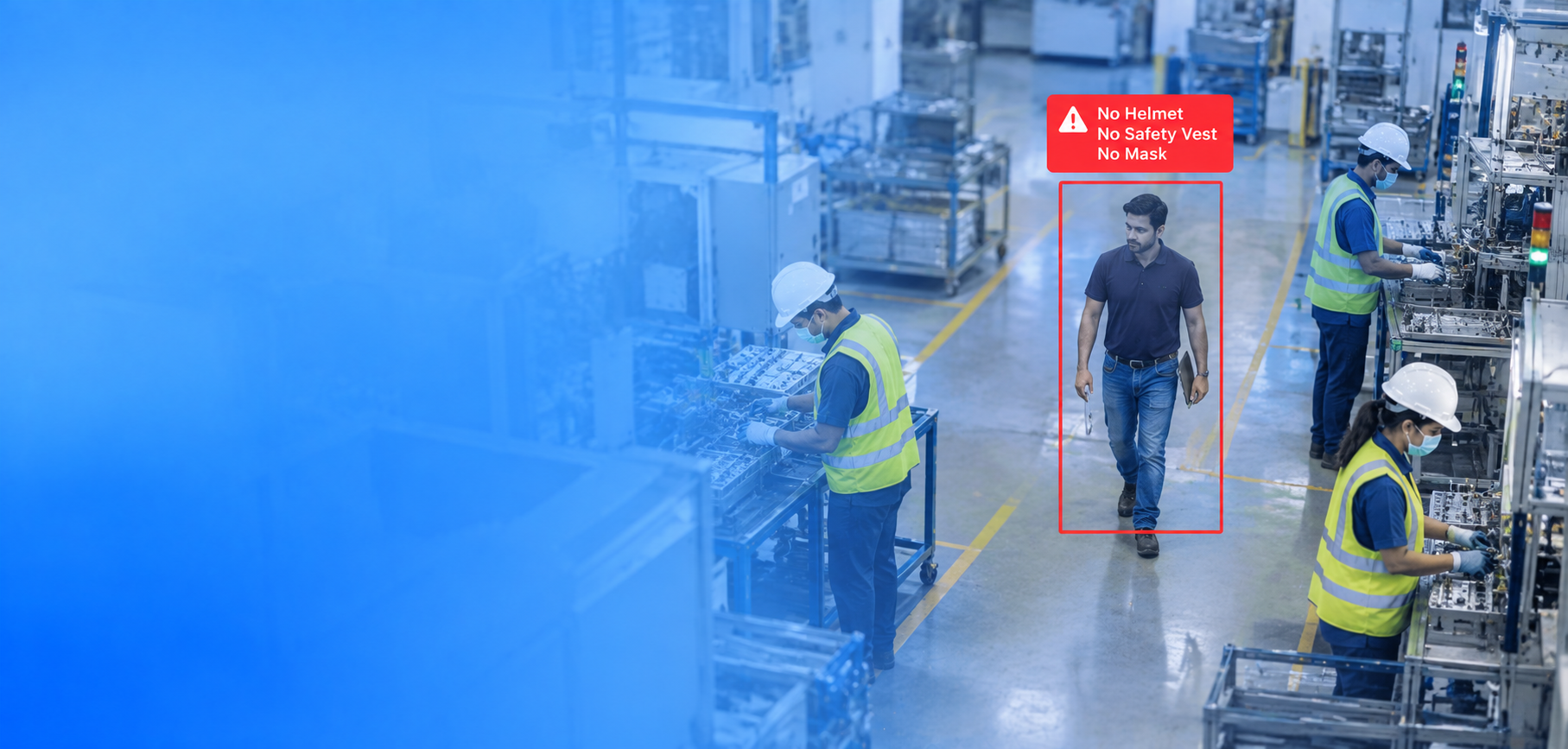
Transform existing CCTV cameras into an intelligent safety monitoring network that continuously detects unsafe conditions and generates real time alerts. Using AI and computer vision, manufacturers can move from reactive incident investigation to proactive workplace risk prevention.
SCHEDULE A DEMOAI-Powered Workplace Safety for Smarter Manufacturing
AI for workplace safety transforms existing CCTV infrastructure into an intelligent monitoring network that continuously identifies unsafe conditions across manufacturing facilities. Using AI and computer vision, organizations can generate real-time alerts, gain actionable safety intelligence, and move from reactive incident investigation to proactive risk prevention.
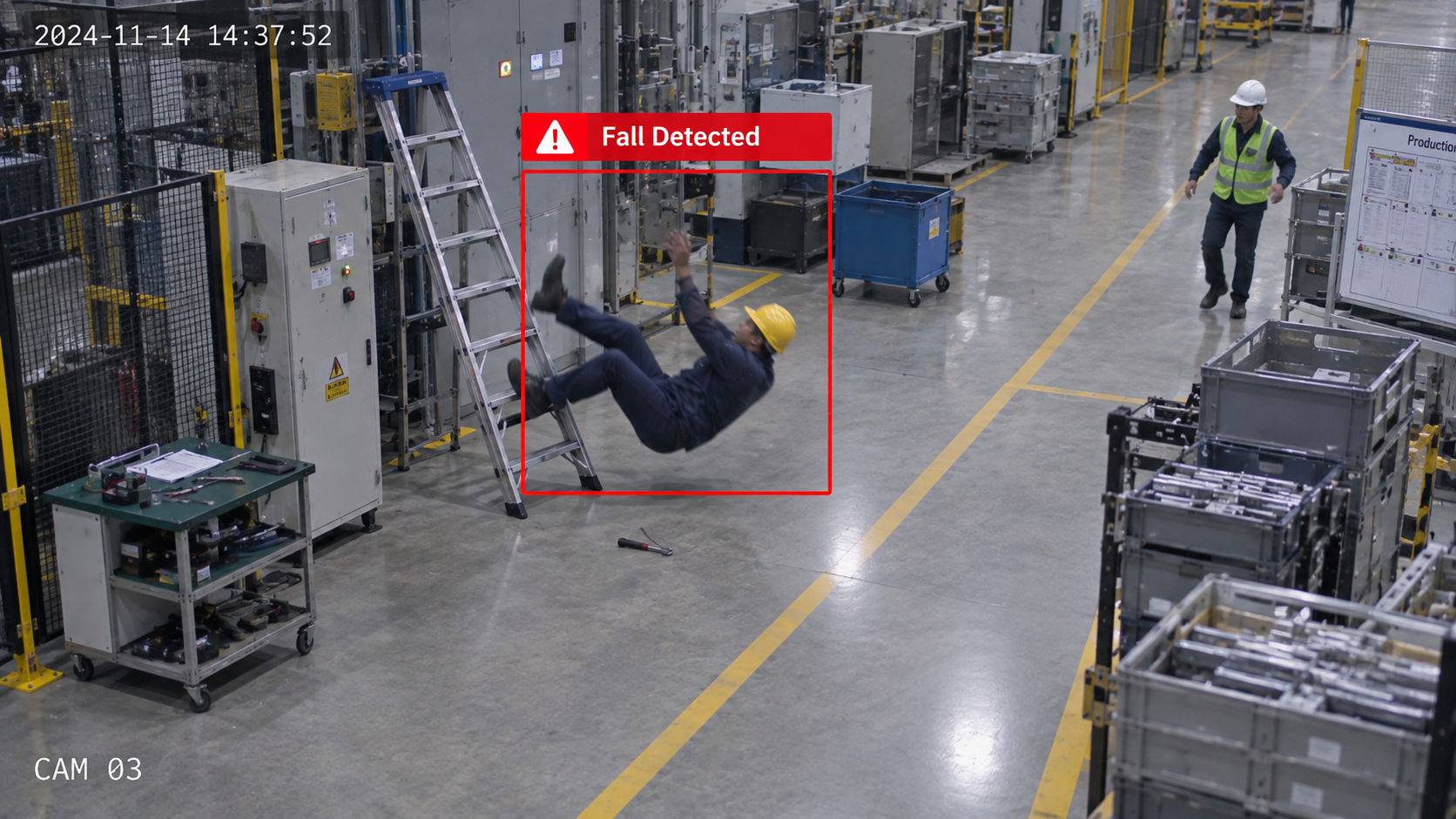
Intelligent CCTV Safety Monitoring
Transform existing CCTV cameras into an intelligent network that continuously monitors workplace environments for potential safety risks.
Real-Time Unsafe Condition Detection
AI continuously identifies unsafe conditions and safety-related events based on predefined rules to enable faster intervention.
AI and Computer Vision Analysis
AI, computer vision, object detection, and behavioral analysis work together to analyze workplace activities and identify potential hazards.
Proactive Incident Prevention
Instead of only investigating what happened, AI helps organizations understand what is happening and intervene before an incident occurs.
Continuous Safety Monitoring
Monitor critical locations including production areas, warehouses, loading zones, walkways, entrances, and emergency exits continuously.
Actionable Safety Intelligence
Convert ordinary video feeds into actionable safety intelligence with real-time alerts, centralized dashboards, and corrective-action workflows.
From CCTV Monitoring to Corrective Safety Action
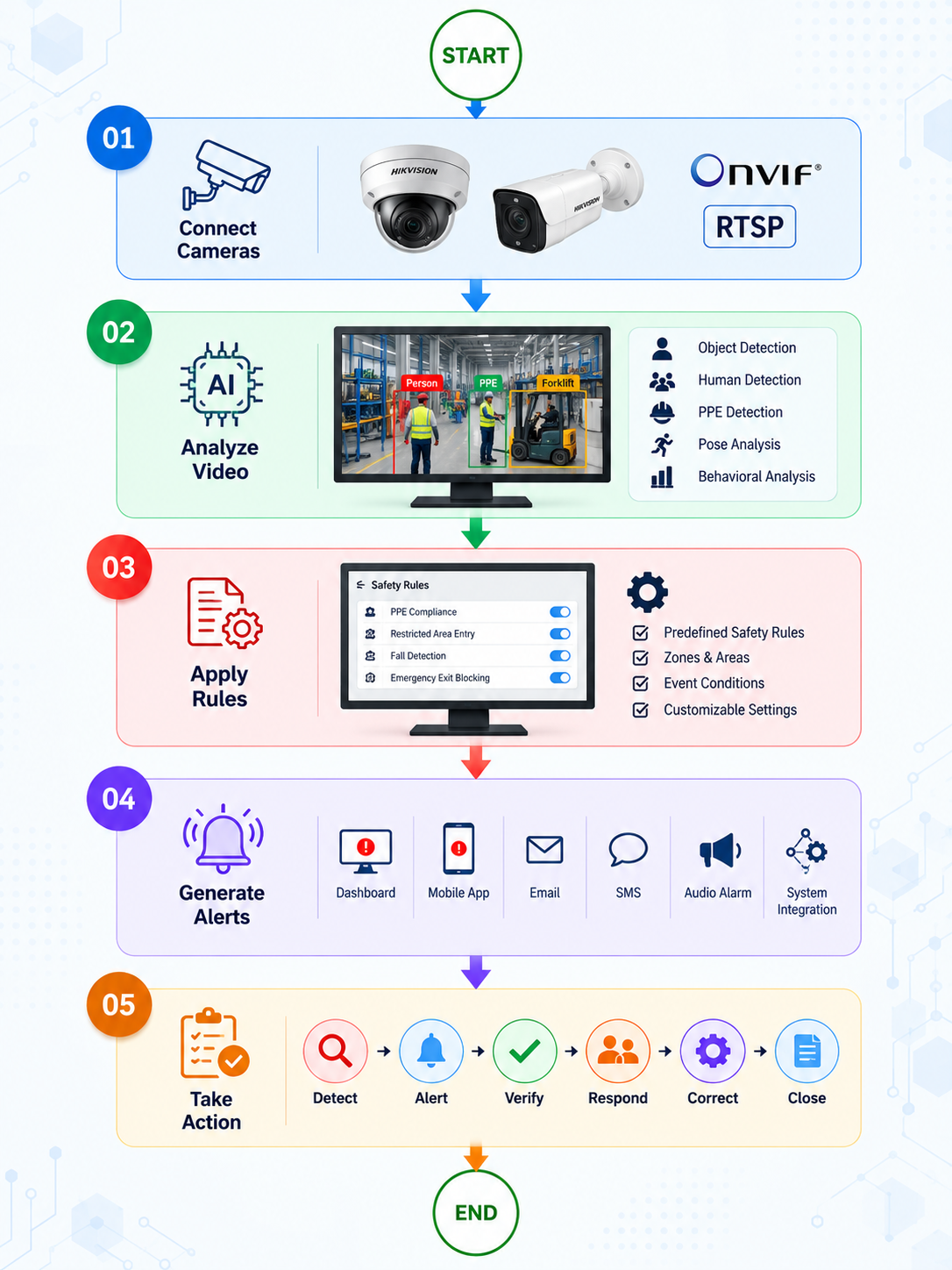
AI for workplace safety follows a structured process that connects existing CCTV infrastructure with intelligent video analytics and workplace safety rules. The system continuously detects safety events, generates real-time alerts, and supports teams in taking corrective action before risks develop into incidents.
-
1
Connect Existing CCTV Cameras
Connect existing CCTV and IP camera infrastructure to the AI safety platform using technologies such as ONVIF and RTSP. This allows organizations to build an intelligent AI safety layer without replacing their existing surveillance cameras.
-
2
Analyze Video Using AI
AI video analytics processes live video streams using object detection, human detection, PPE detection, pose analysis, and behavioral analysis. This enables the system to understand activities, movement, objects, and potential safety risks within defined workplace areas.
-
3
Apply Workplace Safety Rules
AI detections are connected with predefined workplace safety rules to identify specific safety-related events and violations. For example, missing PPE, fall detection, restricted-area entry, or blocked emergency exits can trigger relevant safety events.
-
4
Generate Real-Time Alerts
When a safety rule is triggered, the system generates real-time alerts through dashboards, mobile applications, SMS, email, audio alarms, or existing system integrations. This helps responsible teams respond to safety events while they are occurring instead of discovering them later.
-
5
Take Corrective Action
The final stage connects AI alerts with the organization's safety workflow through Detect → Alert → Verify → Respond → Correct → Close. Safety teams can verify events, take corrective action, record the response, and maintain event information for future analysis.
Transforming Manufacturing Safety with Intelligent AI Monitoring
AI can be applied across multiple areas of manufacturing safety, extending beyond PPE monitoring to identify unsafe conditions and workplace risks. From detecting falls and unauthorized entry to monitoring emergency exits and headcount, AI provides continuous safety intelligence across critical facility areas.
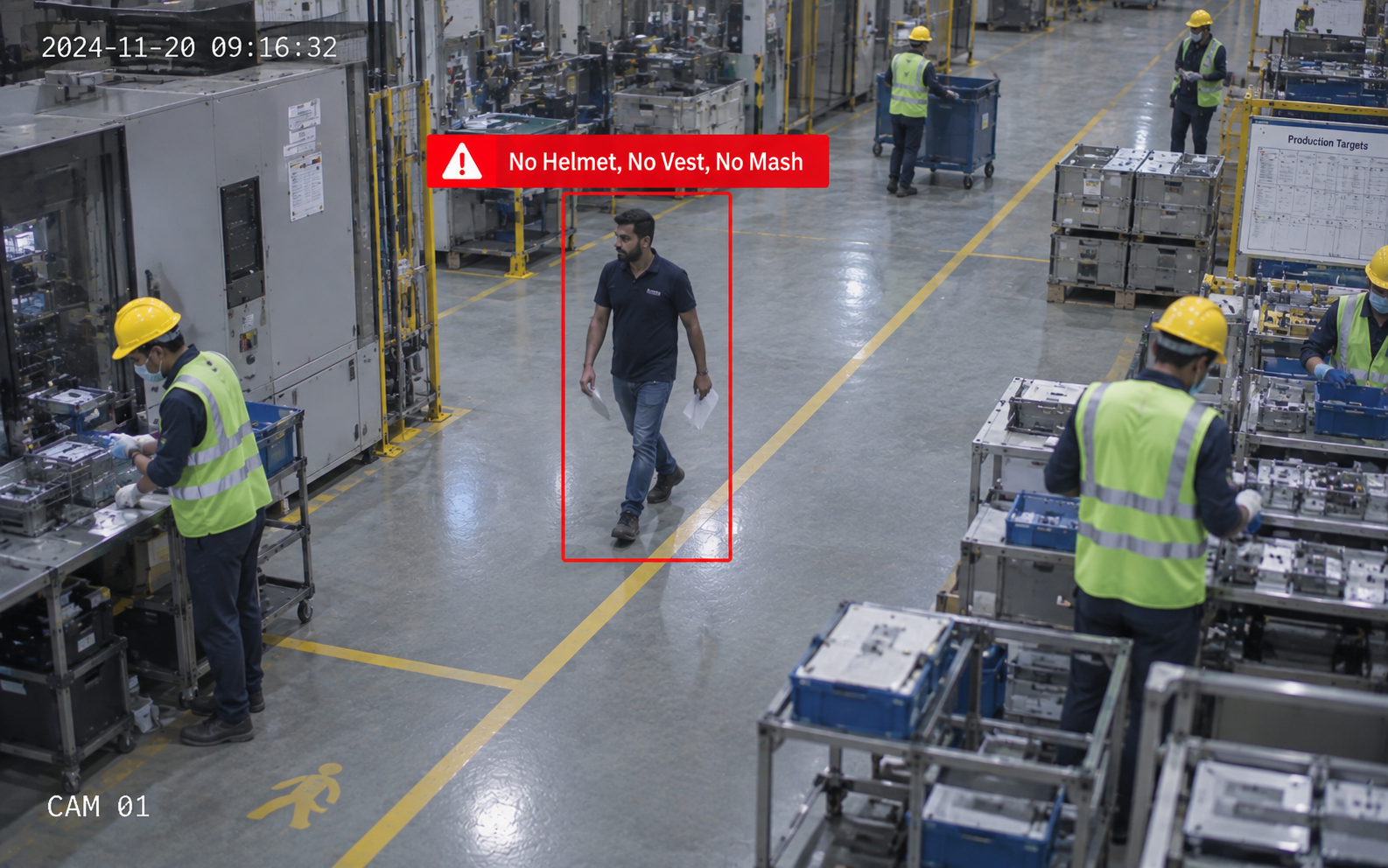
AI PPE Detection
- Continuously monitor workers for required PPE compliance
- Detect safety helmets in defined workplace areas
- Identify safety vests worn by workers
- Monitor gloves and other specified PPE
- Detect safety shoes and safety glasses
- Reduce reliance on periodic manual PPE inspections
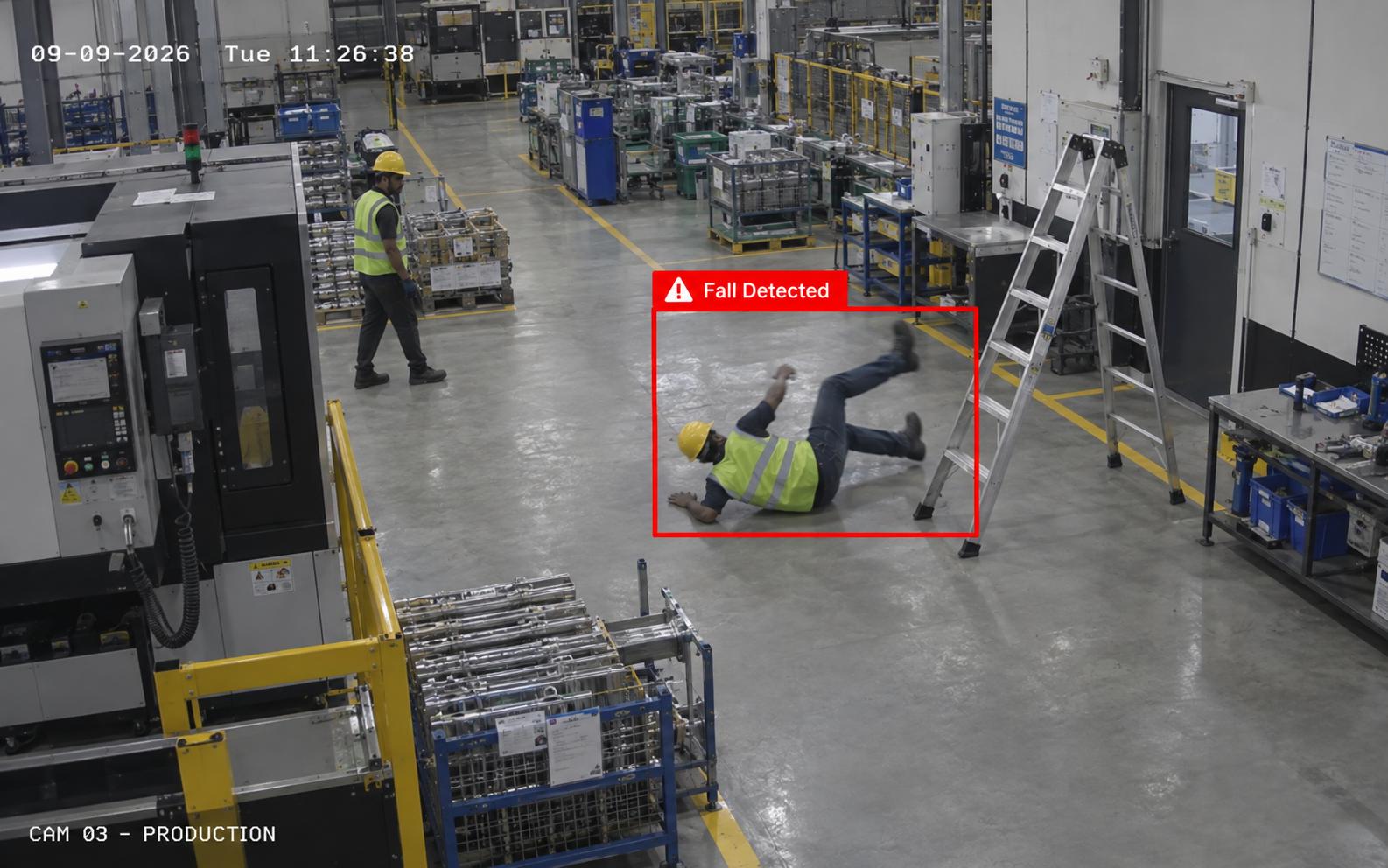
Slip and Fall Detection
- Monitor production areas for potential falling events
- Analyze human movement using computer vision
- Detect unusual human posture associated with falls
- Monitor staircases and warehouse areas
- Identify risks around wet floors and loading areas
- Generate alerts for the responsible safety team
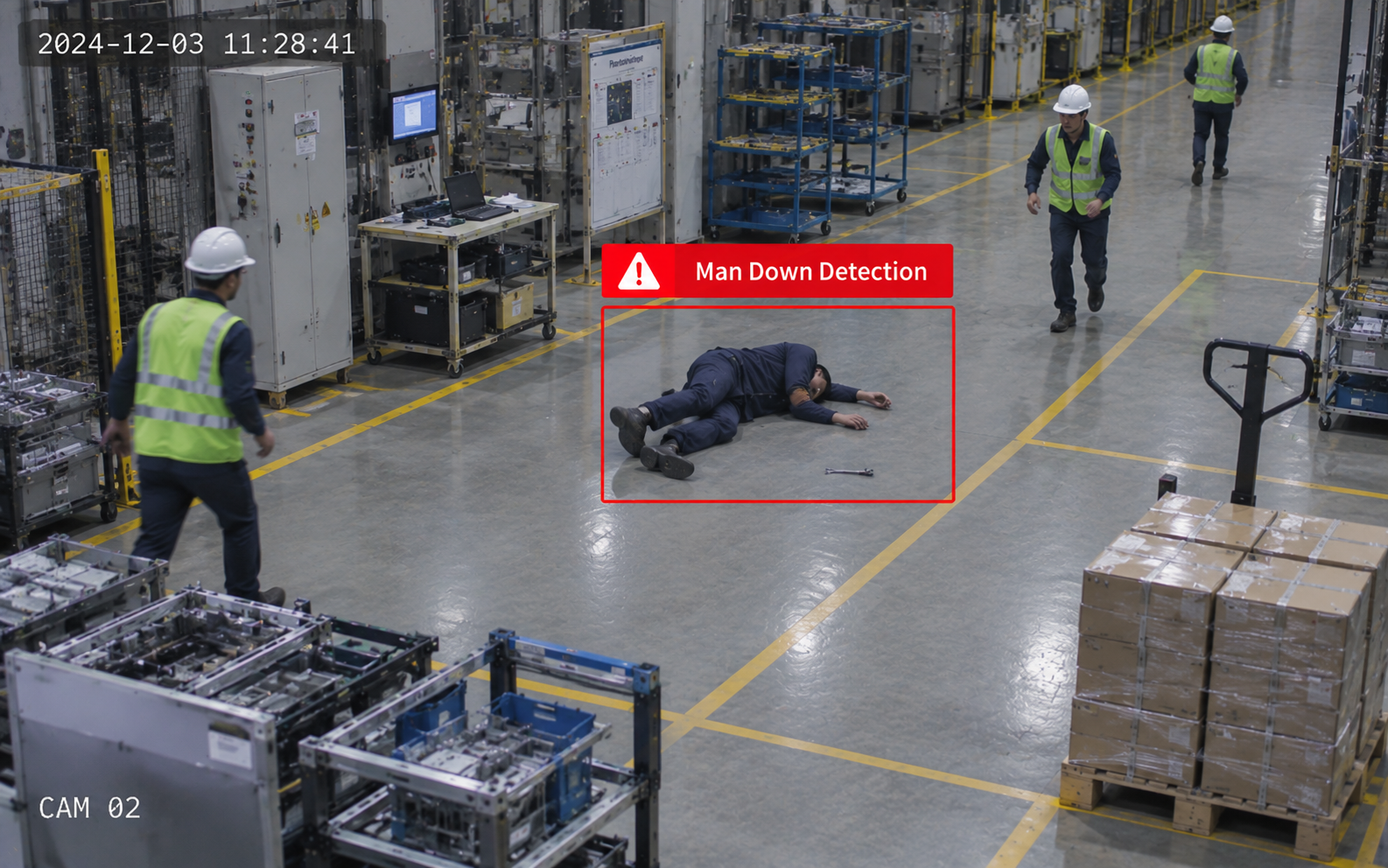
Man-Down Detection
- Identify workers who appear to be lying down
- Detect unusual worker posture
- Evaluate prolonged inactivity and no movement
- Identify potential fallen or motionless workers
- Generate a potential man-down event
- Notify supervisors about the detected event
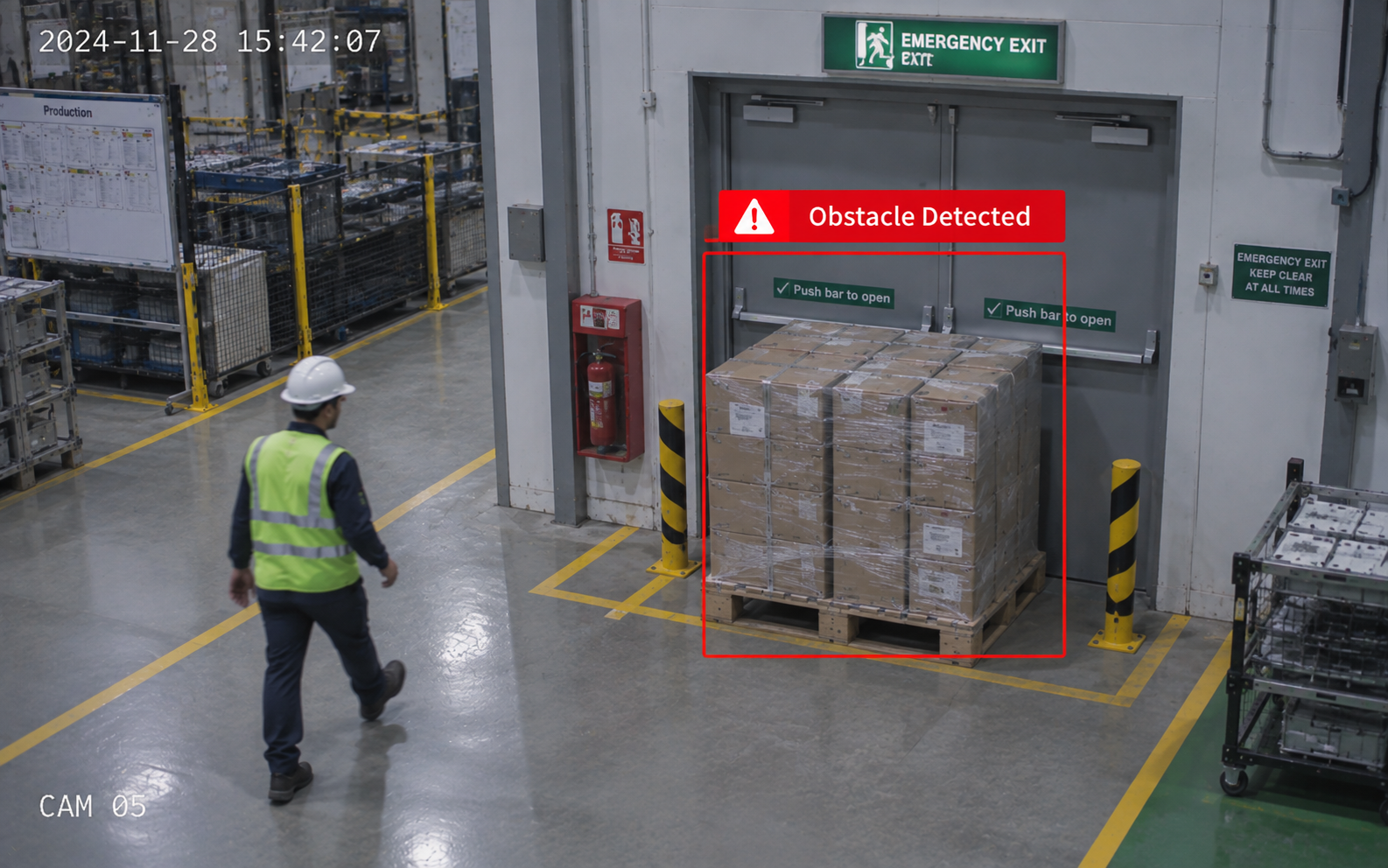
Emergency Exit Monitoring
- Continuously monitor designated emergency exit areas
- Detect blocked emergency exits
- Identify obstructed evacuation routes
- Detect objects placed in restricted areas
- Help maintain accessible emergency exits
- Allow facility and EHS teams to address obstructions before an emergency
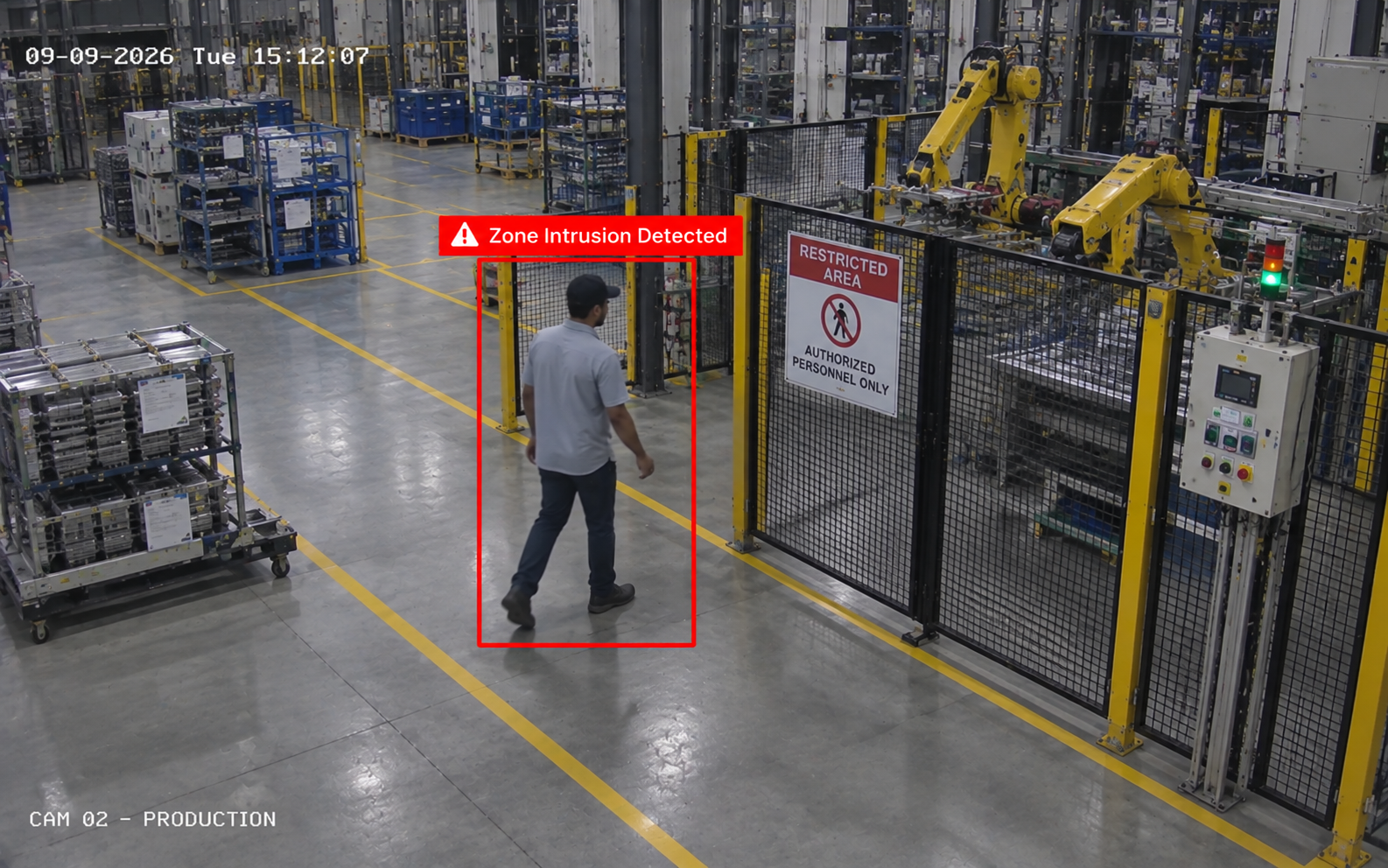
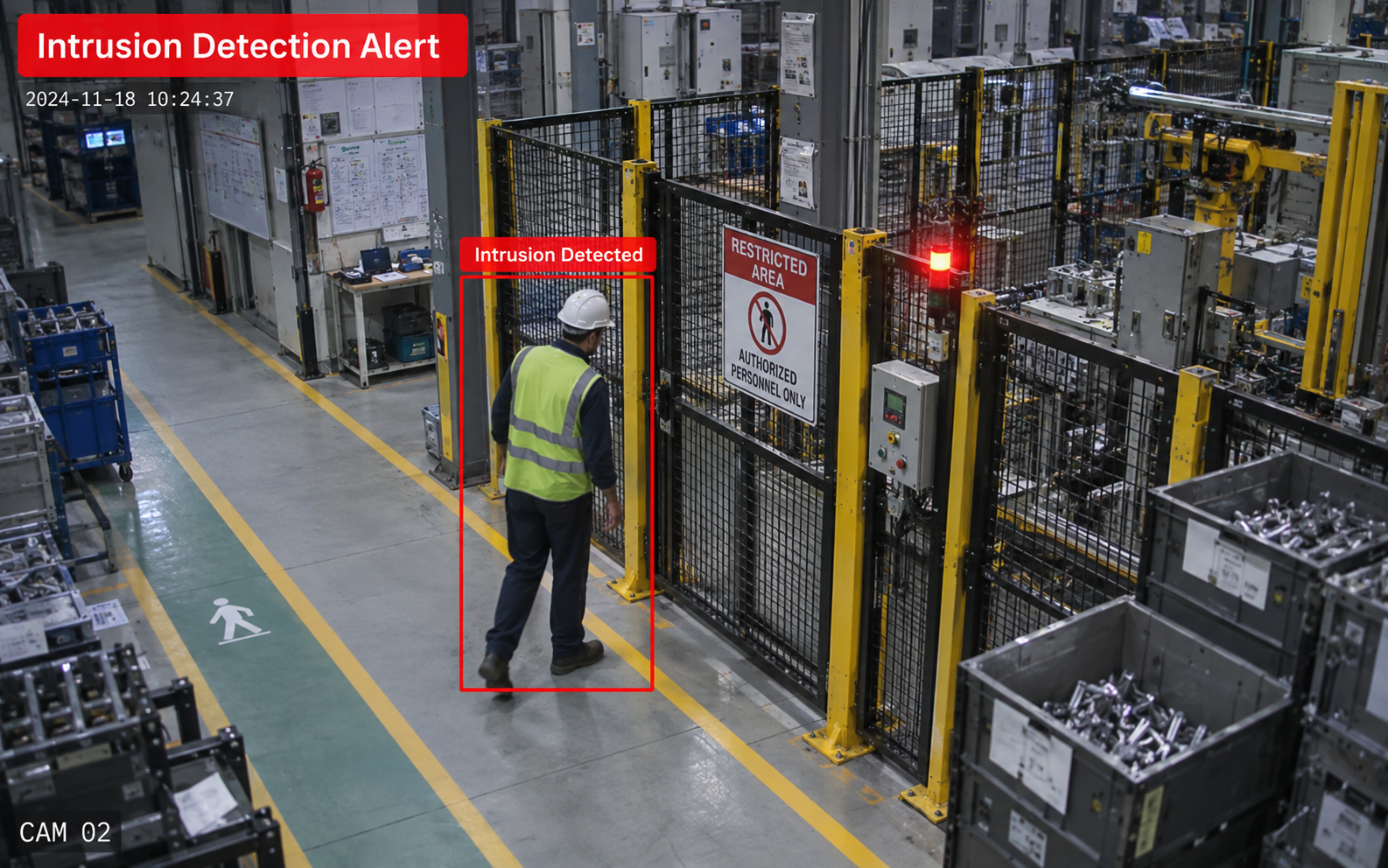
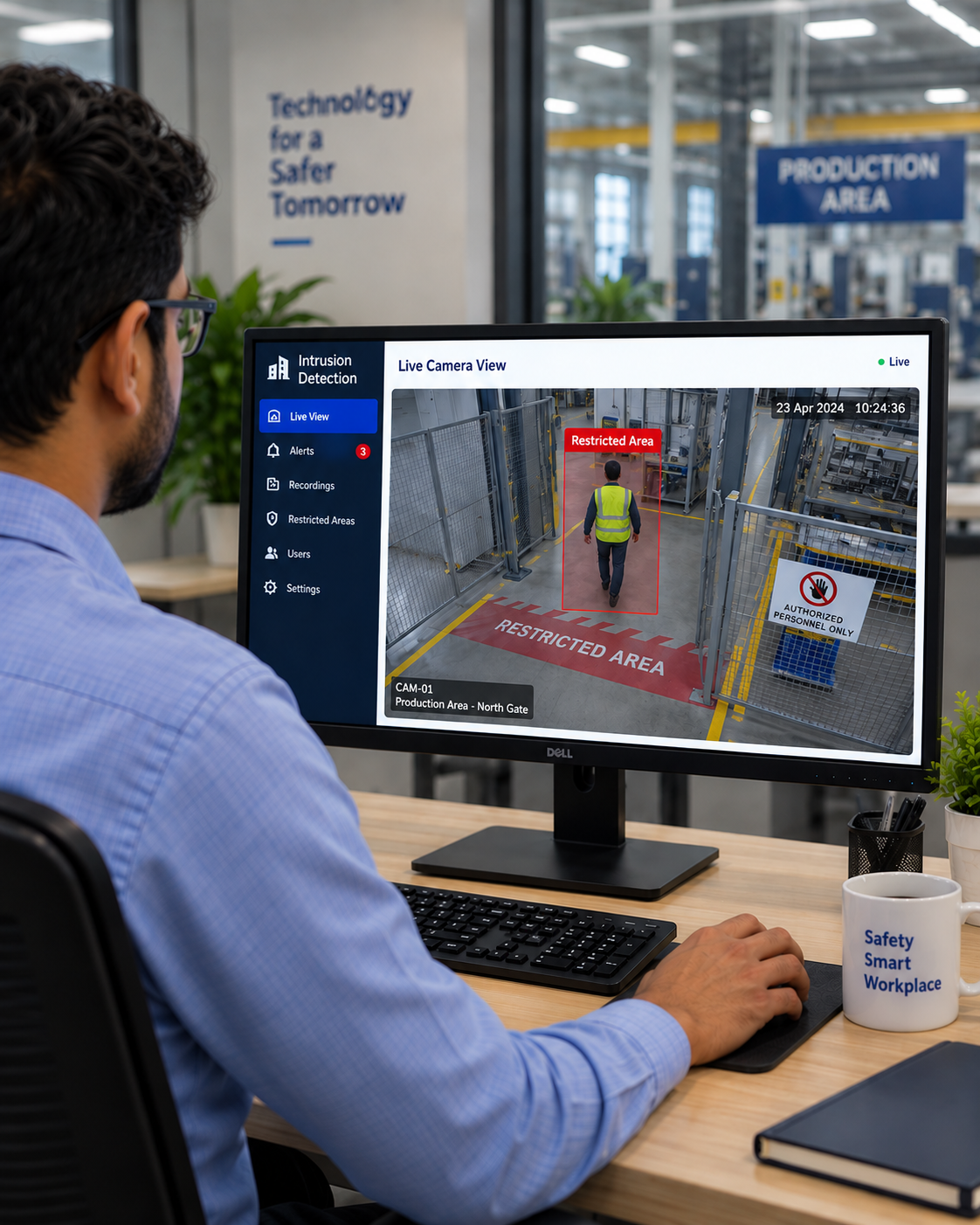
Intrusion Detection
- Monitor predefined restricted and hazardous zones
- Detect unauthorized personnel entering restricted areas
- Identify unauthorized access to controlled zones
- Monitor after-hours movement
- Detect people entering hazardous areas
- Support perimeter and facility safety monitoring
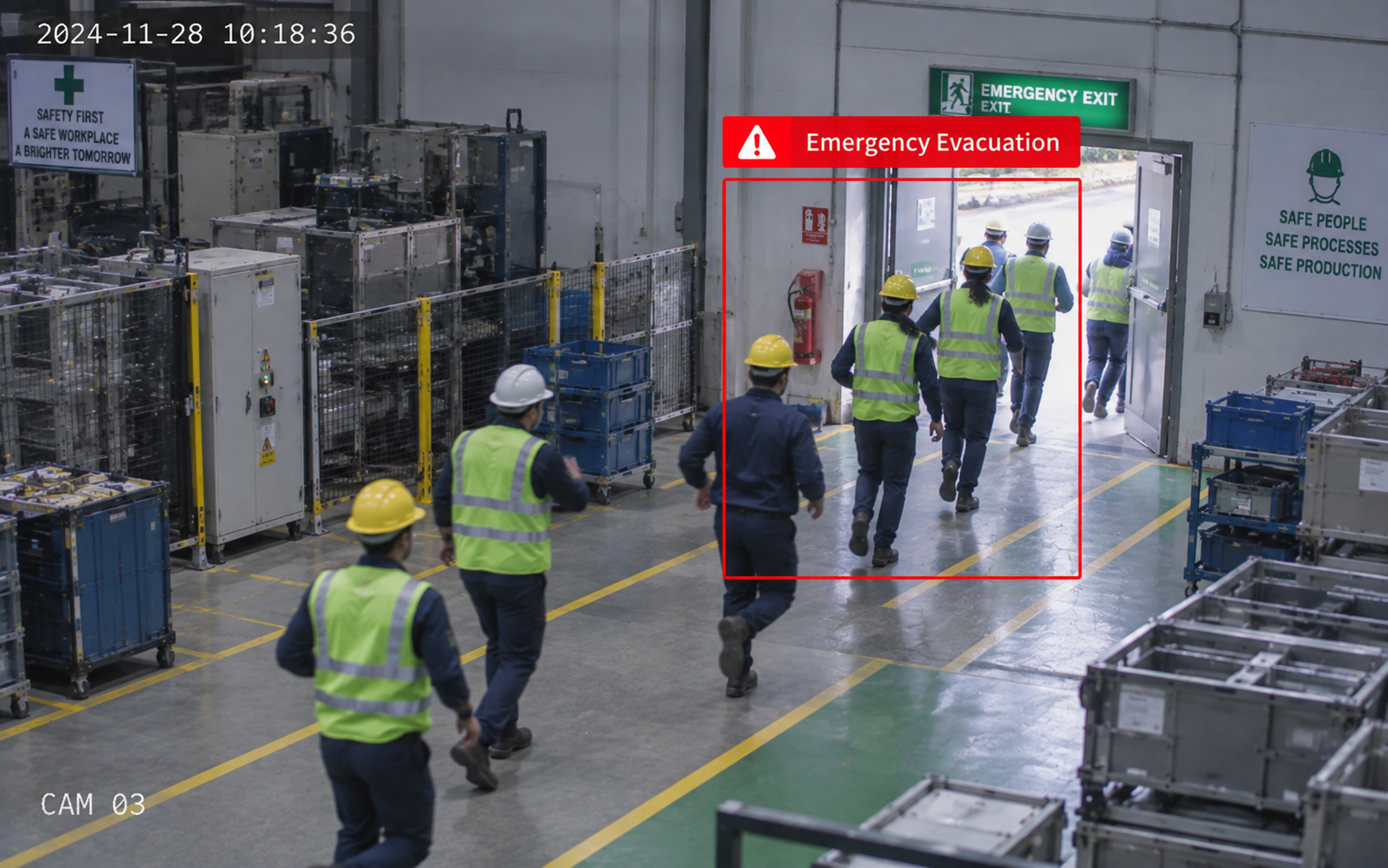
AI-Based Headcount and Emergency Evacuation
- Automatically count employees in designated areas
- Provide visibility into visitors and contractors
- Track people entering designated locations
- Monitor people leaving affected areas
- Provide real-time occupancy information
- Support safety teams during emergency evacuation
Centralized Visibility into Workplace Safety Performance
An AI-powered safety dashboard brings together safety events, violations, and compliance information from across the manufacturing organization in one centralized platform. It helps safety teams monitor performance, identify violation trends, review recent events, and gain better visibility across critical workplace locations.
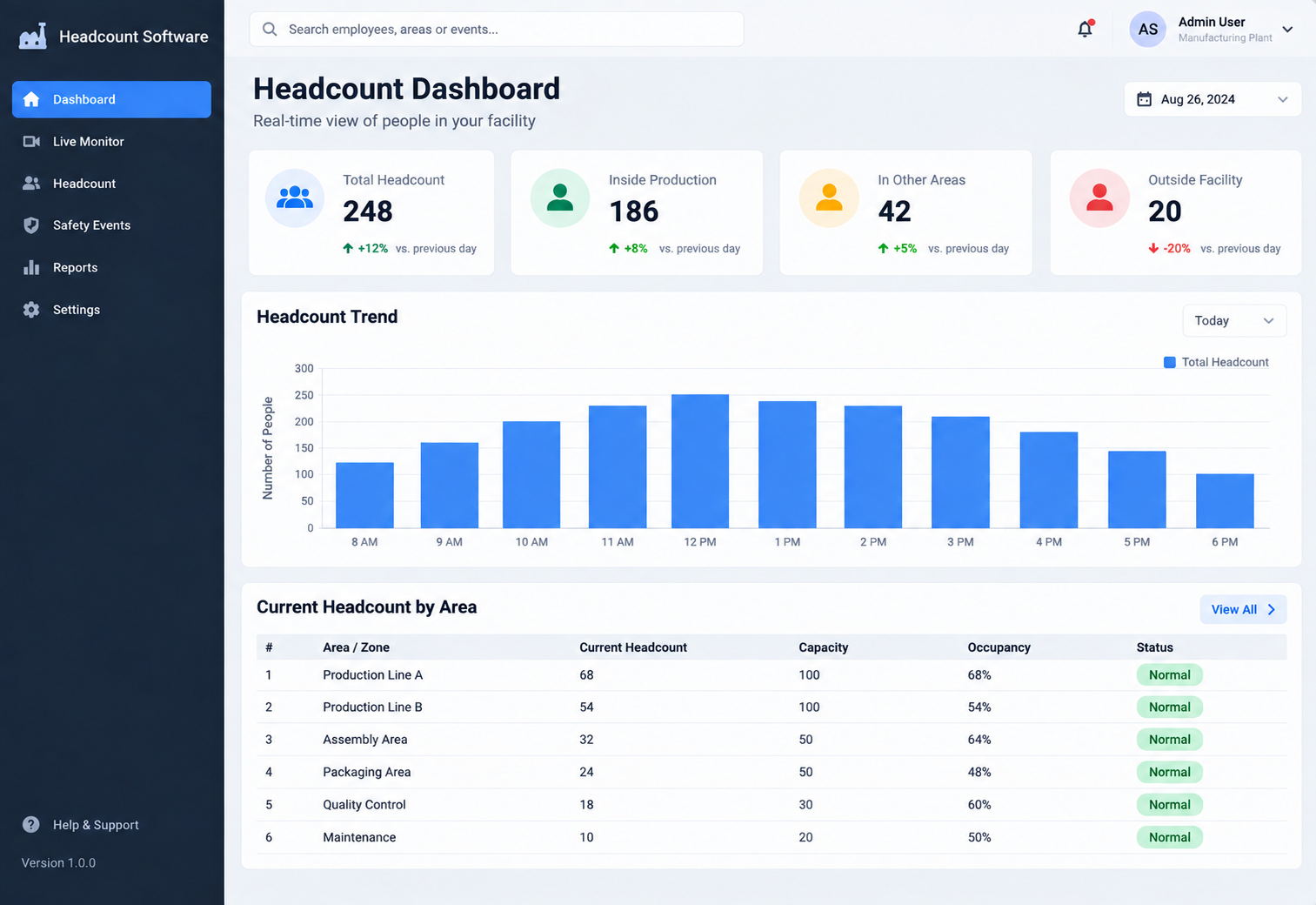
Comprehensive Safety Monitoring and Insights
- Monitor safety performance across multiple plants
- Track violations by departments and production lines
- Analyze safety events across designated safety zones
- Monitor camera locations and different violation types
- Track total safety violations and PPE compliance
- Review recent violations, event history, and violation trends
A Step-by-Step Roadmap to AI-Powered Workplace Safety
Manufacturing organizations can implement AI workplace safety progressively by starting with the most important risks and high-value use cases. A structured approach helps organizations evaluate existing infrastructure, configure AI monitoring, test performance, and connect safety alerts with corrective action.
Identify Safety Risks
- Identify the most important safety risks across the plant
- Detect PPE non-compliance risks
- Identify potential falls and unsafe worker behavior
- Evaluate restricted-area entry risks
- Identify blocked emergency exits
- Assess emergency evacuation challenges
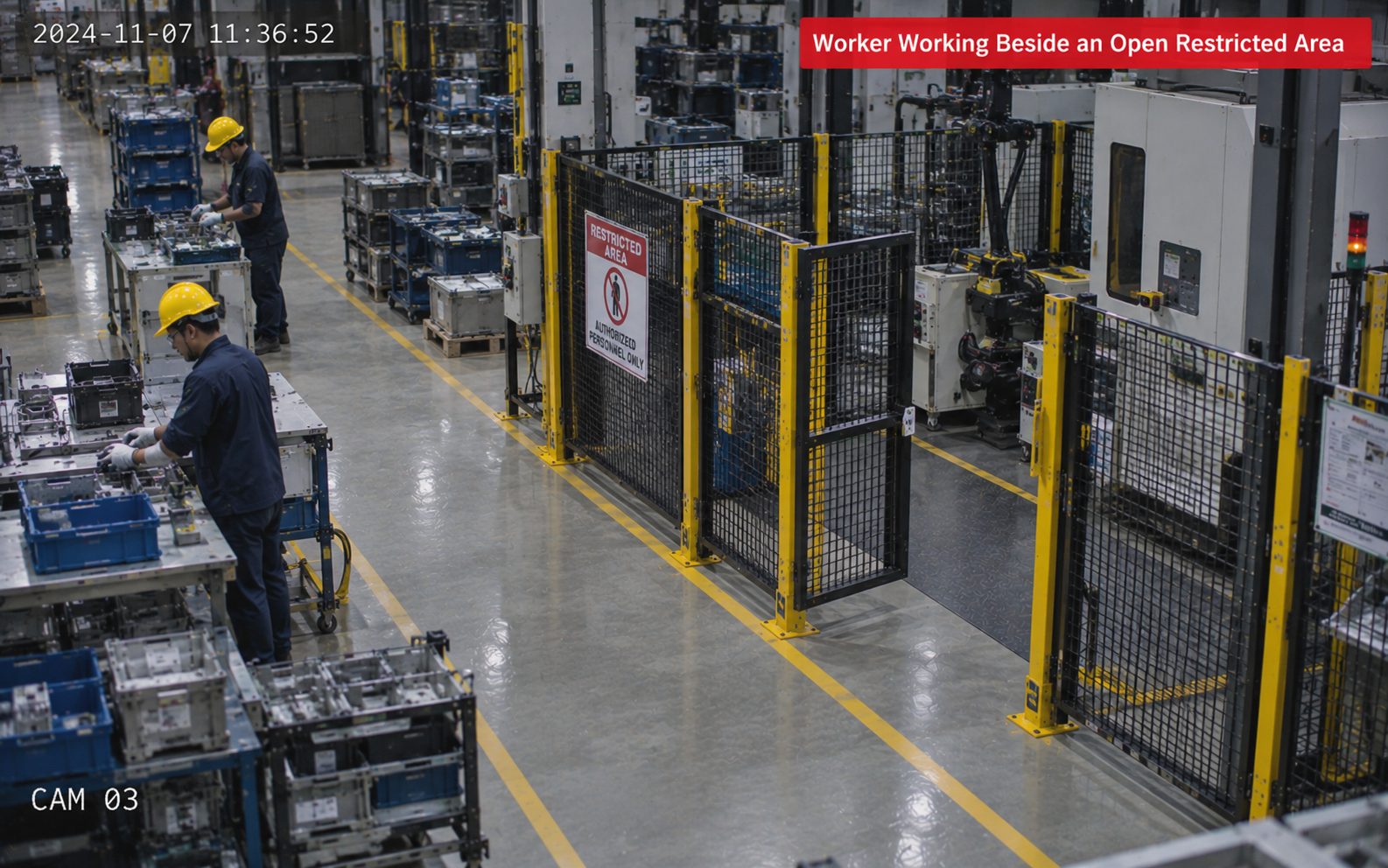
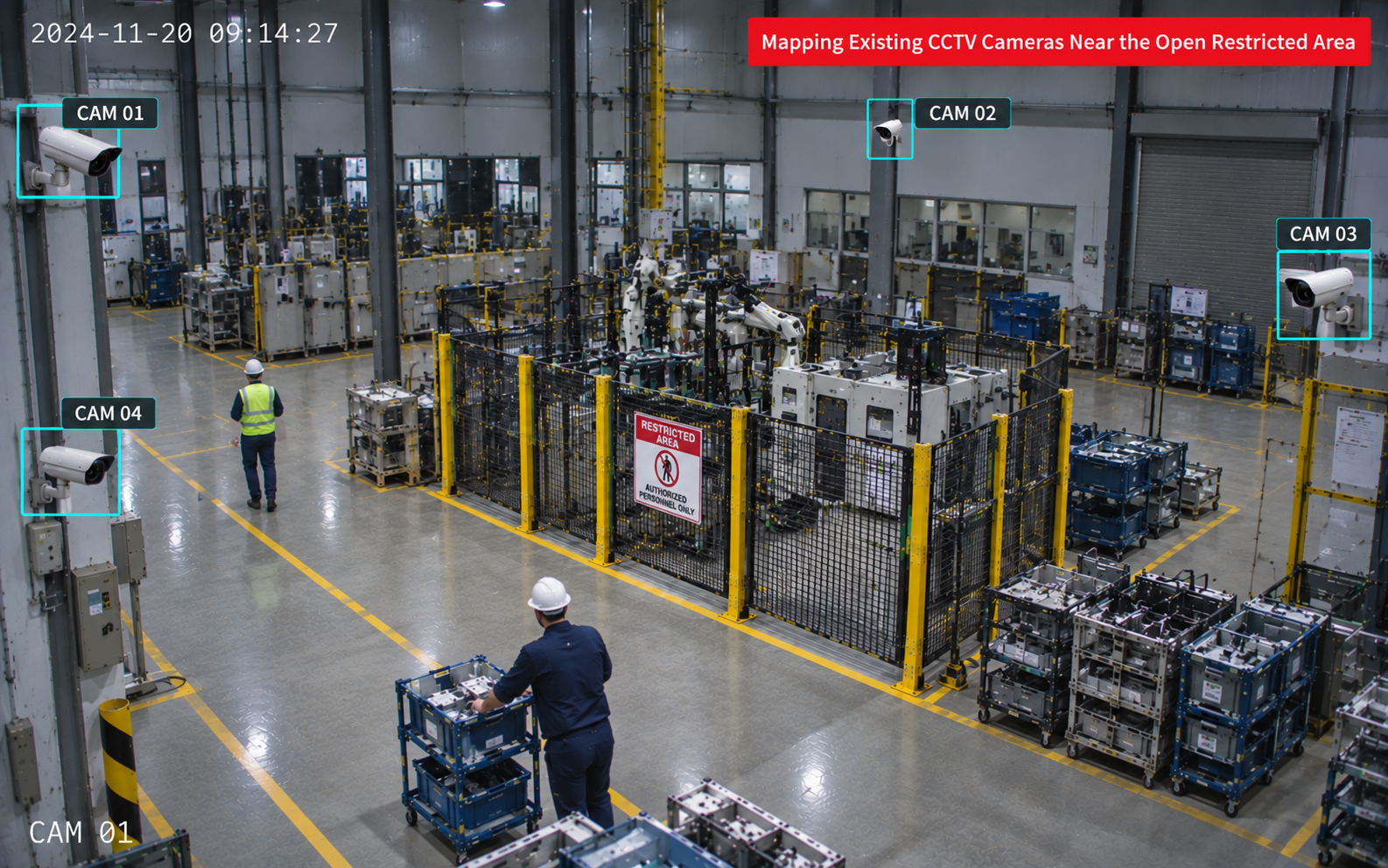
Map Existing CCTV Cameras
- Evaluate existing camera locations
- Review camera coverage across the facility
- Check camera resolution and image quality
- Assess lighting conditions
- Review viewing angles and blind spots
- Evaluate network connectivity
Select AI Safety Use Cases
- Prioritize the most valuable safety use cases
- Evaluate risks based on frequency
- Consider the severity of potential safety events
- Assess whether the risk can be effectively detected
- Use Risk × Frequency × Severity × Detectability for prioritization
- Start with high-value scenarios instead of monitoring everything at once
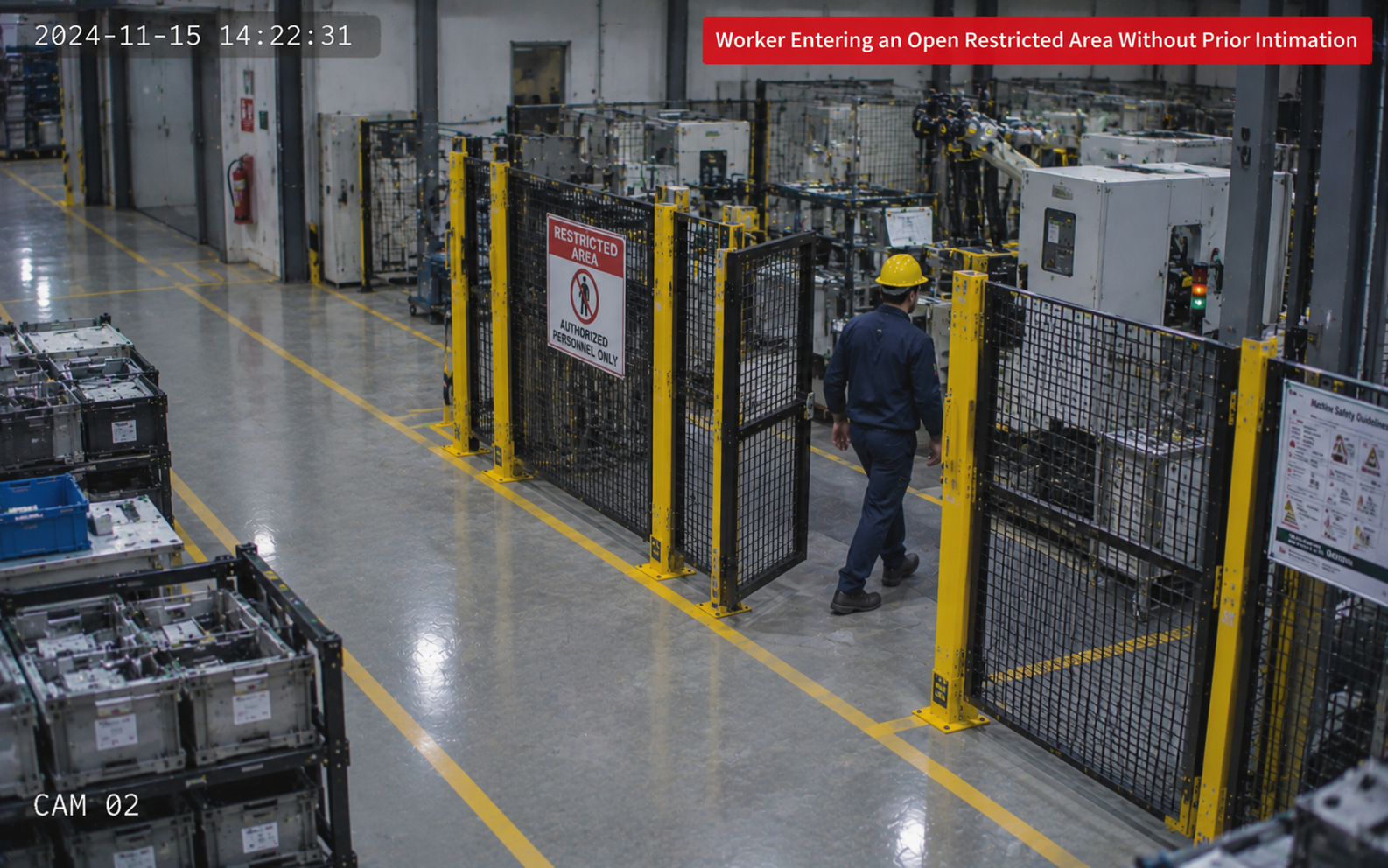
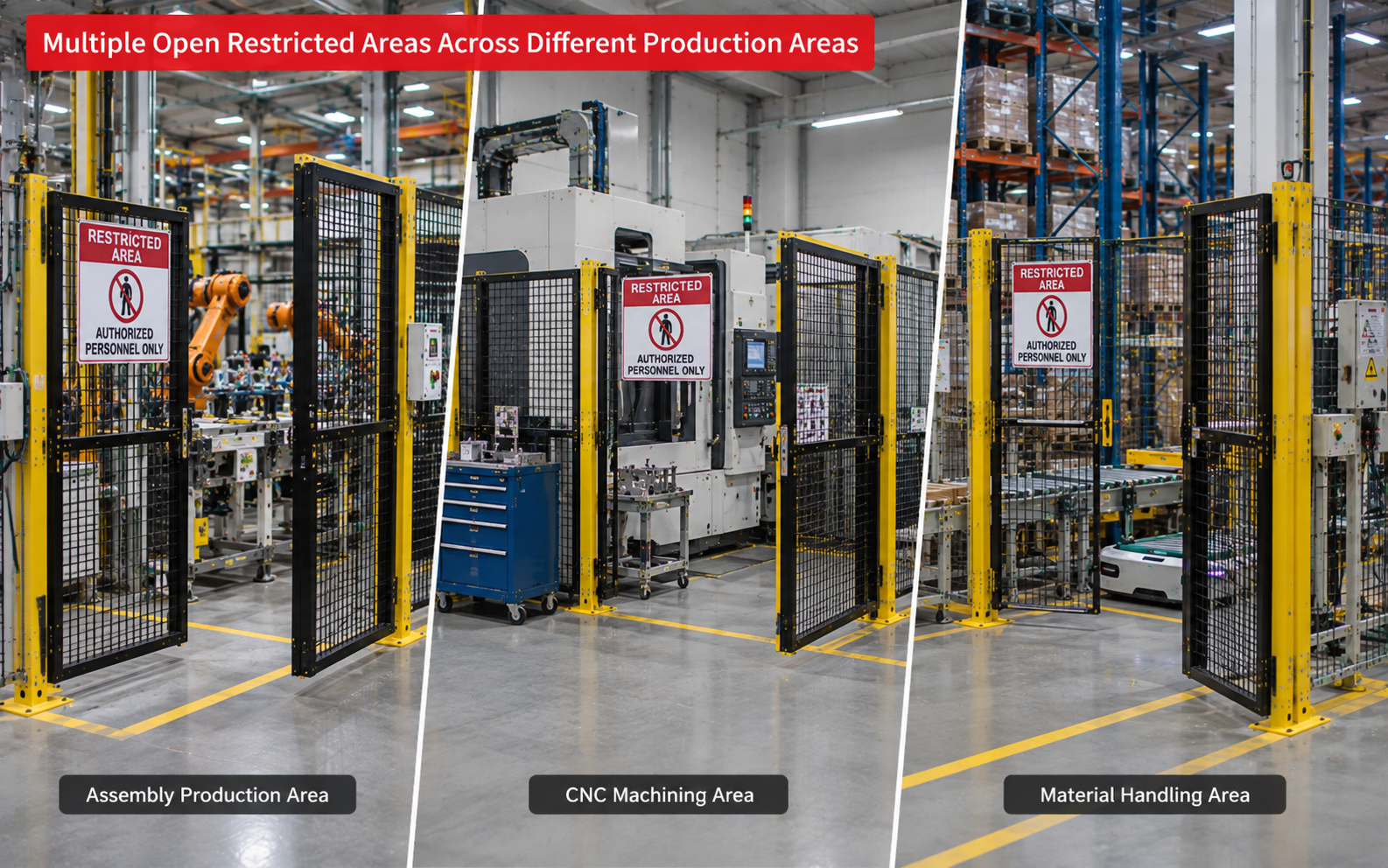
Configure Safety Zones
- Define virtual zones for production areas
- Configure restricted-area monitoring zones
- Identify pedestrian walkways
- Define emergency exit areas
- Configure hazardous workplace zones
- Monitor material handling zones
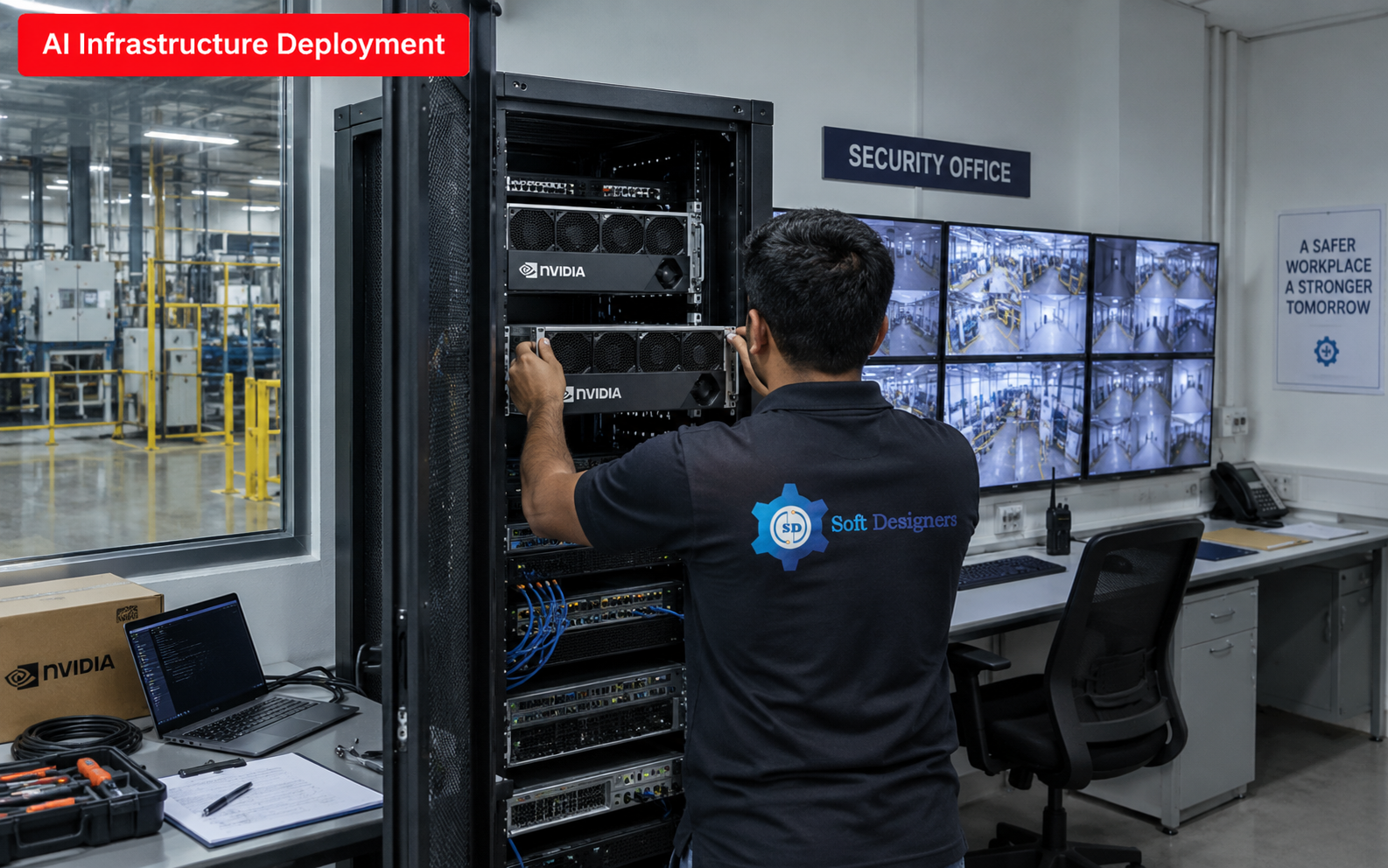
Deploy AI Infrastructure
- Select appropriate AI processing infrastructure
- Deploy AI processing based on the selected architecture
- Use edge infrastructure where appropriate
- Use GPU-based infrastructure where required
- Prepare the required processing environment
- Support AI safety monitoring across the facility
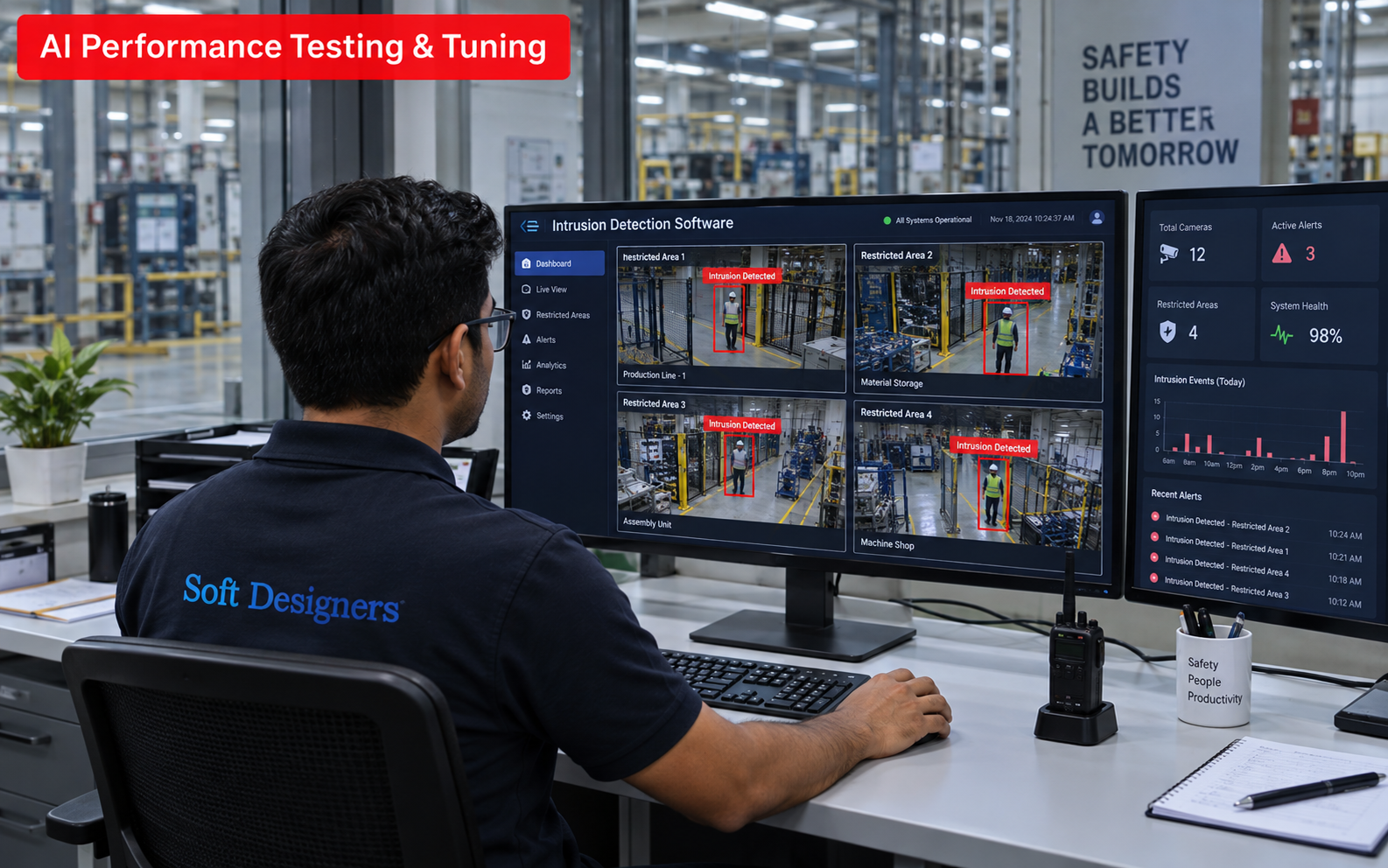
Test and Tune
- Test the system under real plant conditions
- Evaluate AI performance under different lighting
- Test different worker positions and appearances
- Evaluate different camera angles and crowded areas
- Test variations in PPE colors and designs
- Validate performance under occlusions and different production conditions
Connect Alerts to Action
- Connect every important AI detection to a defined response
- Generate an alert when a safety violation is detected
- Enable supervisor verification of the event
- Initiate the required corrective action
- Record the response and complete closure
- Integrate AI monitoring into the organization's safety management process
Building an Intelligent Safety Network with AI
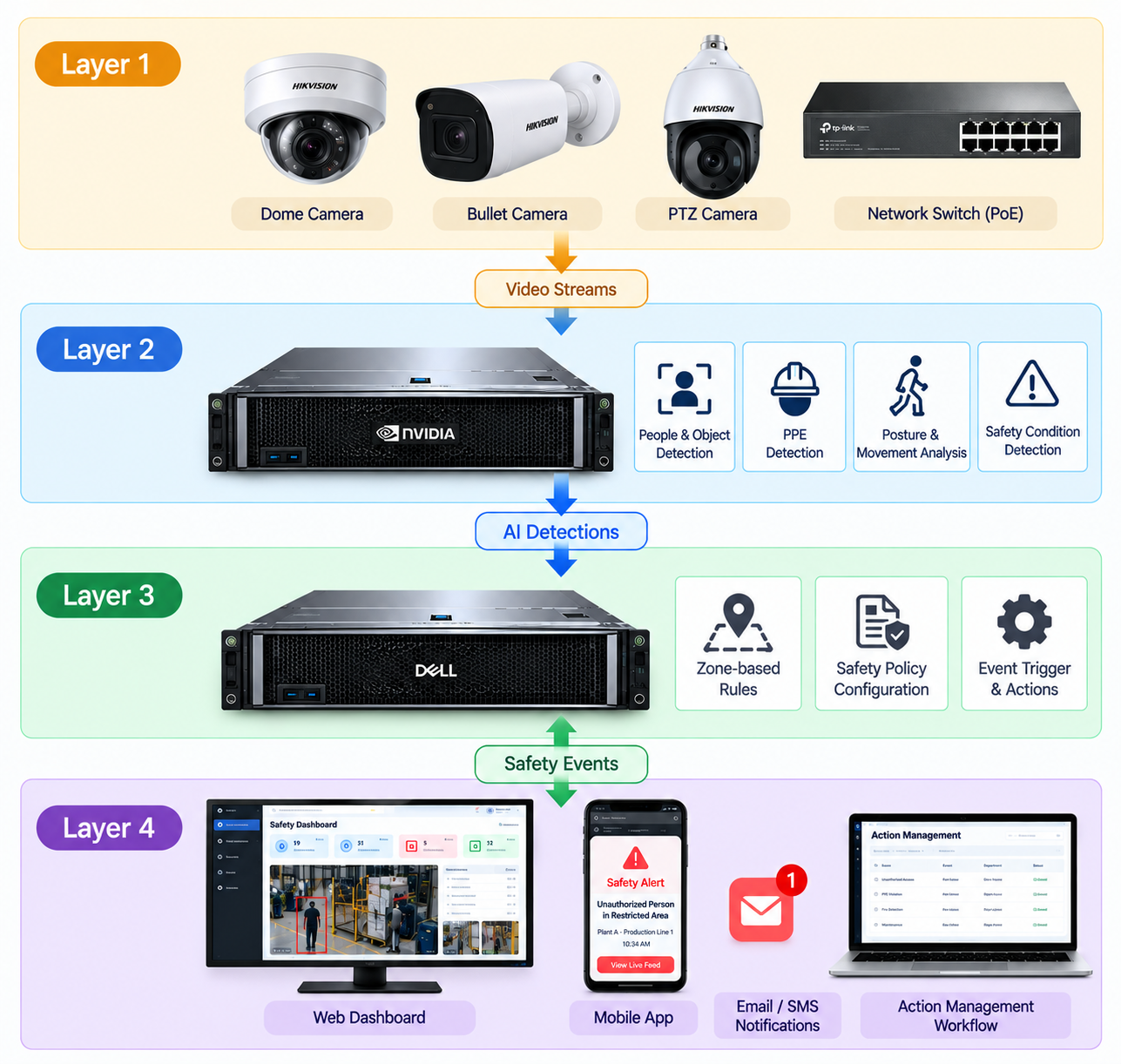
A practical AI workplace safety architecture connects existing CCTV infrastructure with AI video analytics, safety rules, and action-management applications. Together, these layers create a continuous safety network that delivers faster alerts, better data, and proactive safety management.
Layer 1 — Existing CCTV Infrastructure
Use existing IP cameras wherever camera coverage and image quality are suitable for workplace safety monitoring.
Layer 2 — AI Video Analytics
AI models analyze video feeds for people, objects, PPE, posture, movement, and defined safety conditions.
Layer 3 — Safety Rules Engine
The system converts AI detections into meaningful safety events based on configured workplace safety rules and zones.
Layer 4 — Safety Application
Safety events are delivered through dashboards, mobile devices, notifications, and action-management workflows for timely response.
Creating Safer and Smarter Manufacturing Environments
A well-designed AI safety system helps manufacturing organizations continuously identify workplace risks, respond faster, and improve safety performance. By combining real-time monitoring, automated alerts, and safety data, AI supports a more proactive and data-driven approach to workplace safety.
Safer Workplaces
Continuous AI monitoring helps identify potential safety risks in real time before they develop into incidents.
Faster Response
Real-time safety alerts enable responsible teams to respond sooner when unsafe conditions or events are detected.
Reduced Manual Monitoring
AI can continuously analyze multiple camera feeds, reducing dependence on continuous human observation and manual monitoring.
Better Compliance
Automated monitoring provides measurable information about PPE compliance and other workplace safety requirements.
Data-Driven Safety Decisions
Historical safety events and trends help organizations identify recurring problems and make better safety decisions.
Improved Safety Culture
Continuous visibility encourages the proactive identification and correction of unsafe conditions across the workplace.














Our Trusted Clients
We’re proud to collaborate with industry leaders and innovative companies