

AI-Powered Wheel Inspection System
Our AI-Powered Wheel Detection System continuously inspects wheel and tyre assemblies using machine vision and pre-trained AI models to identify wheel model, type, tyre brand, size, valve presence, and OCR markings with precision, across every inspection cycle. It validates each assembly against the expected sequence and instantly generates PASS or FAIL results, stopping the conveyor through PLC control when an incorrect combination is detected.
SCHEDULE A DEMO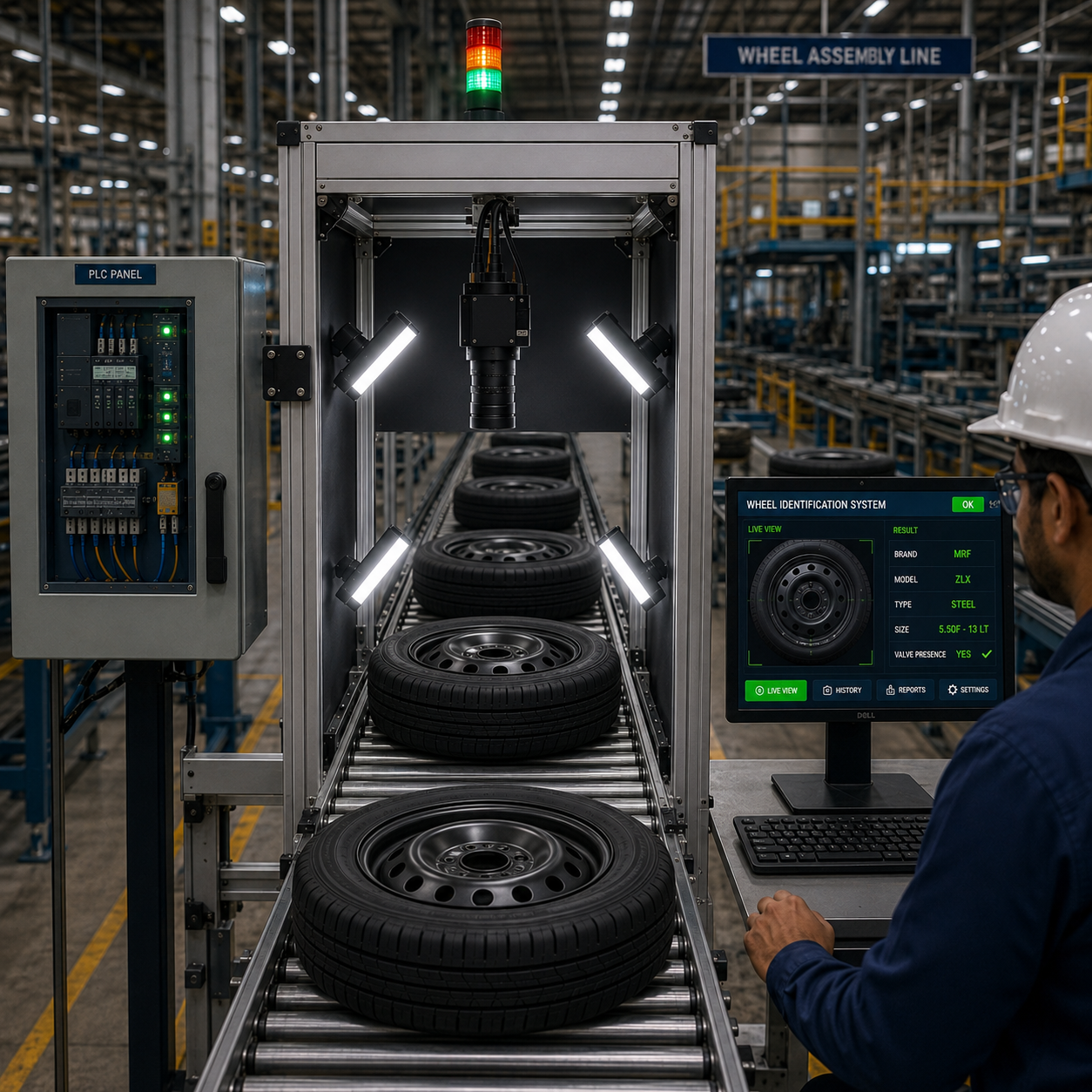
AI-Powered Wheel & Tyre Verification
The Wheel Detection System is an automated conveyor-based inspection solution that uses machine vision and pre-trained AI models to verify wheel and tyre assemblies. It identifies critical assembly attributes, reads tyre OCR, validates the required sequence, and automatically delivers PASS or FAIL decisions.
Features:
- Machine Vision
- AI Inspection
- OCR Detection
- Sequence Validation
- PLC Integration
- Cloud Data Recording
Intelligent Wheel Inspection
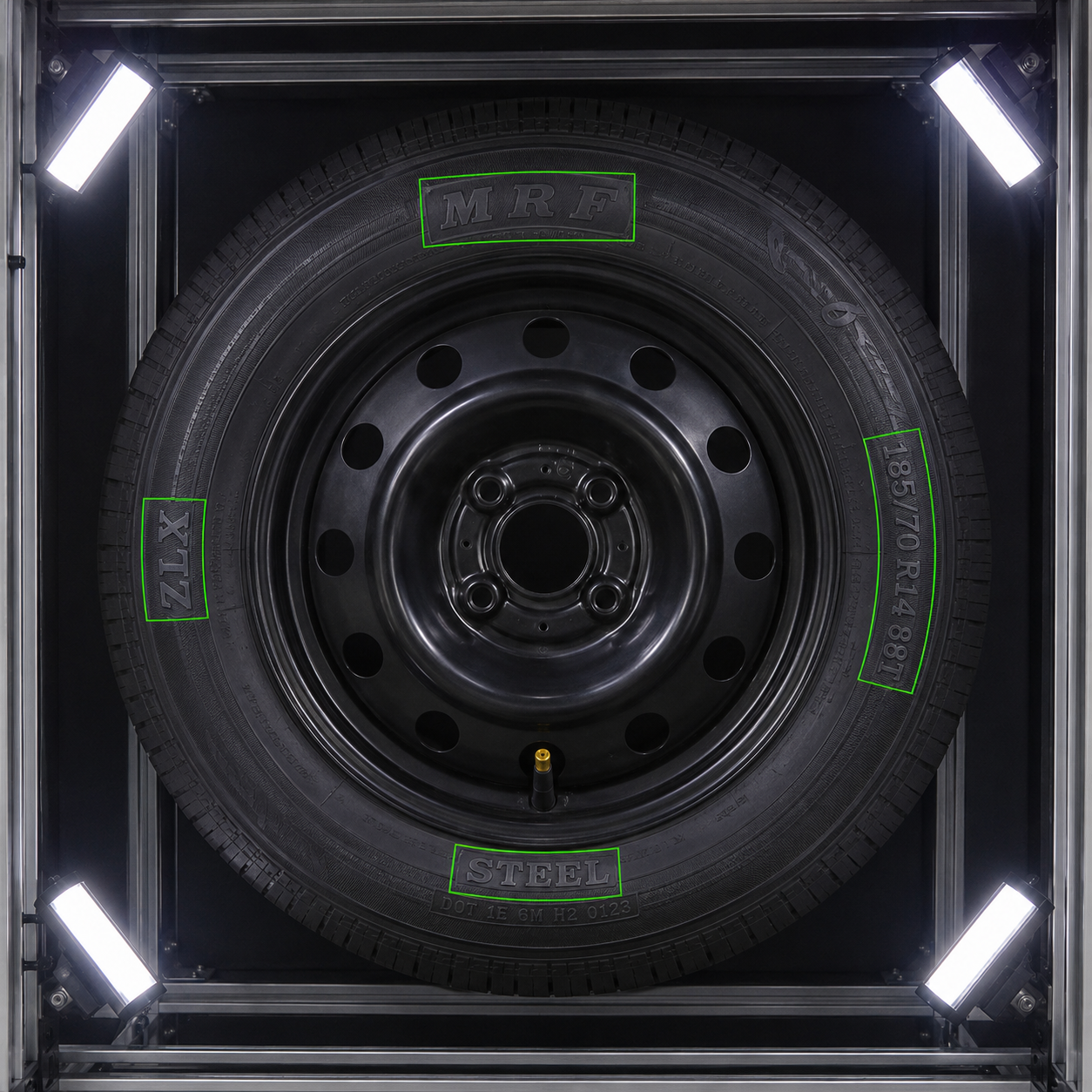
The AI inspection engine extracts multiple identification parameters from each captured wheel and tyre assembly. OCR recognition adds another layer of verification by reading tyre markings during the inspection cycle.
Identifies
- Wheel Model
- Wheel Type
- Tyre Brand
- Tyre Size
- Valve Presence
How AI-Powered Wheel Identification Works
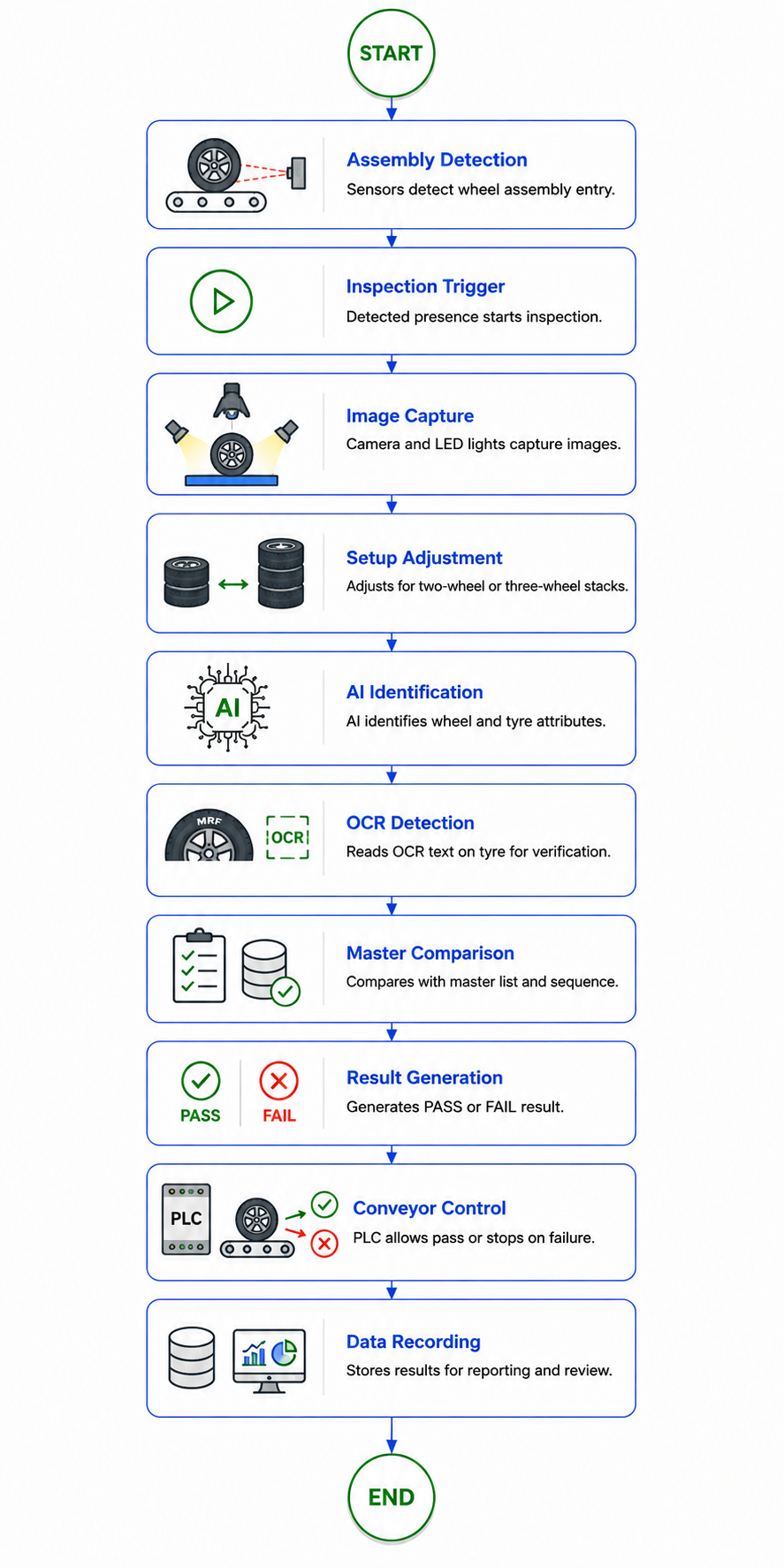
Every wheel assembly passes through a structured inspection workflow, from sensor-based detection and image capture to AI analysis and sequence validation. The system then communicates the inspection outcome to the application, database, and PLC-controlled conveyor.
Step 1: Assembly Detection
Photo-electric sensors detect the wheel assembly entering the inspection station.
Step 2: Inspection Trigger
The detected presence automatically initiates the inspection process.
Step 3: Image Capture
An industrial camera and four LED lights capture images of the wheel and tyre assembly.
Step 4: Setup Adjustment
The inspection arrangement adapts to two-wheel and three-wheel stack configurations.
Step 5: AI Identification
Pre-trained AI models analyse images to identify wheel and tyre attributes.
Step 6: OCR Detection
The system recognizes OCR text present on the tyre for additional verification.
Step 7: Master Comparison
Detected information is compared with the uploaded master list and required assembly sequence.
Step 8: Result Generation
The application generates a PASS or FAIL result according to the comparison outcome.
Step 9: Conveyor Control
The PLC allows a valid assembly to proceed or stops the conveyor for a failed inspection.
Step 10: Data Recording
Inspection results and relevant information are stored for reporting and future review.
Why Manufacturers Choose Our Wheel Inspection Software?
Improve material availability, warehouse responsiveness and shop-floor visibility through a connected digital workflow.
Consistent Verification
Applies the same inspection logic across wheel and tyre assemblies for dependable quality checks.
Production Sequence Control
Helps ensure assemblies are presented according to the required manufacturing sequence.
Early Mismatch Detection
Identifies incorrect wheel and tyre combinations before they continue through the production process.
Faster Troubleshooting
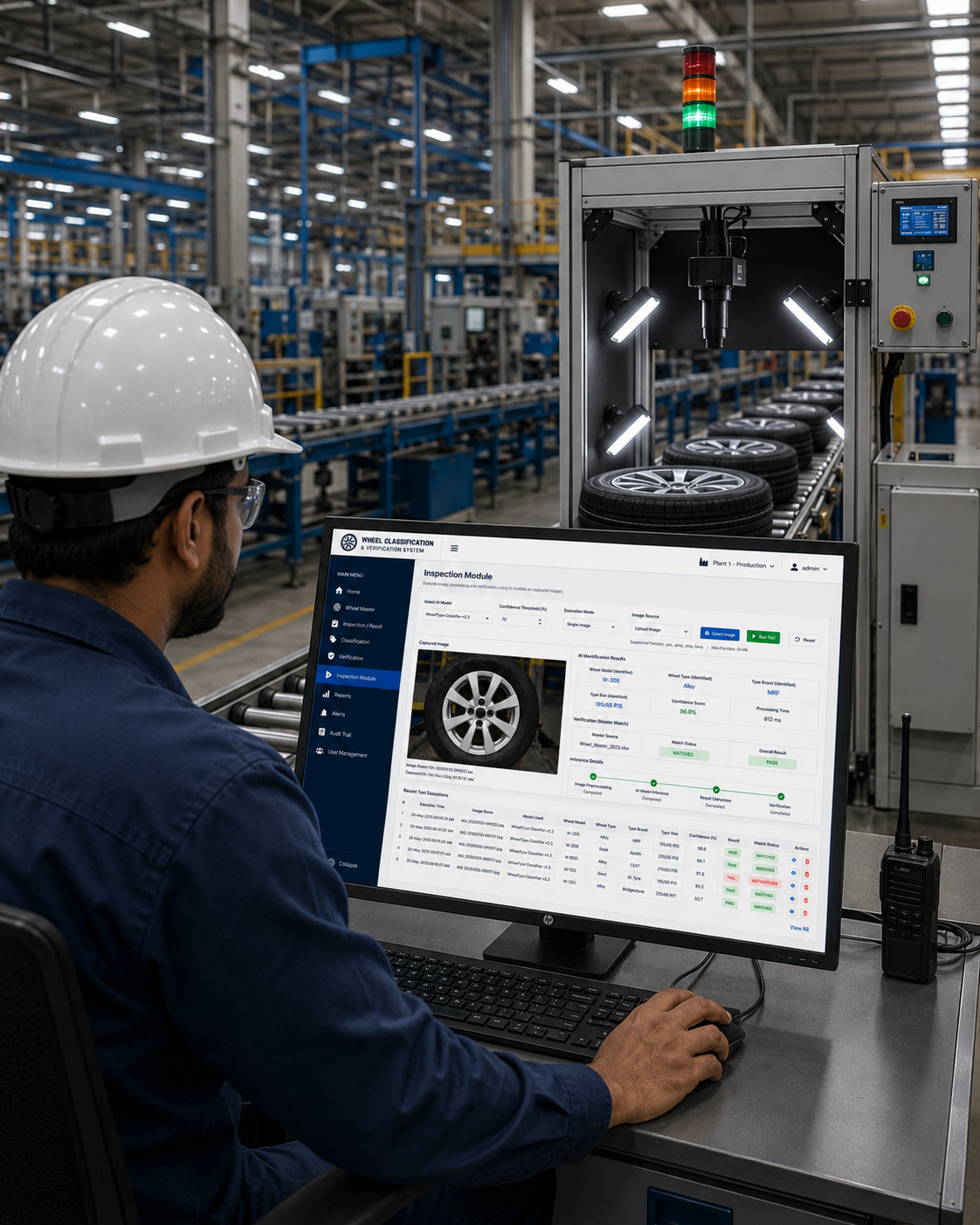
Fault images and inspection information help operators investigate failed assemblies more efficiently.
Operational Transparency
I/O monitoring provides clear visibility into sensors, triggers, conveyor controls, and system conditions.
User Activity Tracking
Audit trails maintain application access and activity records for improved operational accountability.
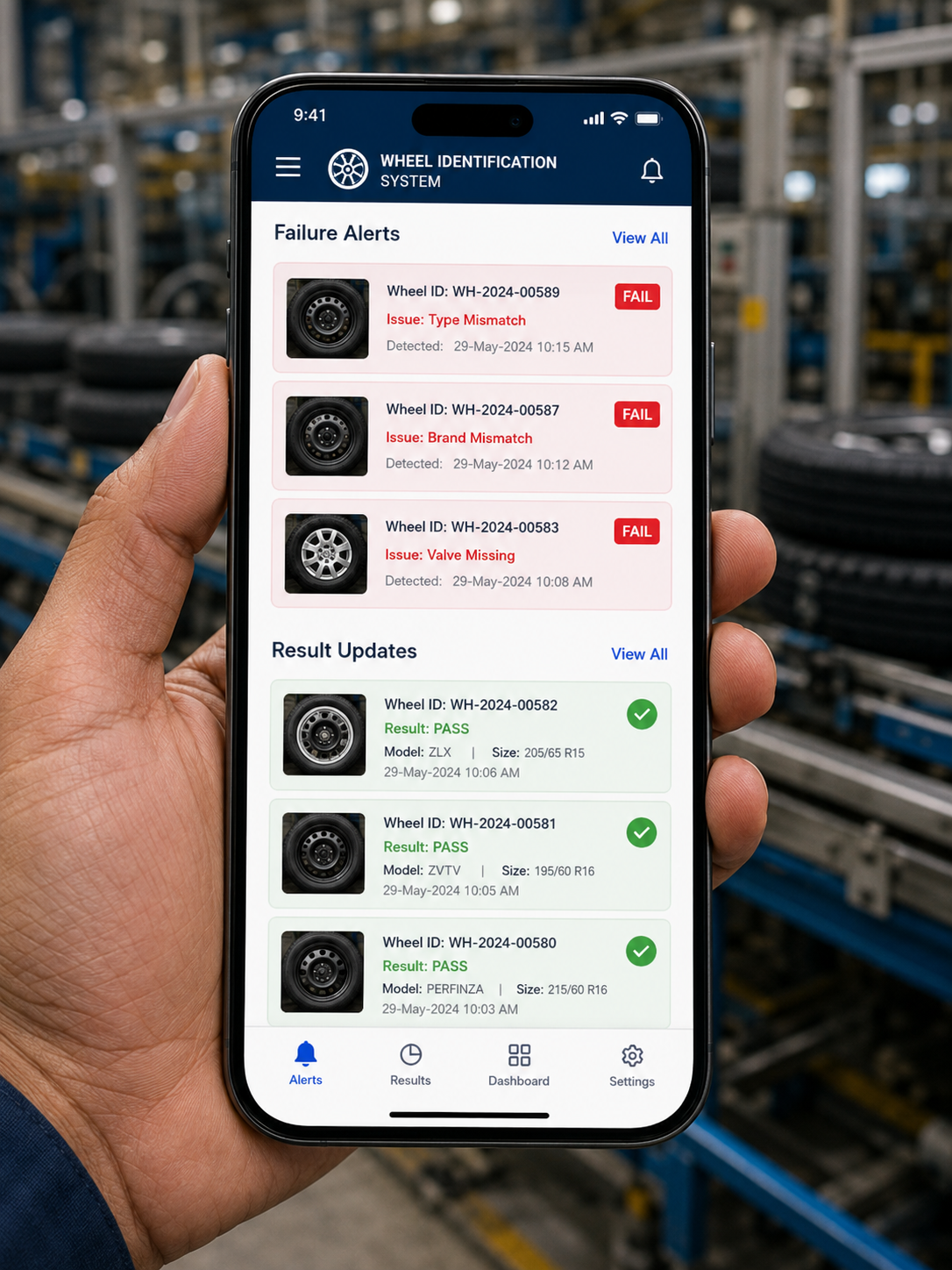
Mobile App for Wheel Inspection System
The mobile application extends inspection visibility beyond the main workstation, allowing authorised users to stay informed about production quality activities.
It provides convenient access to important inspection information and helps teams respond quickly to quality-related events.
Mobile App Benefits
- Live Status – Monitor wheel inspection status in real time.
- Result Updates – Get instant updates on inspection results.
- Failure Alerts – Receive immediate alerts when wheel defects are detected.
- History Access – Access previous inspection results and records anytime.
- Remote Monitoring – Monitor wheel inspections and system activity remotely.
Reports of Wheel Inspection System
The Reports Module organizes inspection results and test information into a structured format for review and analysis. These reports help teams understand inspection performance, investigate failures, and maintain a reliable record of wheel and tyre verification activities.
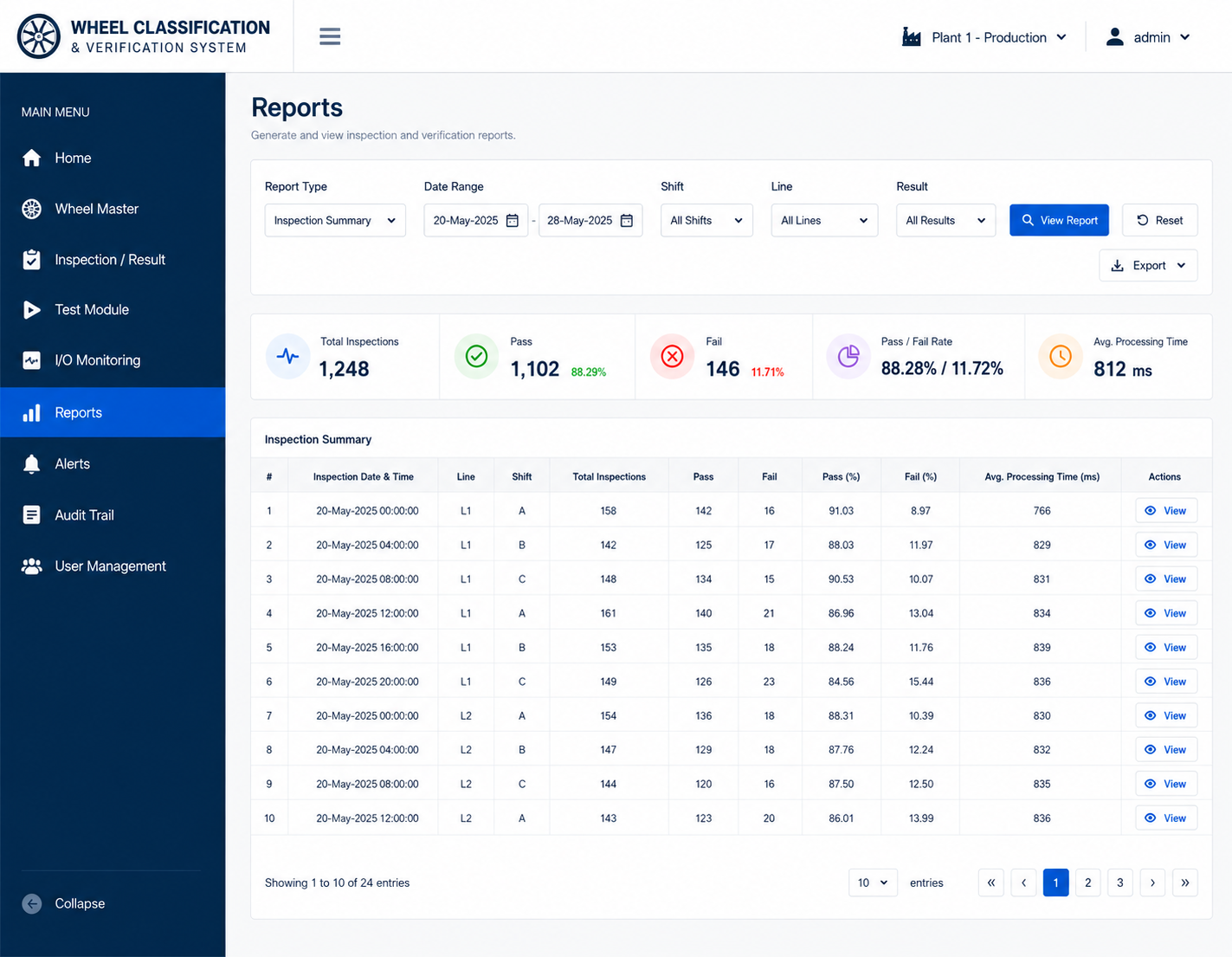
Reports contains:
- Inspection History – Access complete records of previous wheel inspections.
- PASS/FAIL Analysis – Review inspection outcomes and identify quality trends.
- Failure Tracking – Track failed inspections and monitor recurring wheel defects.
- Result Review – Quickly review detailed inspection results for each wheel.
- Quality Traceability – Maintain traceable inspection records for consistent quality control.
Our Trusted Clients
We’re proud to collaborate with industry leaders and innovative companies



















Intelligent Wheel Identification
The AI inspection engine extracts multiple identification parameters from each captured wheel and tyre assembly. OCR recognition adds another layer of verification by reading tyre markings during the inspection cycle.
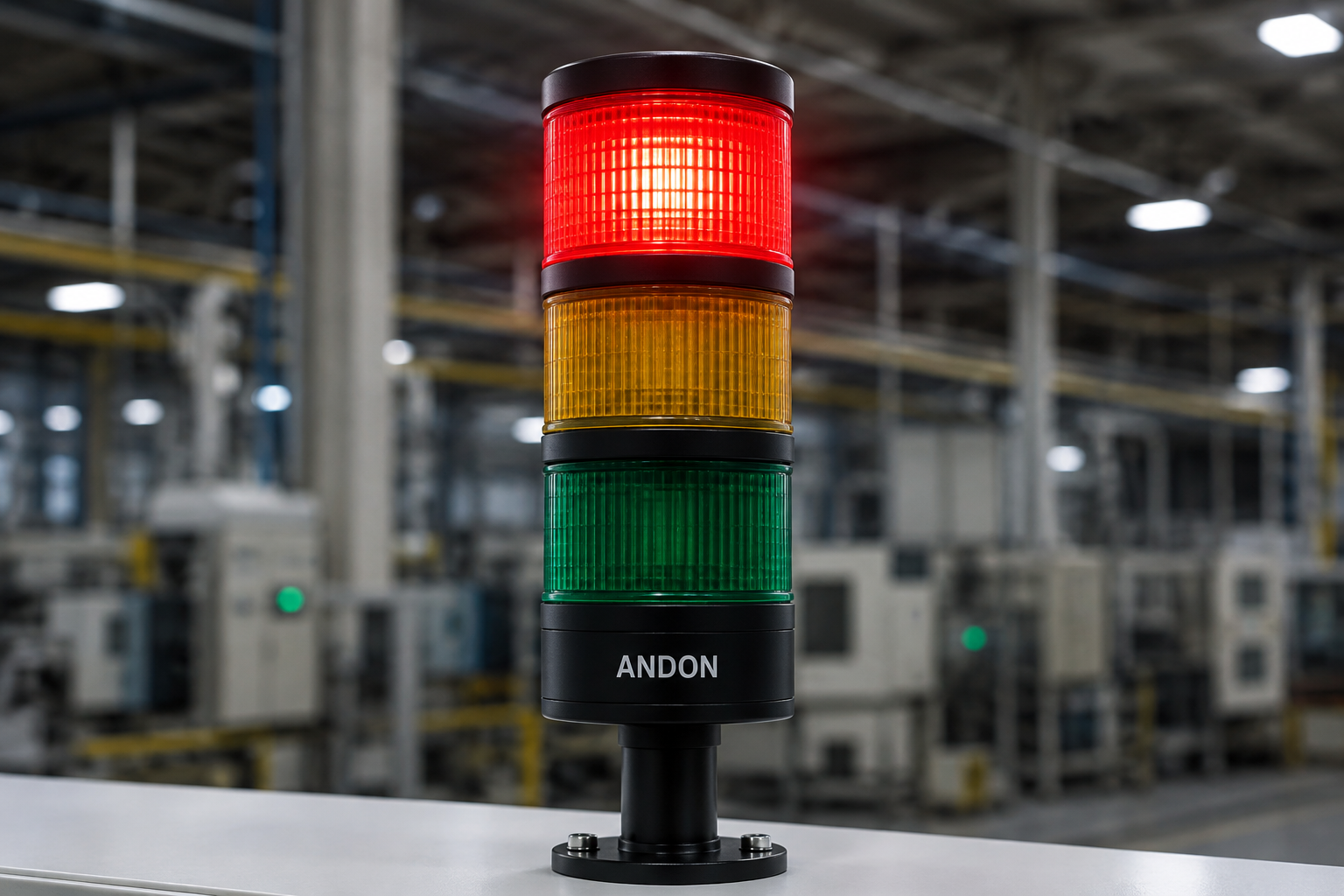
Wheel Model & Type
Automatically recognize the wheel model and type for accurate identification and traceability.
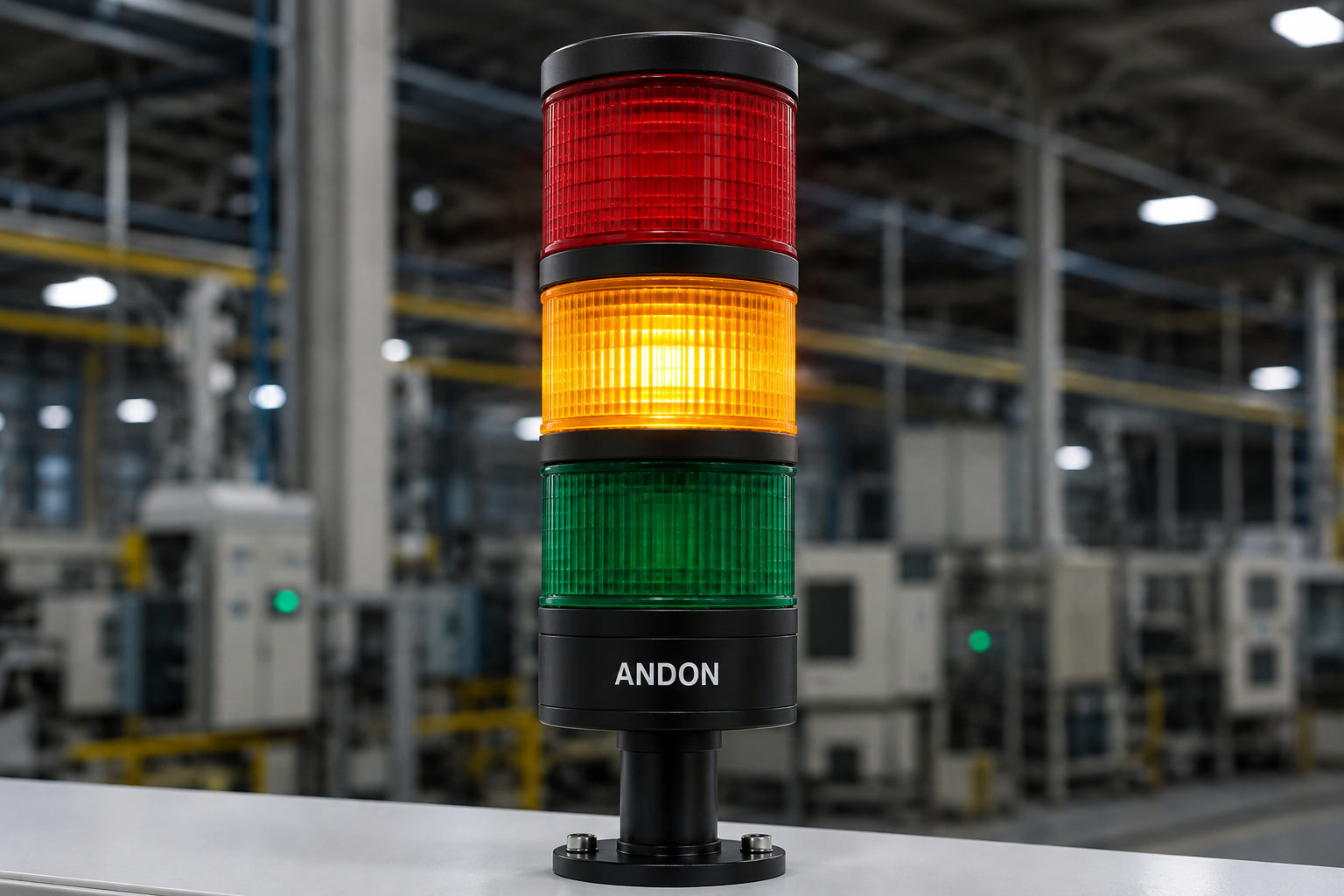
Tire Brand
Detect and identify the tire brand for quality and specification verification.
Tire Size
Accurately identify and validate the tire size against predefined specifications.
Valve Presence
Automatically verify the presence and correct positioning of the wheel valve.