Total Productive Maintenance System Software
Maximize Equipment Efficiency with Total Productive Maintenance Software. Transform your maintenance operations with Total Productive Maintenance System Software designed to improve equipment reliability, reduce unplanned downtime, and strengthen production performance. Connect maintenance teams, operators, machines, and production data through a centralized digital platform.
SCHEDULE A DEMODigitize Your Total Productive Maintenance Process
Total Productive Maintenance System Software helps manufacturers improve equipment effectiveness by centralizing maintenance activities, scheduling preventive maintenance, and monitoring machine performance in a connected digital environment. It supports the complete maintenance lifecycle, from equipment registration and inspection to work order completion and performance analysis.
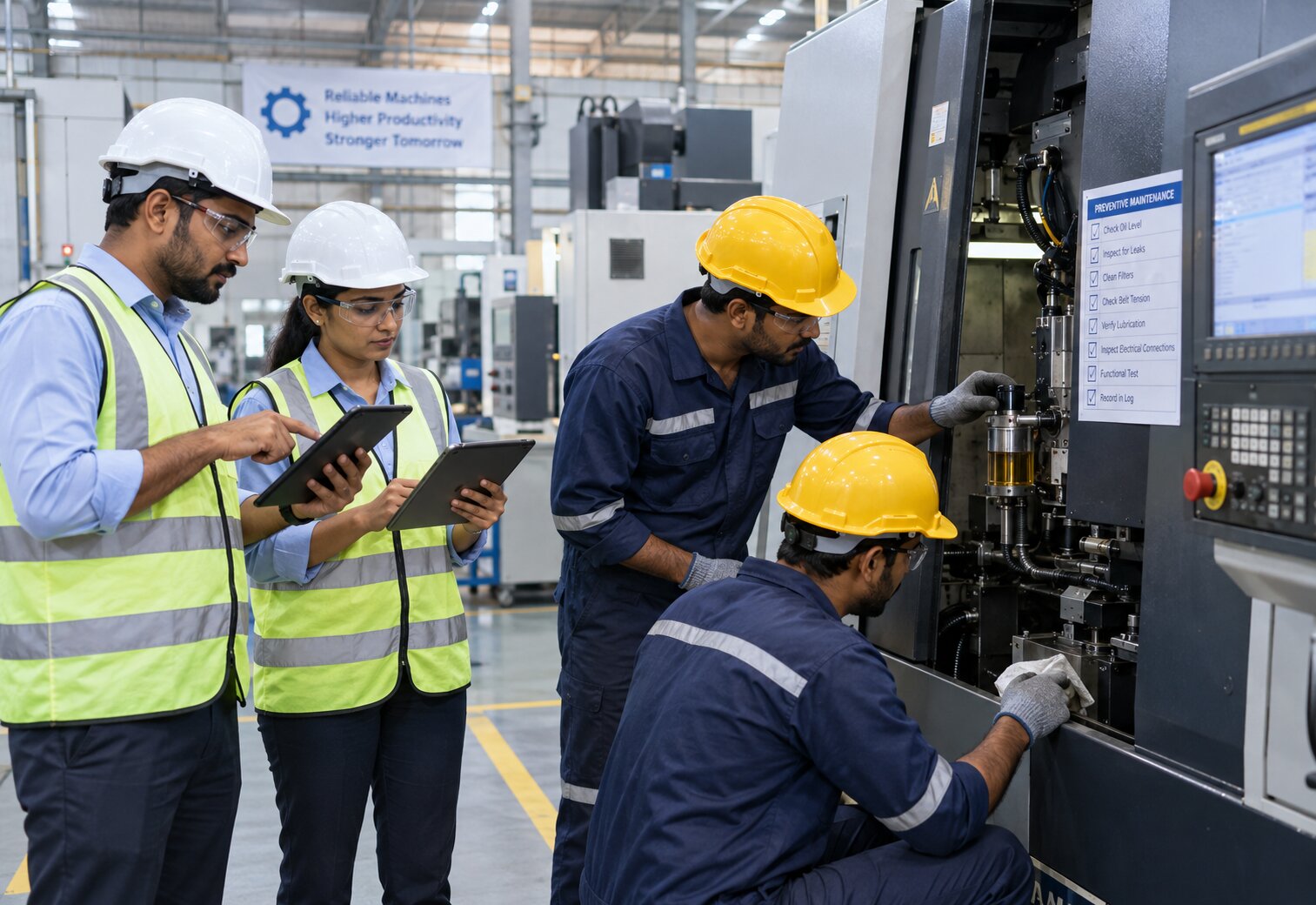
Objectives of TPMS Software
- Improve machine availability and reliability.
- Reduce unplanned equipment downtime.
- Schedule and manage preventive maintenance activities.
- Monitor maintenance costs and equipment performance.
- Involve operators in routine equipment care.
- Support continuous improvement initiatives.
The Eight Pillars of TPM
Total Productive Maintenance (TPM) is a set of strategic initiatives focusing on maintaining and improving production and quality systems through the machines, equipment, processes and employees that add value to an organization. TPM has eight pillars that are mainly aimed at proactively improving the reliability of machines.
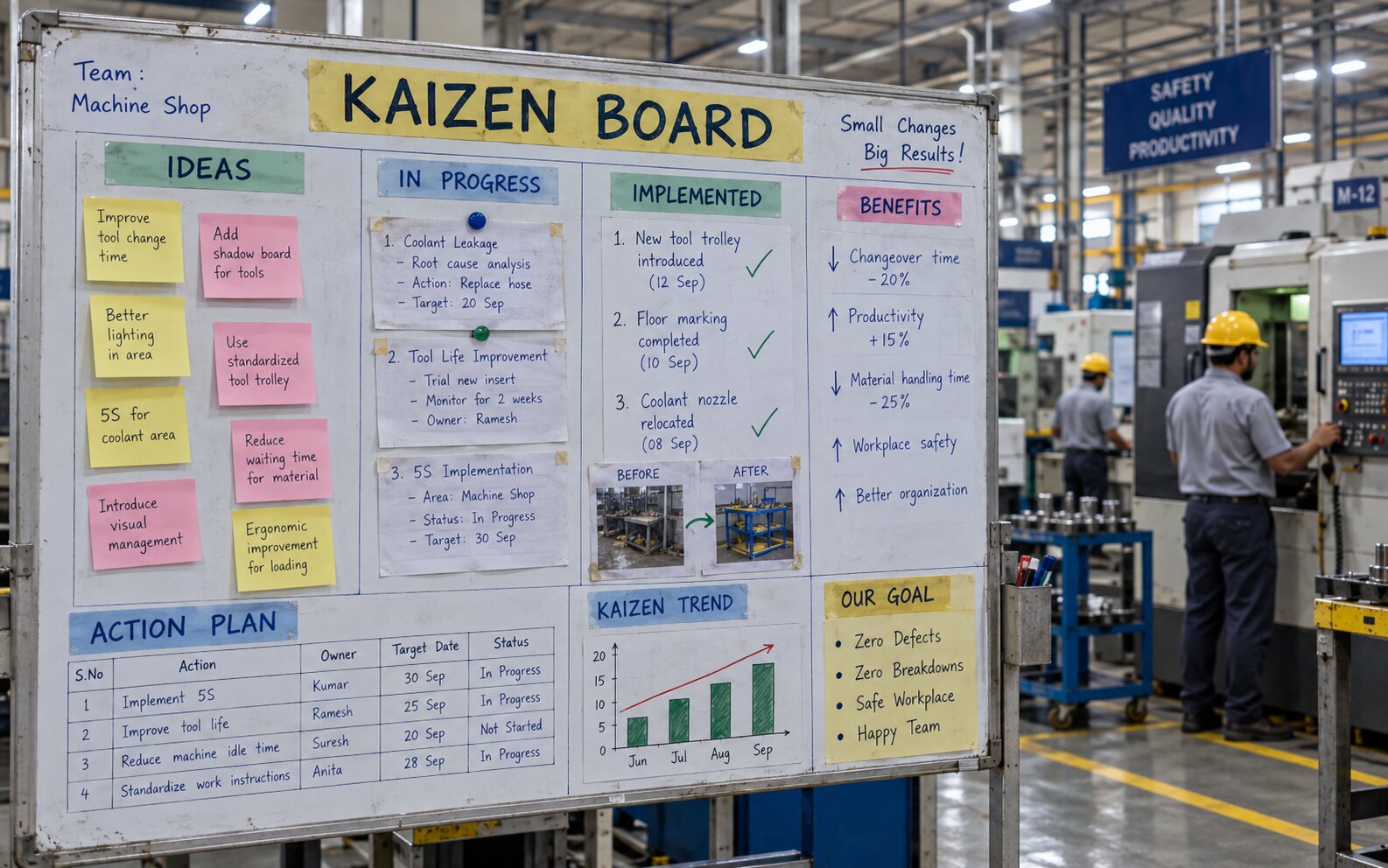
Focused Improvements (Kaizen)
- Continuous improvement process focused on improving quality and productivity.
- Identifies, analyzes, and eliminates non-value-adding activities.
- Forms cross-functional teams to identify equipment-related problems and set improvement goals.
- Maps the current state to establish a baseline for performance measurement.
- Analyzes root causes and implements effective improvement solutions.
- Ensures that implemented improvements are sustained over time.
Autonomous Maintenance
- Creates machine ownership by involving operators in maintenance activities.
- Operators perform daily cleaning and minor maintenance tasks.
- Improves workers' skill levels through a better understanding of equipment operations.
- Supports the multi-skilling objective of a lean organization.
- Reduces capital investments through reliable equipment performance.
- Increases machine lifespan through continuous monitoring and maintenance.
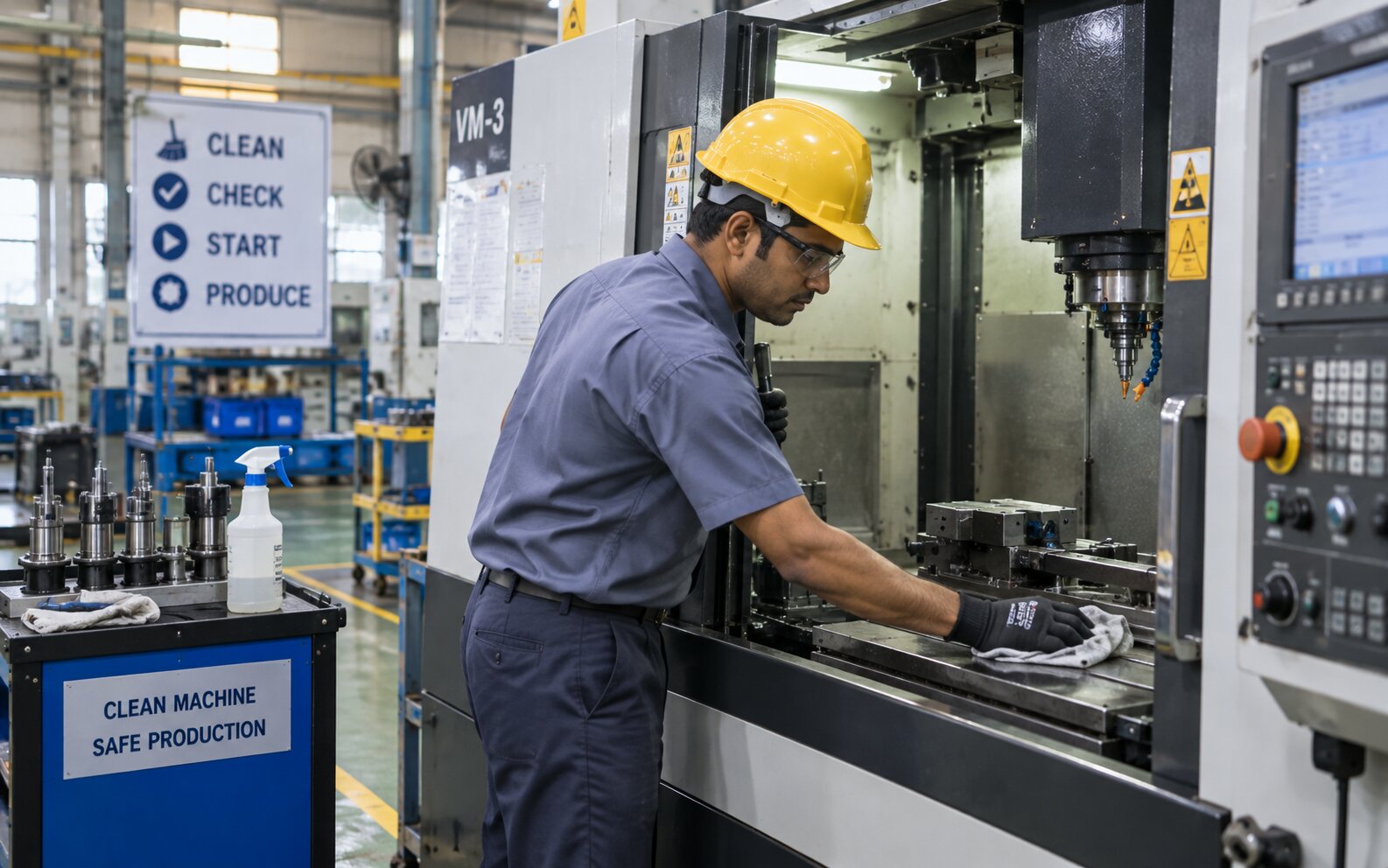
Planned Maintenance
- Planned or preventive maintenance is performed before machine breakdowns occur.
- Maintenance schedules are planned based on machine failure rates and equipment age.
- Helps organizations reduce unexpected equipment breakdowns.
- Provides prior information about scheduled maintenance activities.
- Allows production teams to build the required inventory for maintenance periods.
- Supports the smooth execution of maintenance without unexpected interruptions.
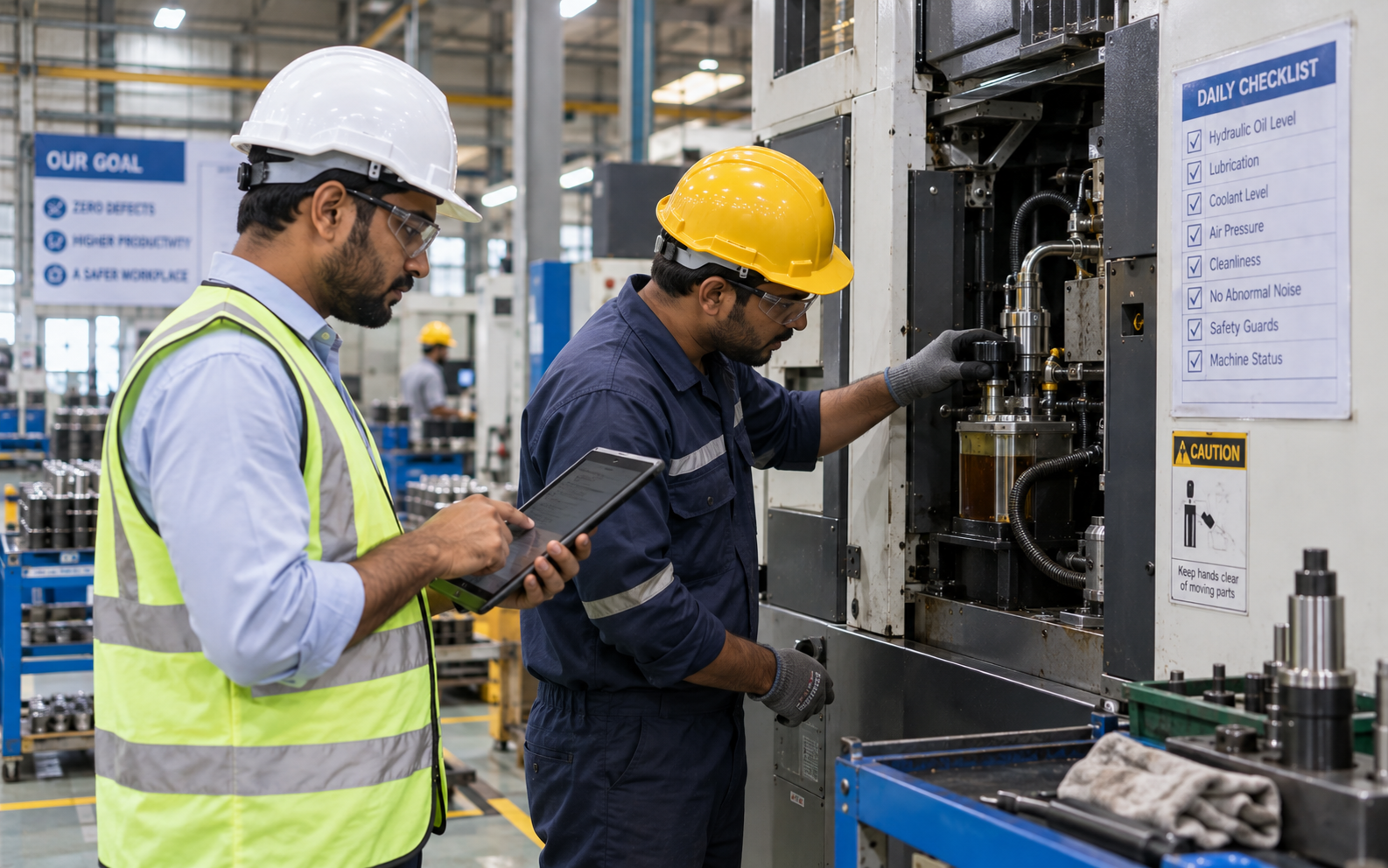
Early Equipment Maintenance (EEM)
- Builds high equipment efficiency from the design and development stage.
- Designs equipment to be easy to operate, clean, inspect, and maintain.
- Ensures equipment is delivered to the site according to autonomous maintenance standards.
- Supports productivity and output quality from the first day of commissioning.
- Improves accessibility of equipment parts and simplifies changeover activities.
- Includes ergonomic design, visual indicators, and increased safety features.
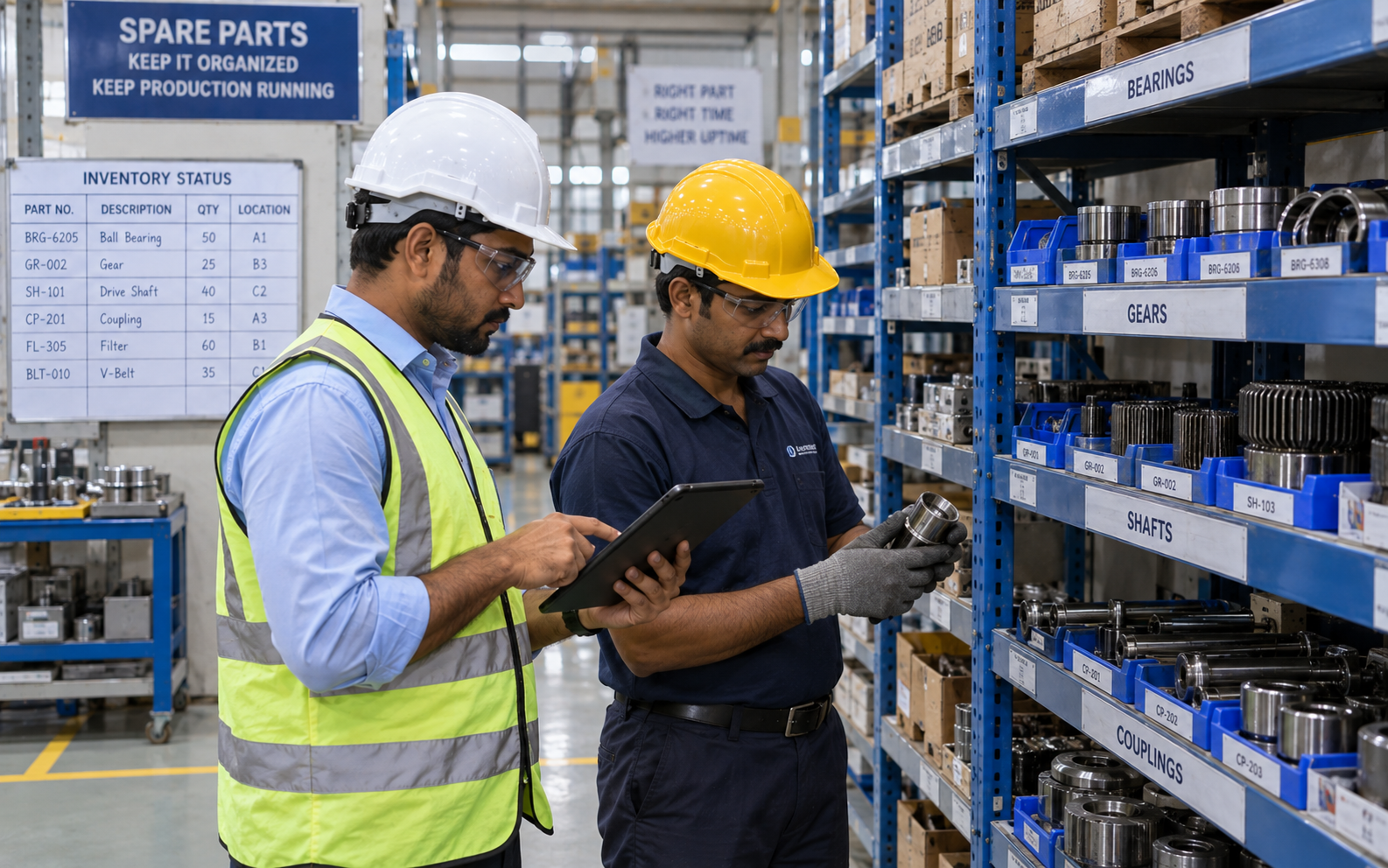
Quality Maintenance
- Ensures equipment can detect and prevent errors during production.
- Improves process reliability and supports first-time-right component production.
- Helps reduce the Cost of Poor Quality (COPQ).
- Uses lean tools such as autonomation (Jidoka) to detect abnormal conditions.
- Uses indicator lights to report equipment and process abnormalities.
- Reduces the need for tedious manual monitoring by operators.
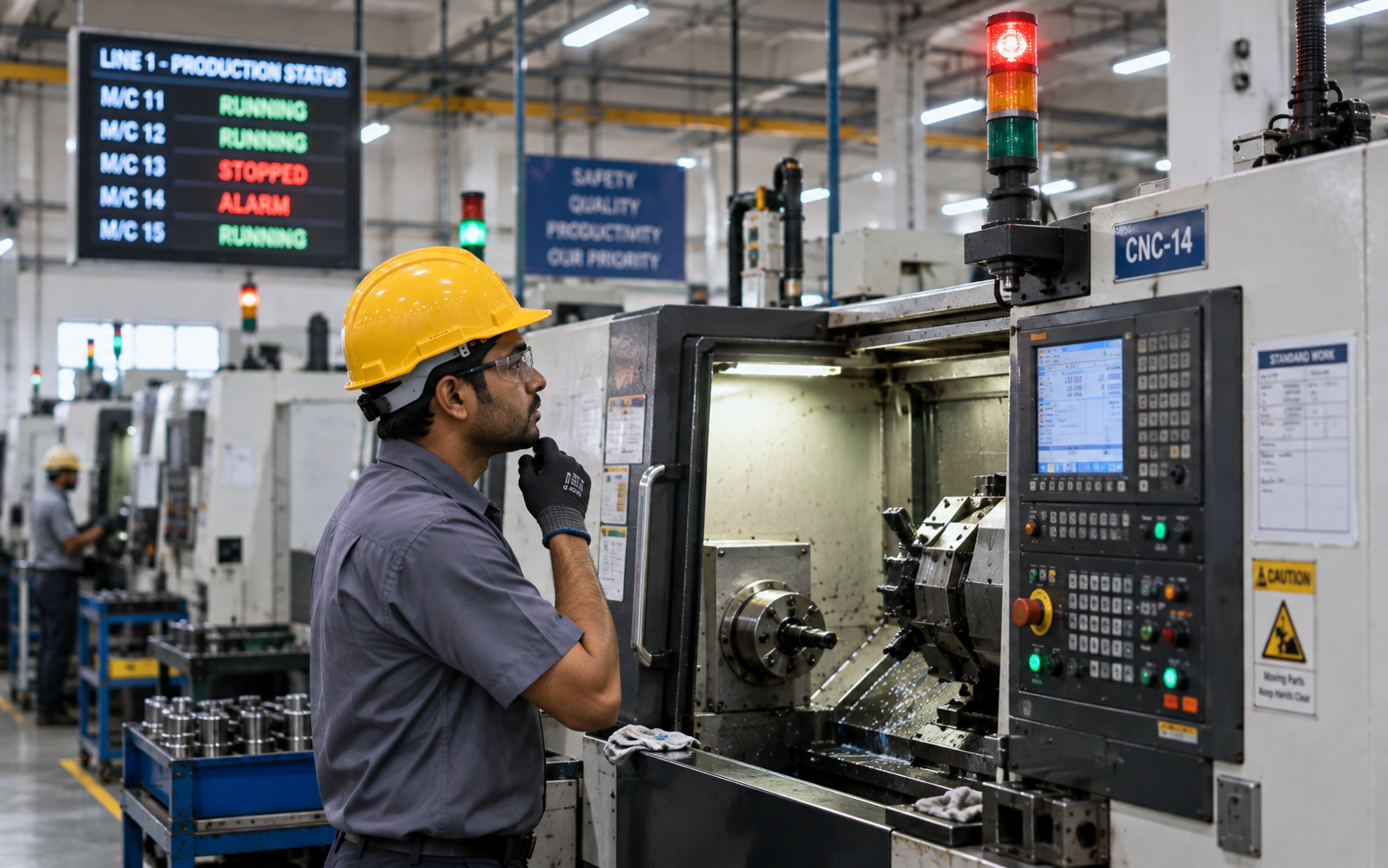
Training and Education
- Companywide initiative involving operators, maintenance teams, and senior managers.
- Improves operators' skills to perform basic maintenance activities.
- Helps operators take responsibility for maintenance tasks previously handled by maintenance teams.
- Develops advanced preventive maintenance and analytical skills among maintenance personnel.
- Encourages proactive problem-solving within maintenance teams.
- Trains managers to become competent mentors and participate in coaching programs.
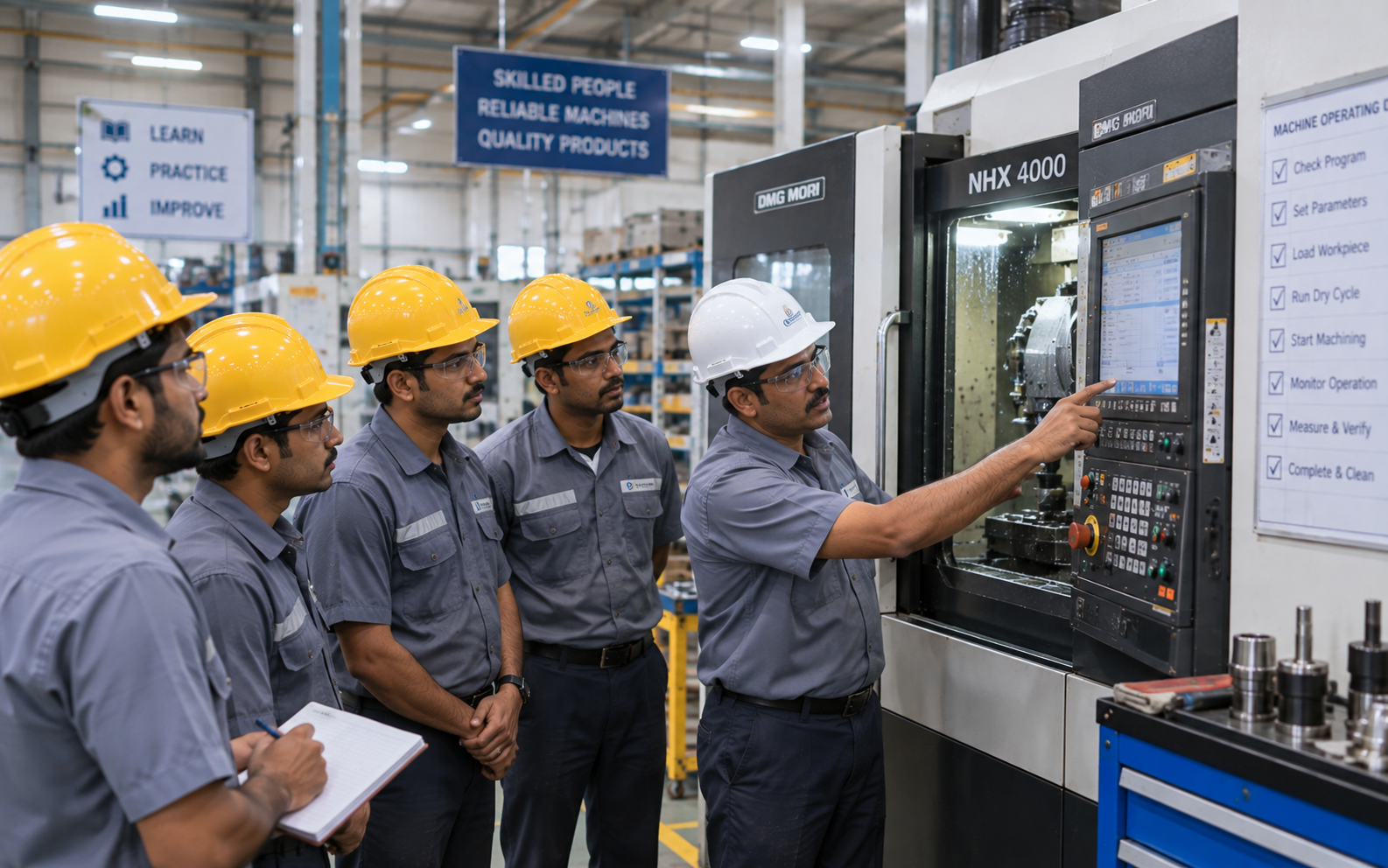
Safety, Health & Environment
- Ensures workers are provided with a safe working environment.
- Focuses on identifying and eliminating unsafe conditions.
- Supports improvements in productivity, quality, and delivery performance.
- Uses machine guards to make equipment safer for operators.
- Implements Standard Operating Procedures (SOPs), personal protective equipment, and first-aid kits.
- Promotes a safer workplace and a more productive workforce.
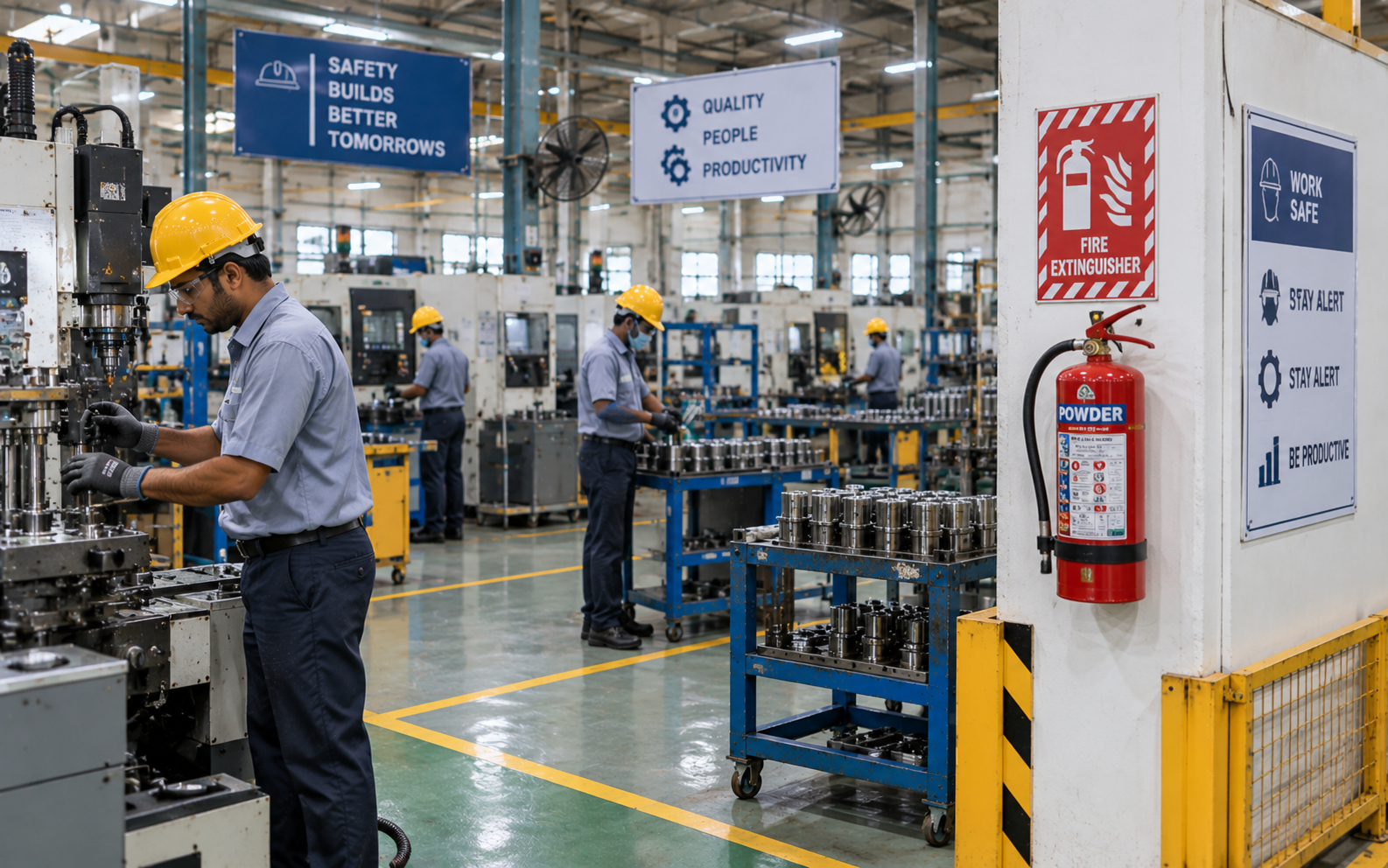
Office TPM
- Helps supportive functions understand and apply lean principles in their operations.
- Improves the efficiency of services provided to value-adding processes.
- Applies TPM principles as standalone techniques to improve support functions.
- Improves administrative procedures such as order processing.
- Supports the timely and accurate delivery of materials to the shop floor.
- Improves workflow by ensuring support processes operate efficiently.
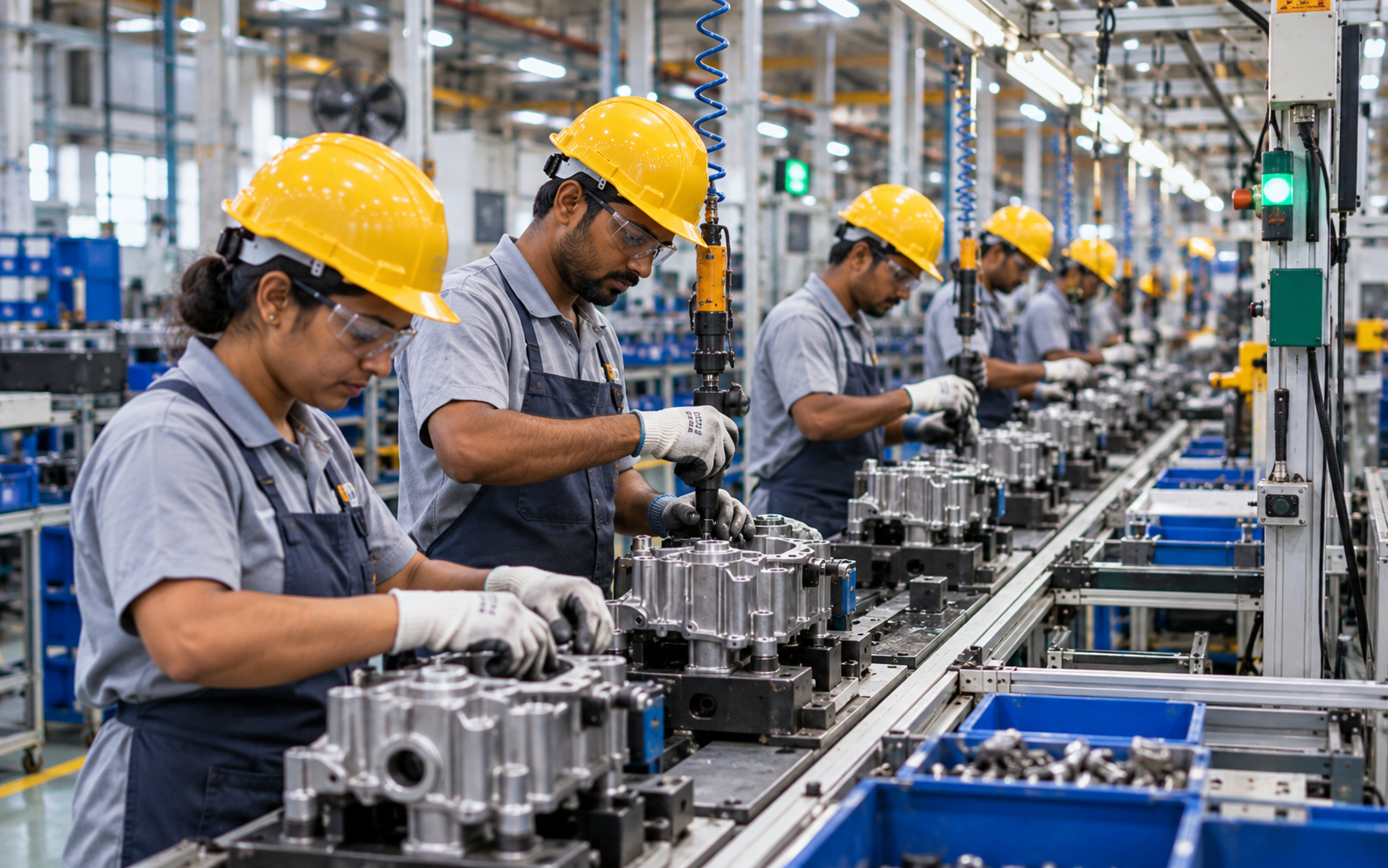
From Equipment Monitoring to Continuous Improvement
A structured TPMS maintenance workflow helps organizations identify equipment abnormalities, assign maintenance actions, and monitor the effectiveness of completed work. It supports a connected process from equipment monitoring and issue identification to maintenance execution and performance analysis.
-
1
Equipment Monitoring
Monitor machine conditions, inspections, operating status, and reported abnormalities.
-
2
Issue Identification
Record equipment issues through operator checklists, alerts, or maintenance reports.
-
3
Work Order Creation
Generate or assign maintenance work orders with priority, responsibility, and required actions.
-
4
Maintenance Execution
Technicians perform inspections, repairs, servicing, or replacement activities.
-
5
Verification & Closure
Record completed work, observations, and relevant maintenance findings before closing the work order.
-
5
Performance Analysis
Review downtime, recurring failures, maintenance completion, and equipment performance to support improvement.
Production Monitoring Enterprise Integration
Connect production monitoring with machines, shop-floor systems, and enterprise applications to create a connected manufacturing environment. Integrate real-time production data, alerts, traceability, and business information through a centralized platform.
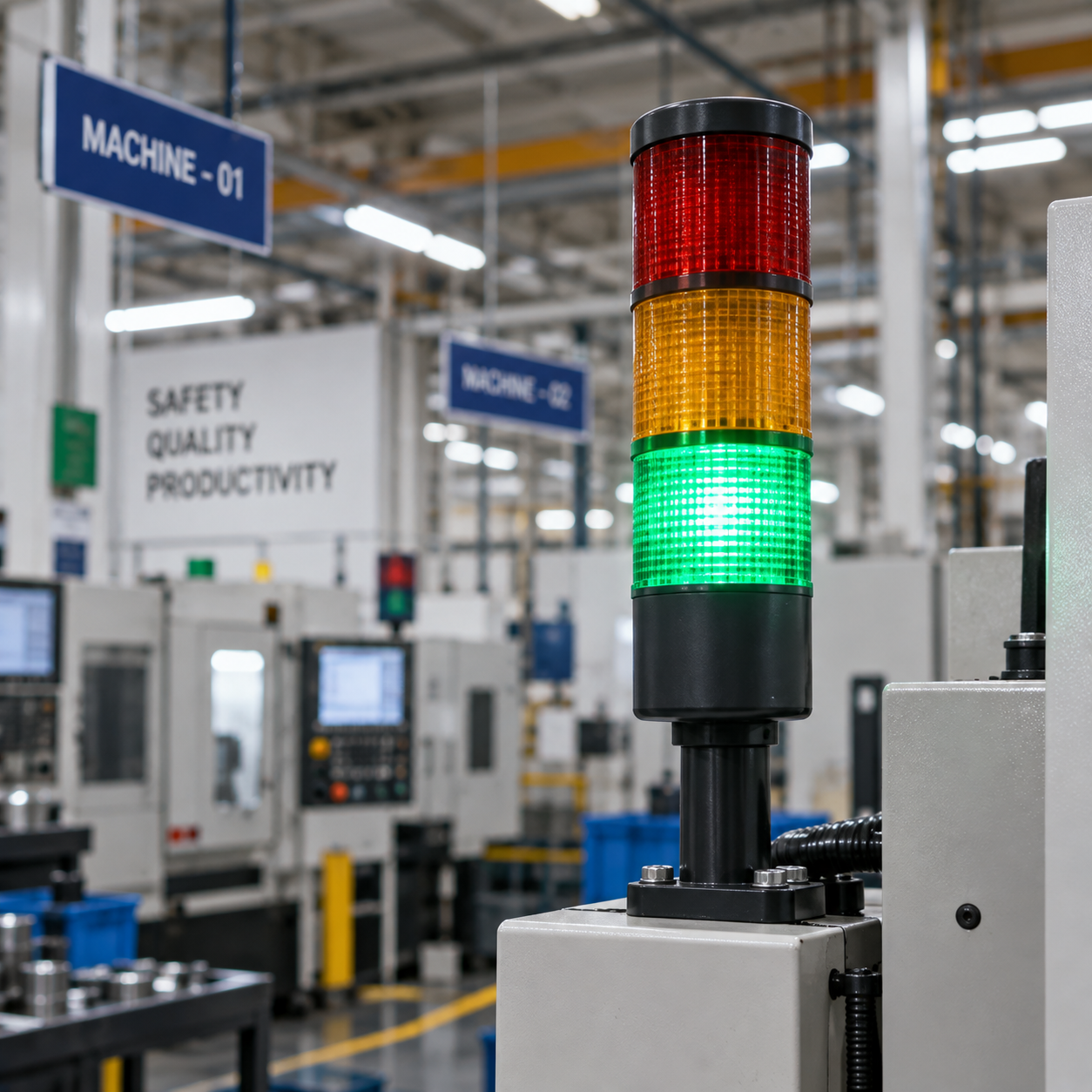
Andon System Integration
Connect real-time equipment alerts with maintenance escalation to improve visibility of machine issues and maintenance response.
- Receive machine breakdown and abnormality notifications.
- Display maintenance-related alerts on shop-floor dashboards.
- Escalate unresolved equipment issues to supervisors or technicians.
- Link production stoppages with maintenance actions.
- Track the time taken to respond to equipment-related alerts.
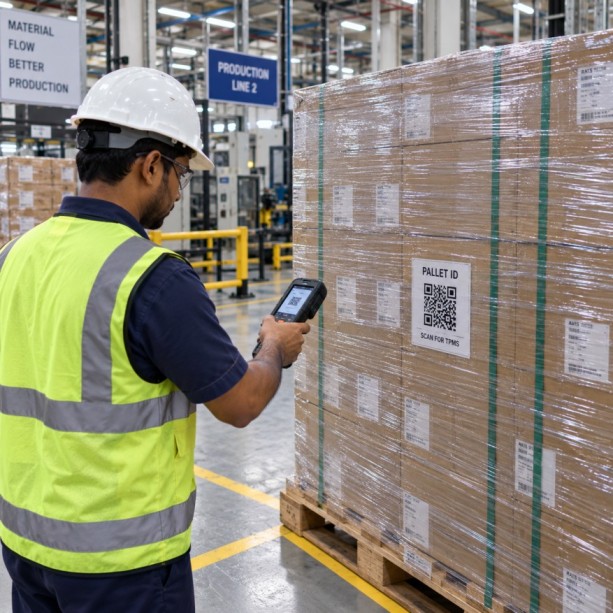
Traceability Integration
Connect equipment history with production records to support investigations and improve access to relevant equipment information.
- Associate equipment IDs with production stations.
- Link maintenance events with relevant production records where supported.
- Review equipment history during quality investigations.
- Identify maintenance activities performed on production assets.
- Support analysis of potential relationships between equipment issues and product quality.
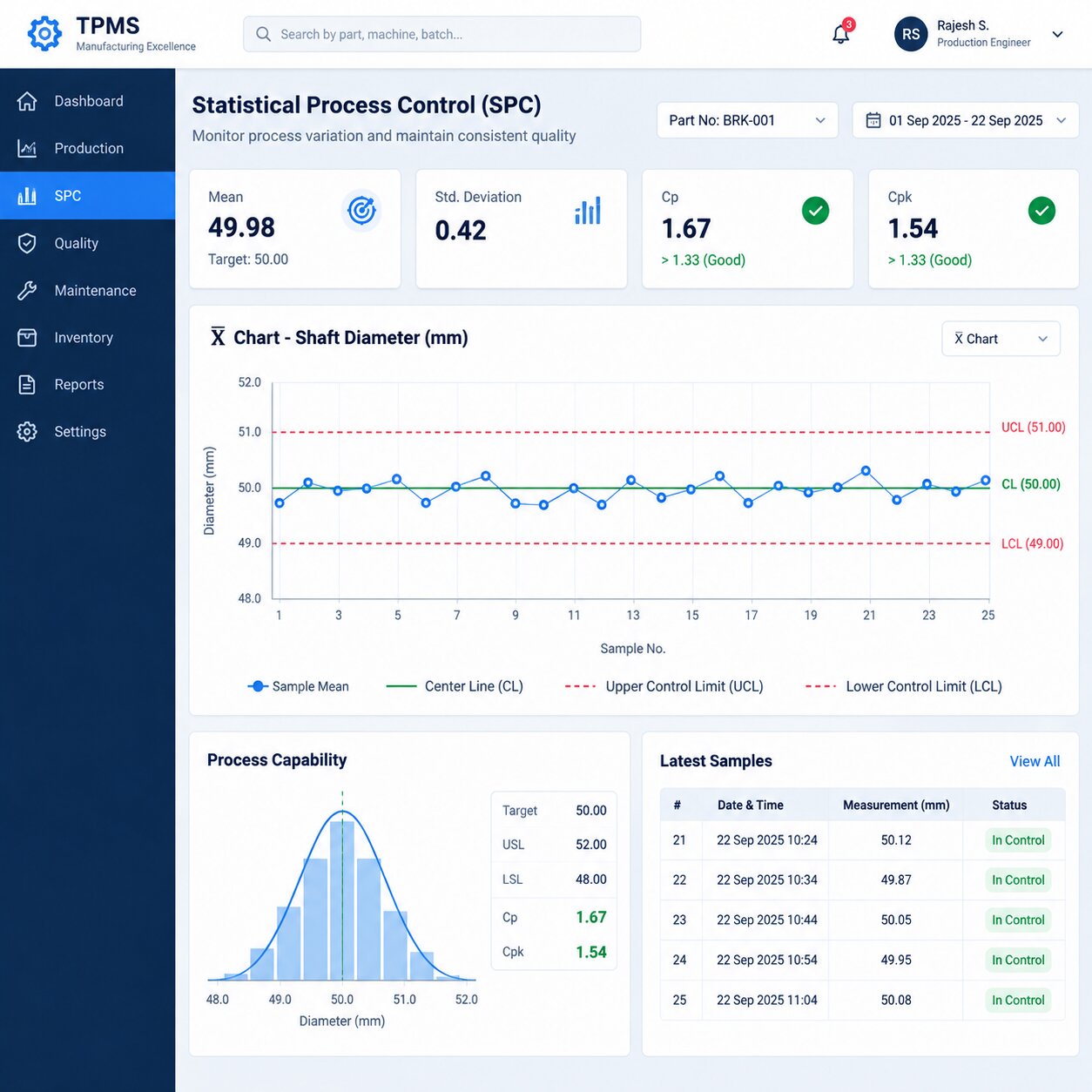
SPC Integration
Connect equipment performance with process quality data to support the investigation of process variations and equipment-related quality concerns.
- Review equipment maintenance events alongside quality trends.
- Investigate process variations that coincide with equipment abnormalities.
- Monitor equipment-related quality concerns.
- Support maintenance actions when process performance indicates a potential equipment issue.
- Connect inspection and maintenance records for analysis.
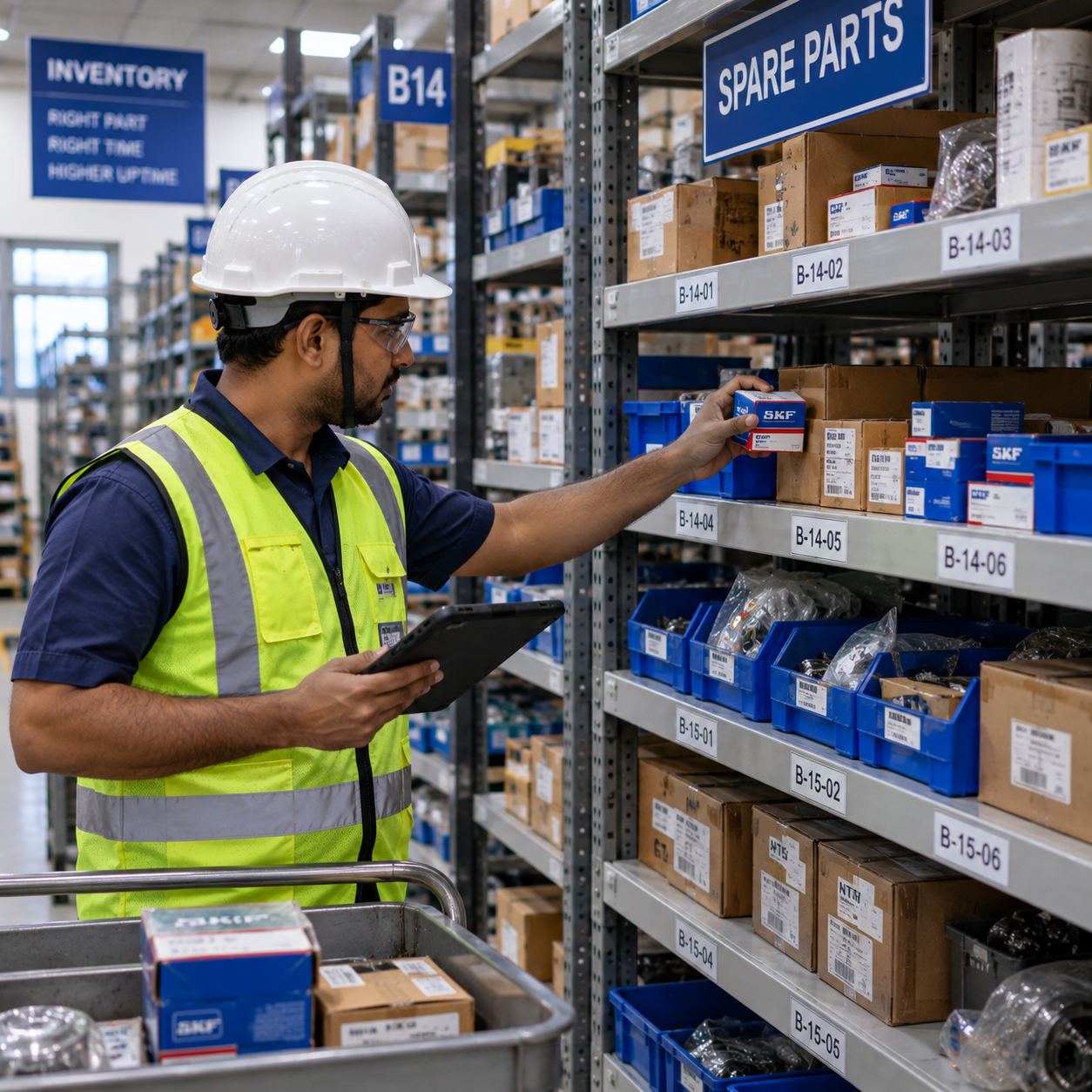
Spares Management Integration
Connect maintenance activities with spare parts information to improve parts availability and support maintenance planning.
- Link required spare parts to maintenance work orders.
- Track spare part consumption during repairs.
- Monitor inventory levels and replenishment requirements.
- Support maintenance planning based on scheduled servicing.
- Improve visibility of critical components and maintenance stock.
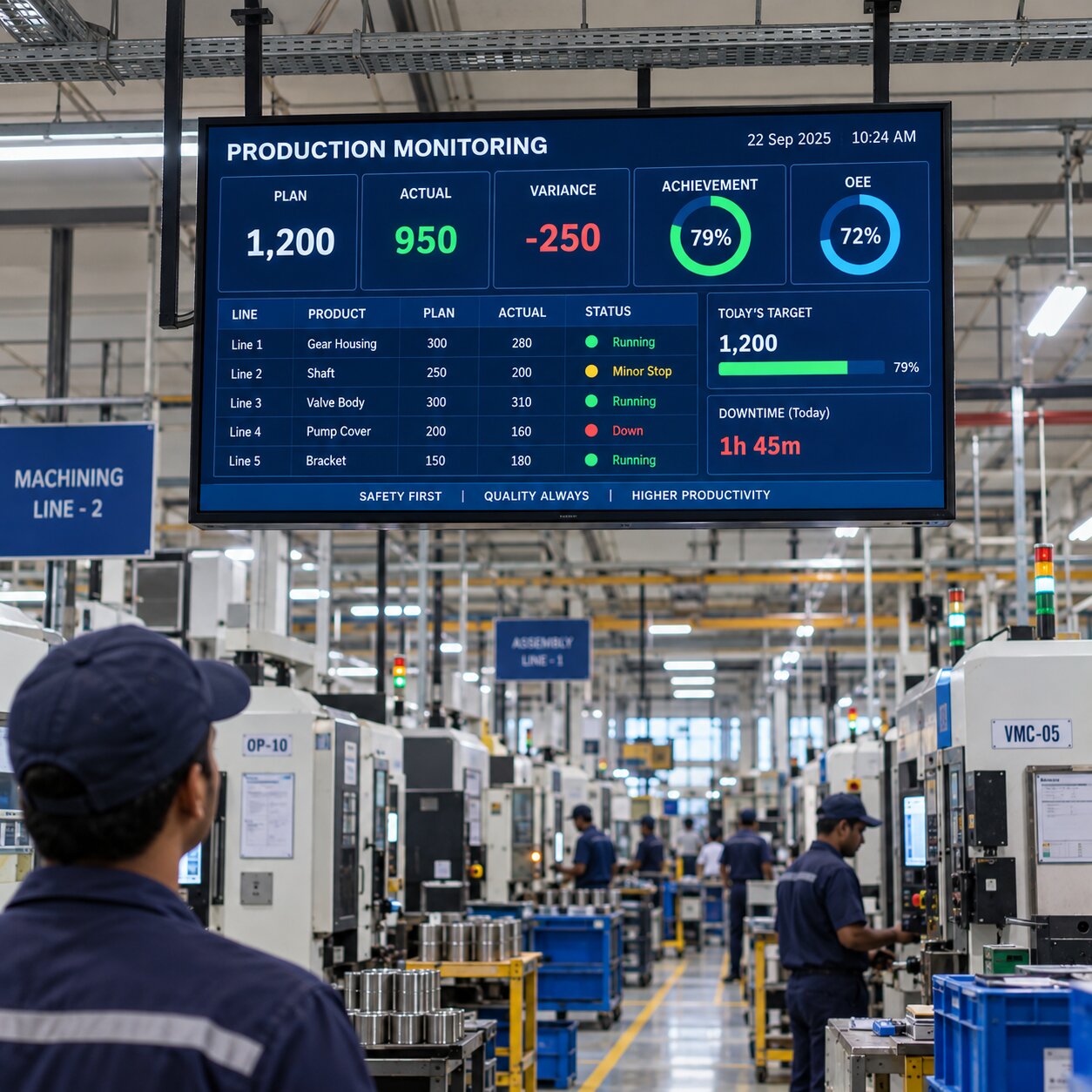
Production Monitoring Integration
Connect production monitoring with maintenance activities to improve visibility of equipment performance, production operations, and machine-related issues.
- Connect equipment information with production monitoring activities.
- Support visibility of machine performance during production operations.
- Review equipment-related issues alongside production information.
- Support identification of equipment-related production interruptions.
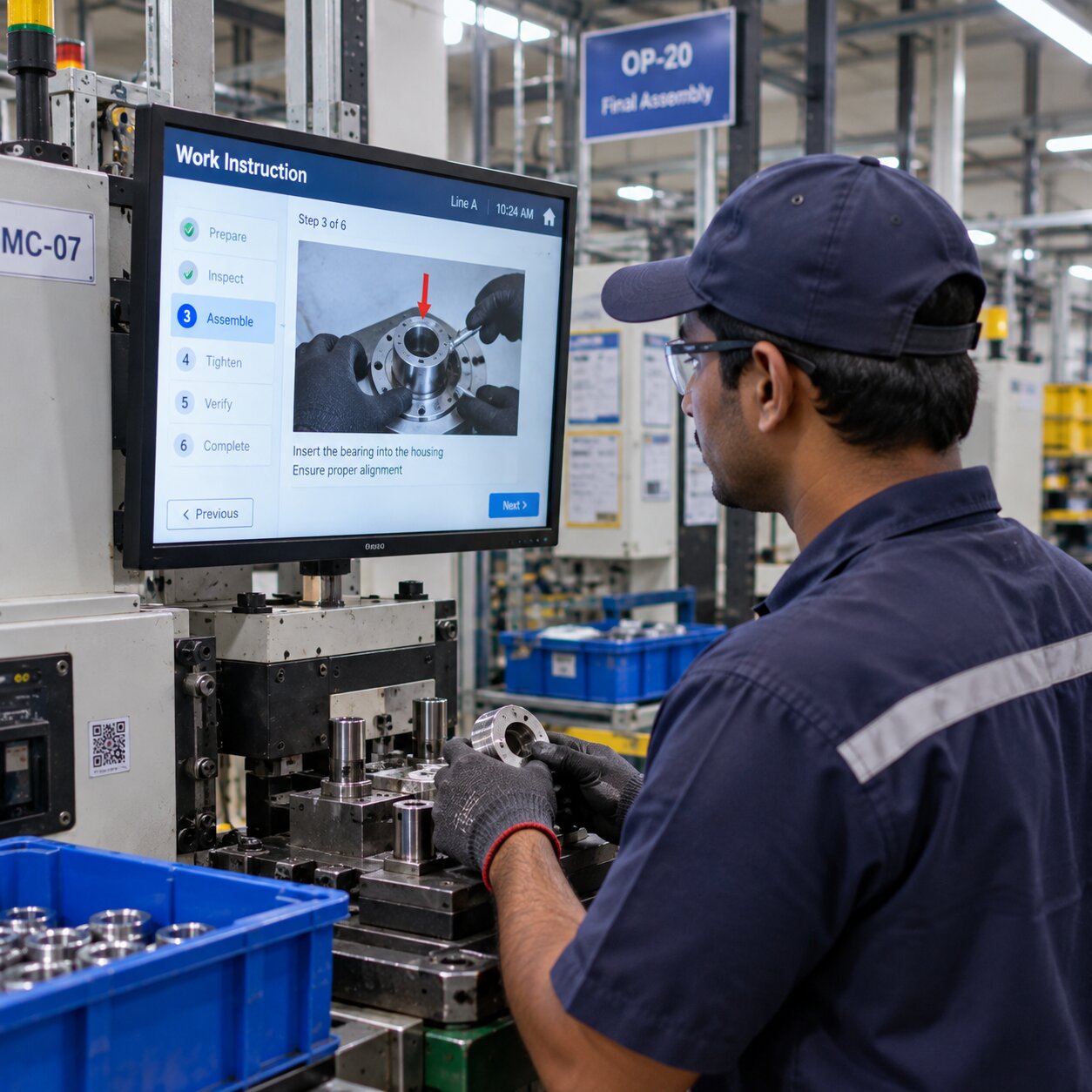
Digital Work Instructions Integration
Connect digital work instructions with maintenance activities to support standardized equipment operation, inspection, and maintenance procedures.
- Support access to standardized equipment-related instructions.
- Connect maintenance activities with relevant work instructions.
- Help operators follow defined equipment care procedures.
- Support consistent execution of maintenance-related activities.
Drive Proactive Maintenance and Equipment Performance
TPMS Software helps manufacturers move from reactive repairs to proactive equipment care through preventive maintenance, operator involvement, maintenance work orders, and performance analytics. It supports improved equipment reliability, structured maintenance execution, and continuous improvement.
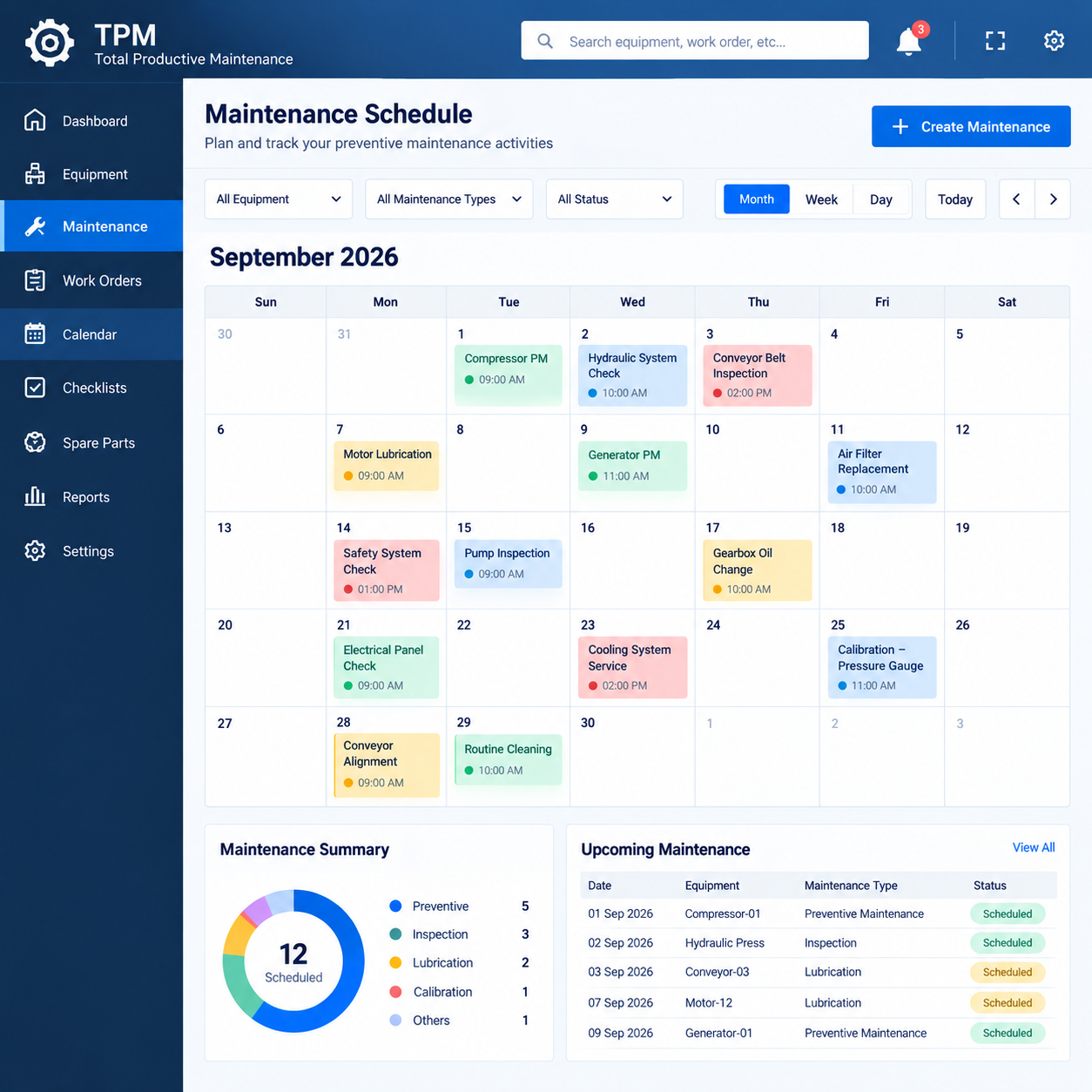
Preventive Maintenance Management
Schedule servicing at defined intervals to support equipment reliability and reduce unplanned machine failures.
- Calendar-based maintenance schedules.
- Machine runtime and cycle-based maintenance planning.
- Recurring maintenance checklists.
- Maintenance due-date notifications.
- Maintenance history and completion tracking.
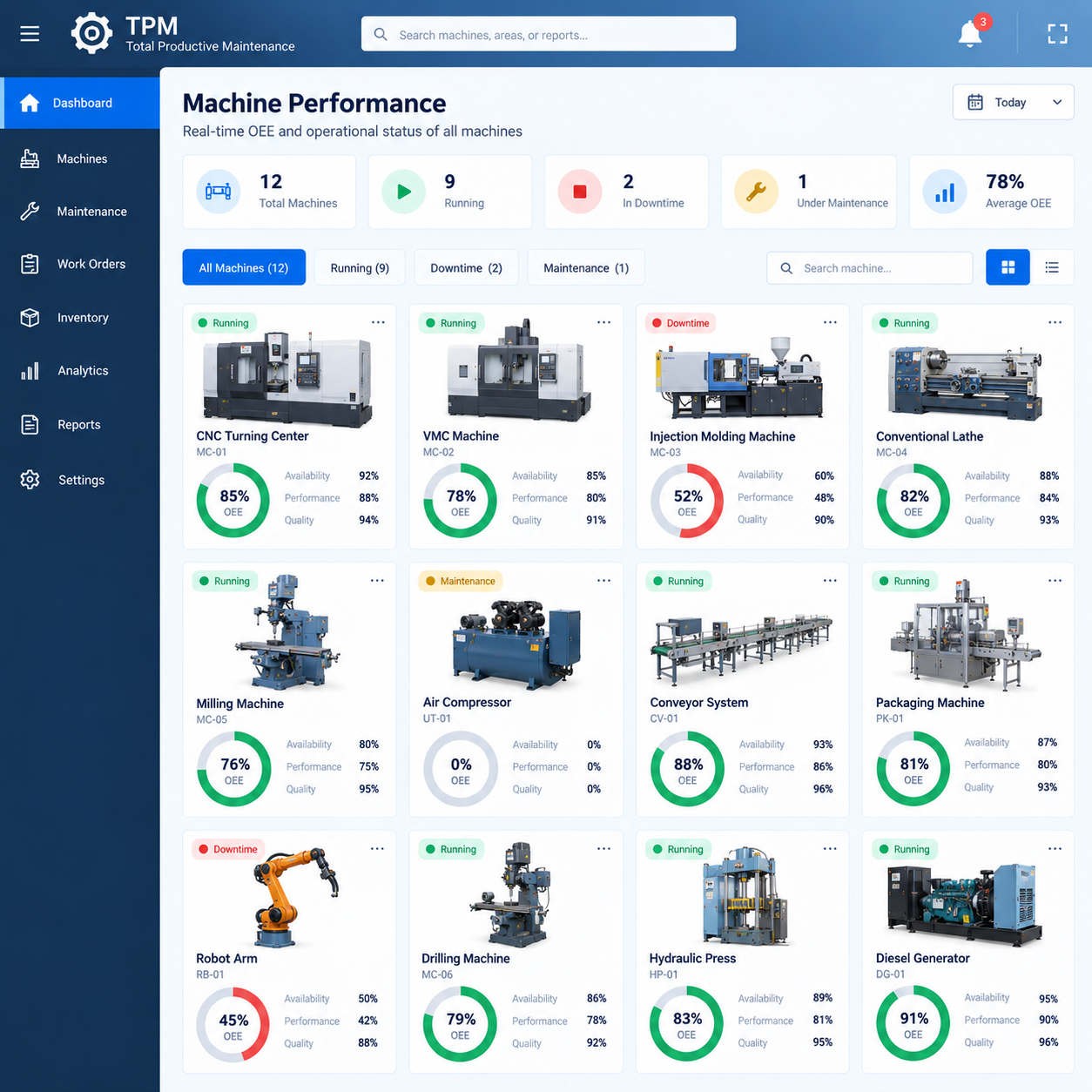
OEE & Equipment Performance Monitoring
Connect maintenance events with OEE indicators to understand equipment availability, performance, and quality.
- Monitor equipment availability during planned production time.
- Review equipment performance against expected operating performance.
- Track the proportion of production that meets quality requirements.
- Connect equipment maintenance events with performance information.
- Identify equipment performance and improvement opportunities.
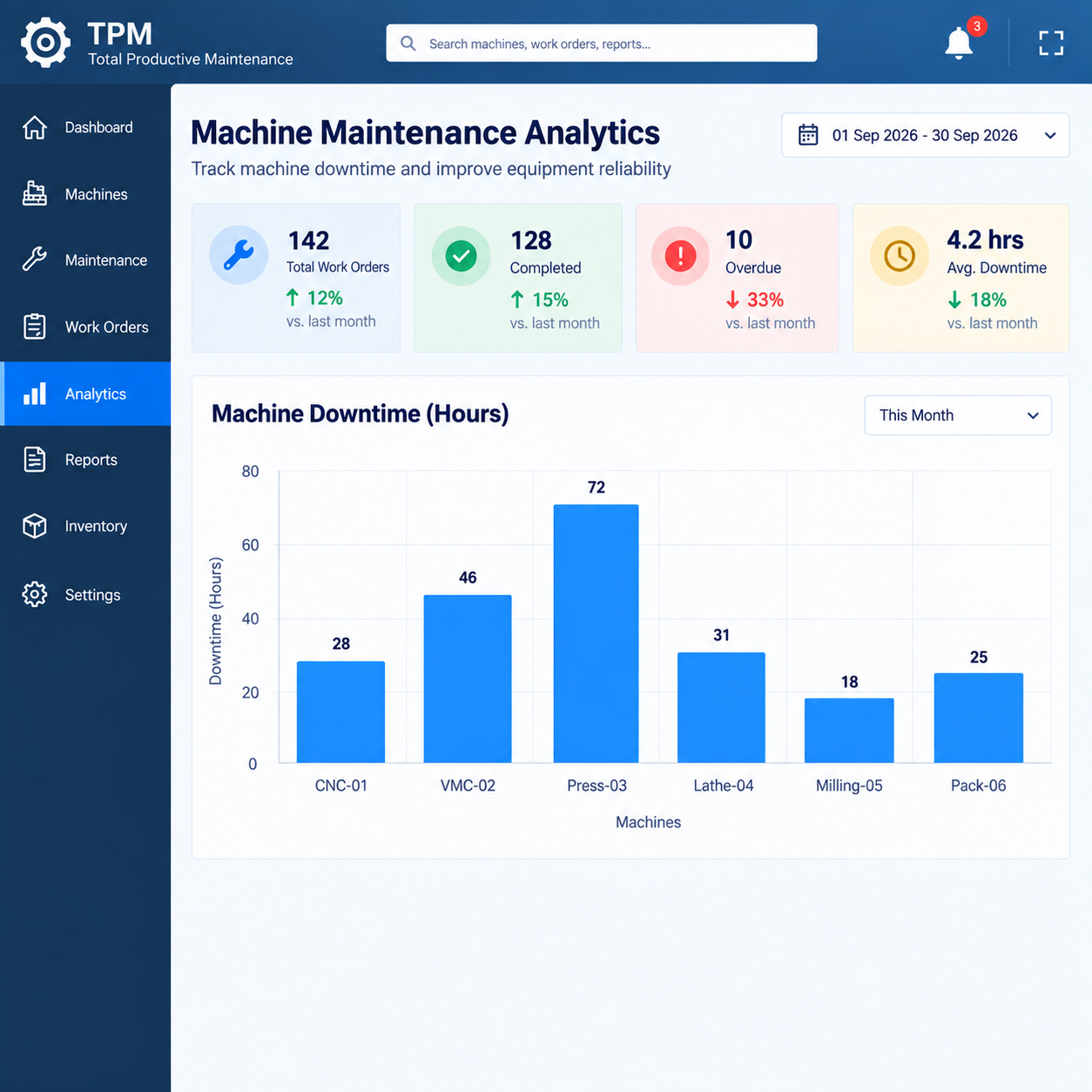
Maintenance Analytics & Downtime Analysis
Analyze downtime, breakdown duration, maintenance performance, and equipment trends to identify recurring issues.
- Track machine downtime and breakdown duration.
- Identify recurring equipment issues.
- Monitor MTTR and MTBF based on defined measurement rules.
- Review maintenance and equipment performance information over time.
- Identify improvement opportunities through maintenance analytics.
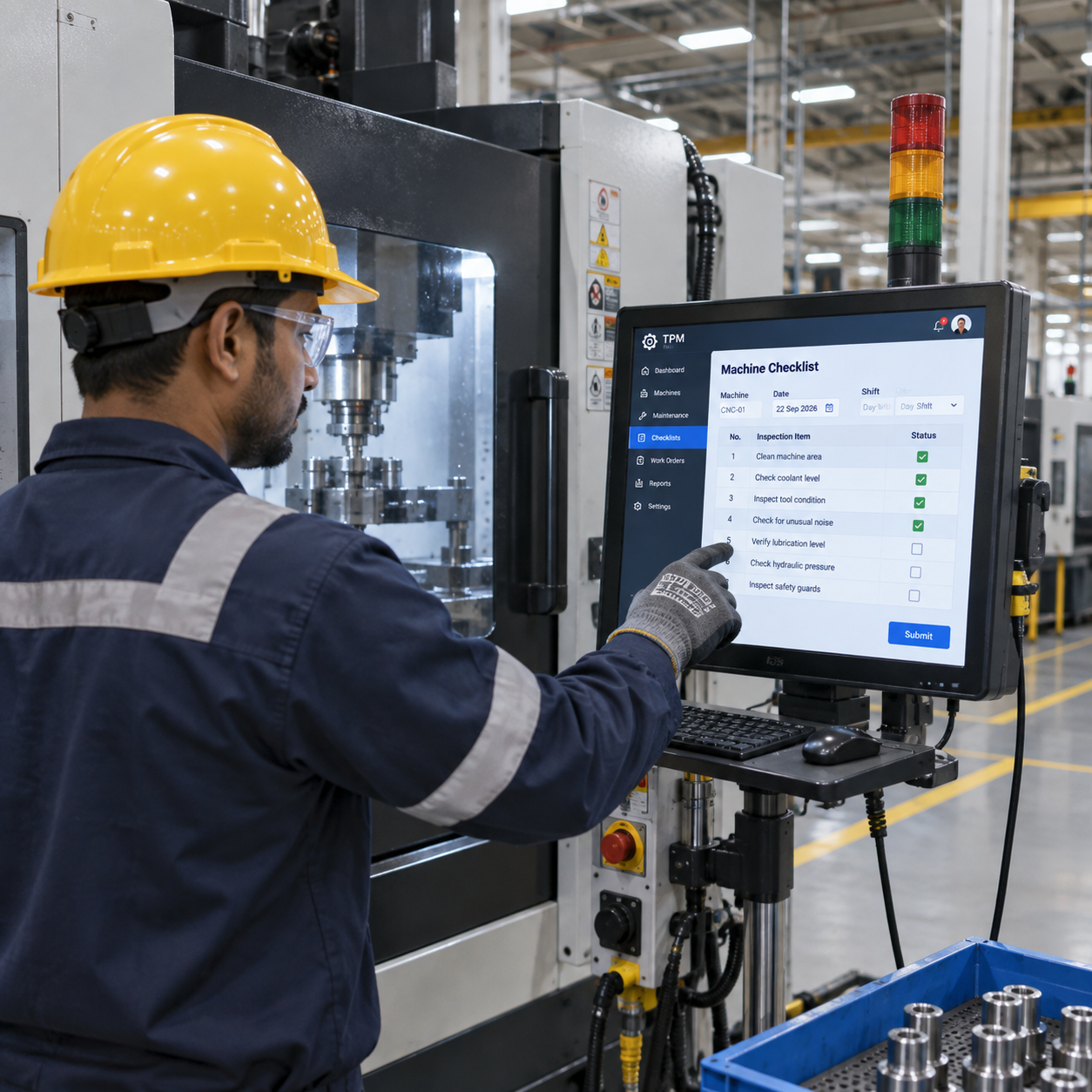
Autonomous Maintenance & Operator Involvement
Empower operators to perform routine equipment checks and report abnormalities through structured digital checklists.
- Daily and shift-based equipment inspection checklists.
- Cleaning and lubrication activity records.
- Abnormality reporting and digital confirmation of completed checks.
- Escalation of identified issues to maintenance teams.
- Operator and machine association.
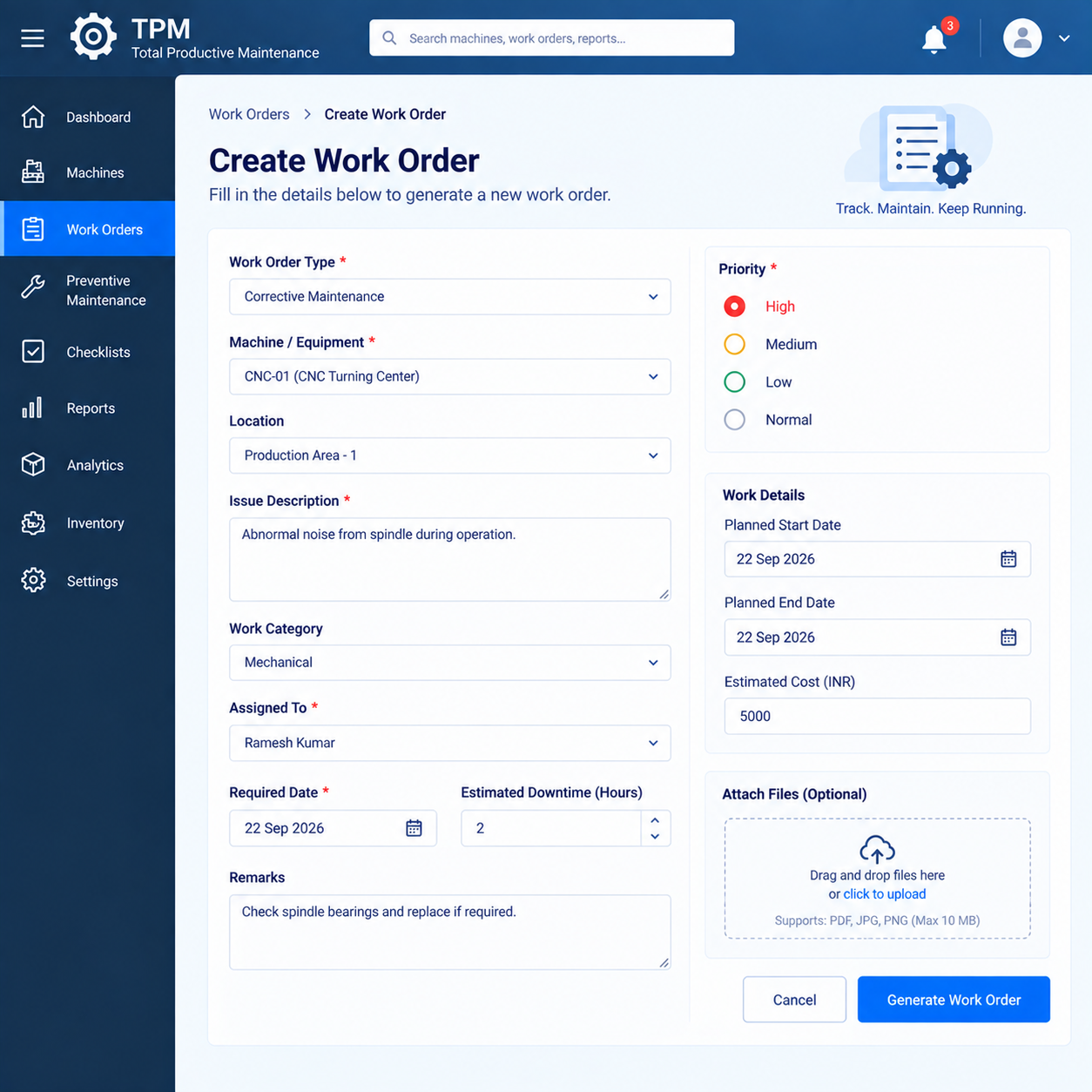
Maintenance Work Order Management
Organize repair, inspection, and servicing activities through structured work order creation, assignment, execution, and closure.
- Generate maintenance tasks from schedules, reported issues, or configured workflows.
- Assign tasks to maintenance personnel or responsible teams.
- Define task priorities, planned dates, and maintenance schedules.
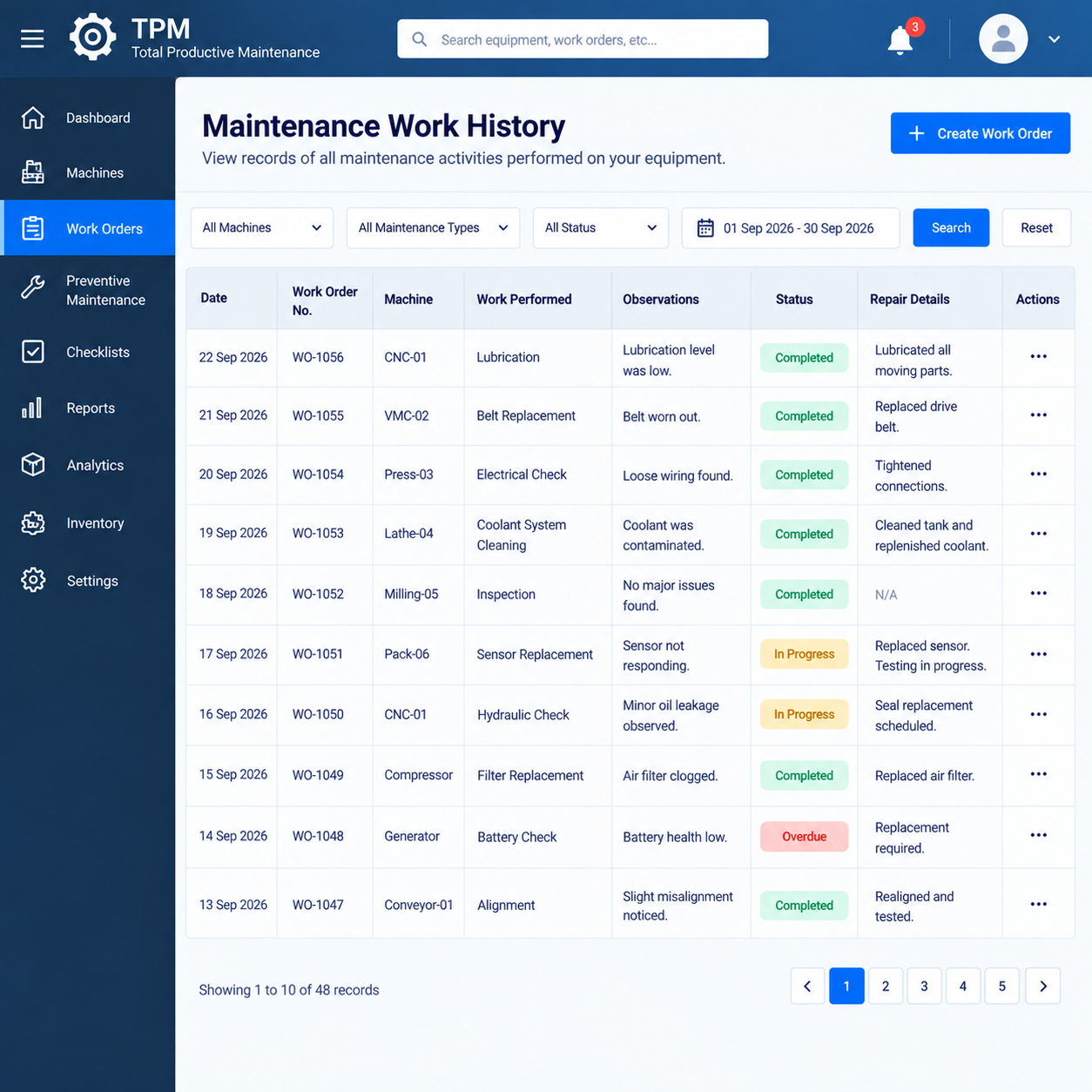
- Record work performed, observations, and repair details.
- Document task completion and review maintenance outcomes.
Maintenance Completion & Performance Reports
Monitor scheduled maintenance, work orders, pending activities, and overdue tasks through maintenance reports.
- Monitor scheduled maintenance activities.
- Track completed maintenance work orders.
- Identify pending and overdue maintenance tasks.
- Review maintenance completion information.
- Support maintenance performance tracking and improvement initiatives.
Real-Time Production Analysis
A centralized production dashboard provides real-time visibility into shop-floor performance, helping operators, supervisors, and management track production from a single screen.
Preventive Maintenance Management
Schedule servicing at defined intervals to support equipment reliability and reduce unplanned machine failures.
- Calendar-based maintenance schedules.
- Machine runtime and cycle-based maintenance planning.
- Recurring maintenance checklists.
- Maintenance due-date notifications.
- Maintenance history and completion tracking.
OEE & Equipment Performance Monitoring
Connect maintenance events with OEE indicators to understand equipment availability, performance, and quality.
- Monitor equipment availability during planned production time.
- Review equipment performance against expected operating performance.
- Track the proportion of production that meets quality requirements.
- Connect equipment maintenance events with performance information.
- Identify equipment performance and improvement opportunities.
Maintenance Analytics & Downtime Analysis
Analyze downtime, breakdown duration, maintenance performance, and equipment trends to identify recurring issues.
- Track machine downtime and breakdown duration.
- Identify recurring equipment issues.
- Monitor MTTR and MTBF based on defined measurement rules.
- Review maintenance and equipment performance information over time.
- Identify improvement opportunities through maintenance analytics.
Autonomous Maintenance & Operator Involvement
Empower operators to perform routine equipment checks and report abnormalities through structured digital checklists.
- Daily and shift-based equipment inspection checklists.
- Cleaning and lubrication activity records.
- Abnormality reporting and digital confirmation of completed checks.
- Escalation of identified issues to maintenance teams.
- Operator and machine association.
Maintenance Work Order Management
Organize repair, inspection, and servicing activities through structured work order creation, assignment, execution, and closure.
- Generate maintenance tasks from schedules, reported issues, or configured workflows.
- Assign tasks to maintenance personnel or responsible teams.
- Define task priorities, planned dates, and maintenance schedules.
- Record work performed, observations, and repair details.
- Document task completion and review maintenance outcomes.
Maintenance Completion & Performance Reports
Monitor scheduled maintenance, work orders, pending activities, and overdue tasks through maintenance reports.
- Monitor scheduled maintenance activities.
- Track completed maintenance work orders.
- Identify pending and overdue maintenance tasks.
- Review maintenance completion information.
- Support maintenance performance tracking and improvement initiatives.
Shopfloor Connectivity
Connect Your Existing Shop-Floor Equipment. Traceability becomes more powerful when production devices and systems are connected.
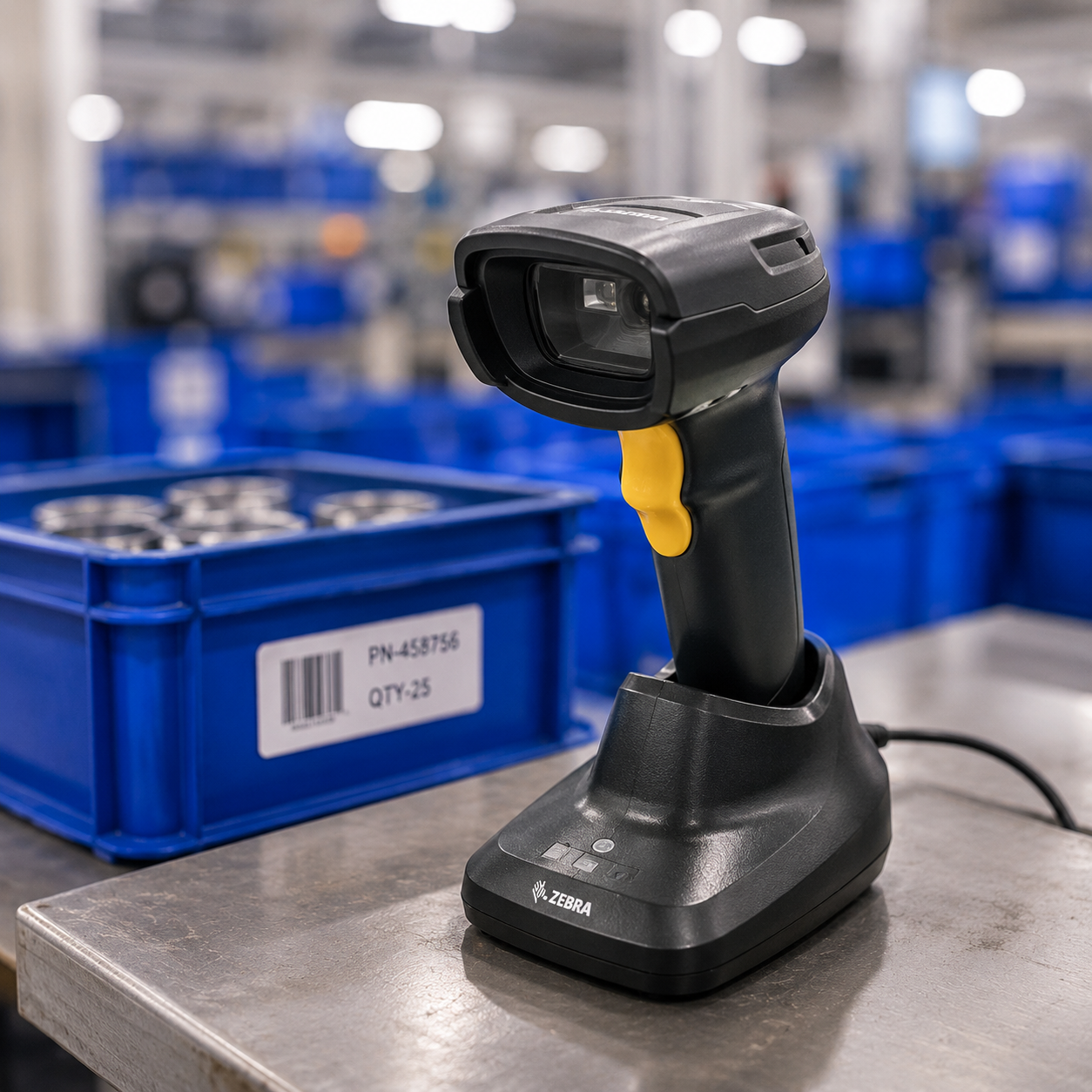
Barcode Scanners
Scan product, material and work order identifiers.
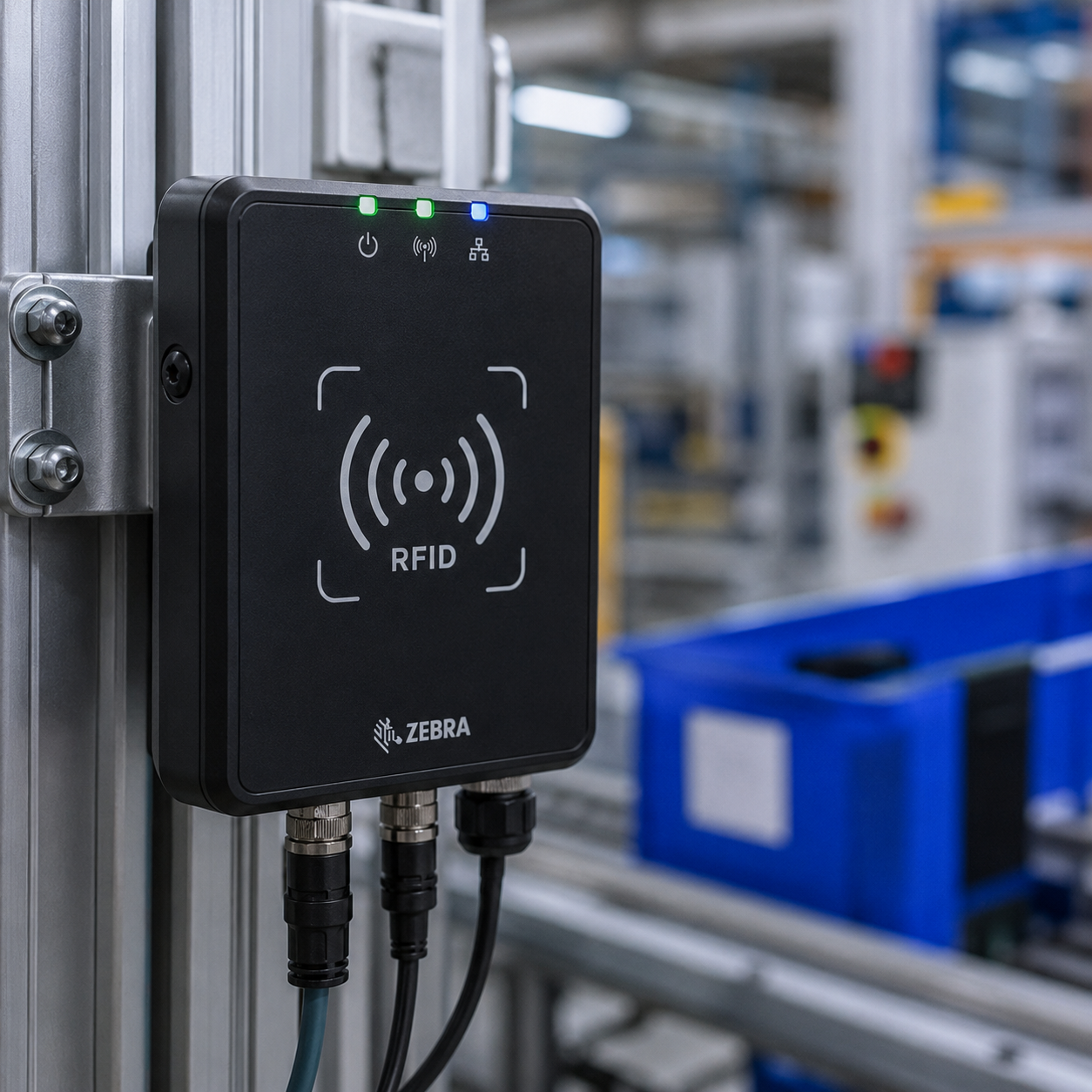
RFID Readers
Capture contactless product identification.
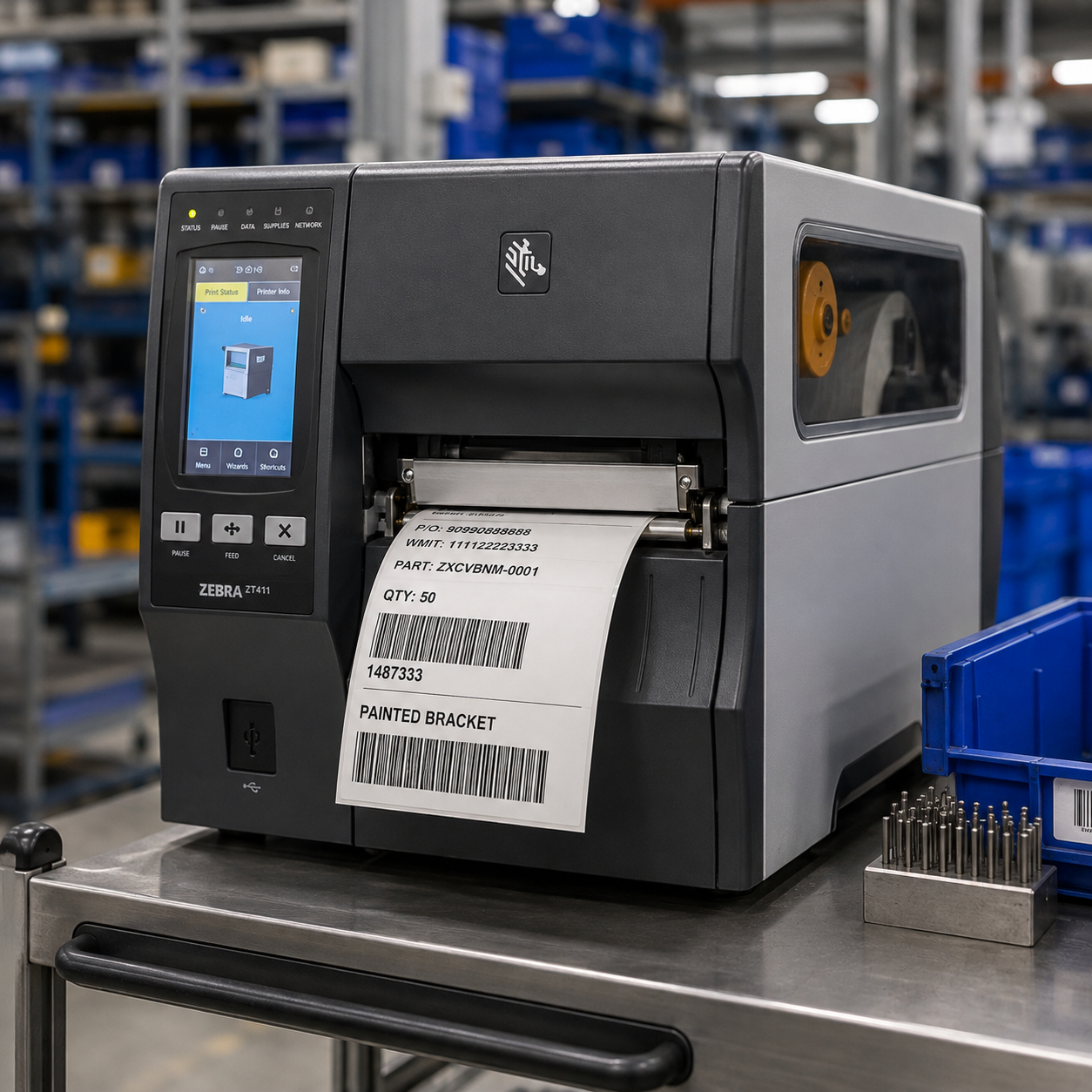
Industrial Printers
Print product and packaging identification labels.
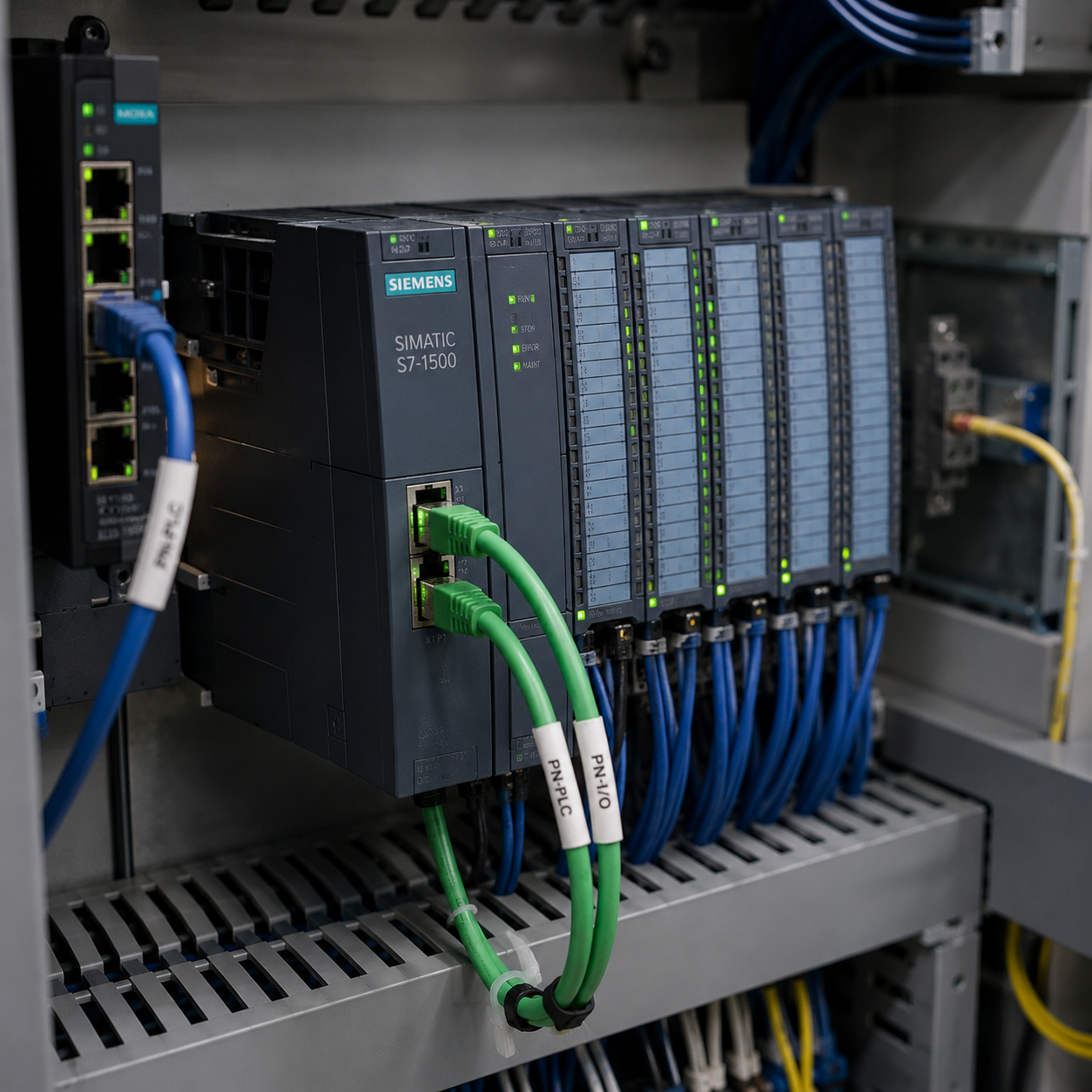
PLC / Machine Connectivity
Exchange relevant production signals and events.
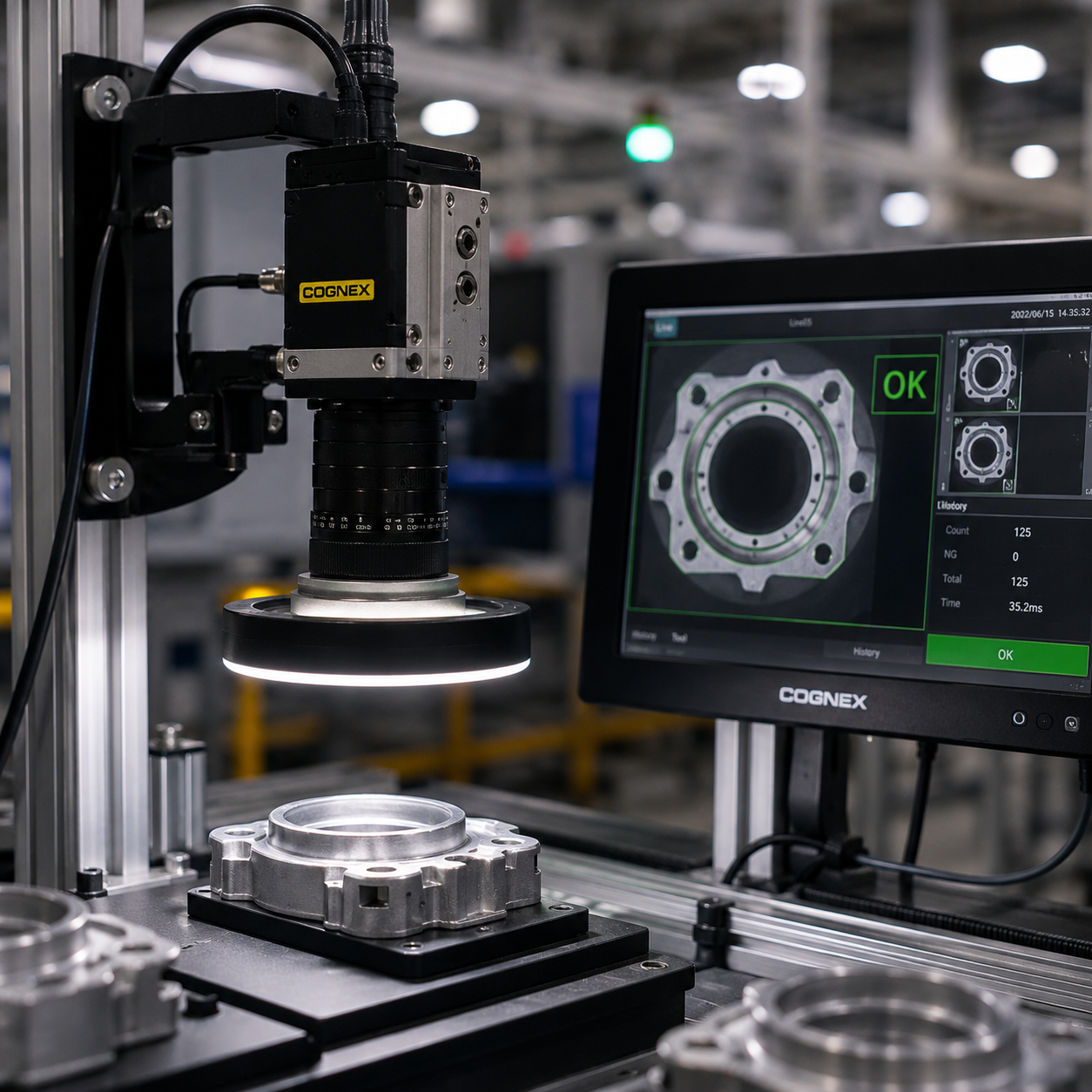
Vision Systems
Capture automated quality inspection results.
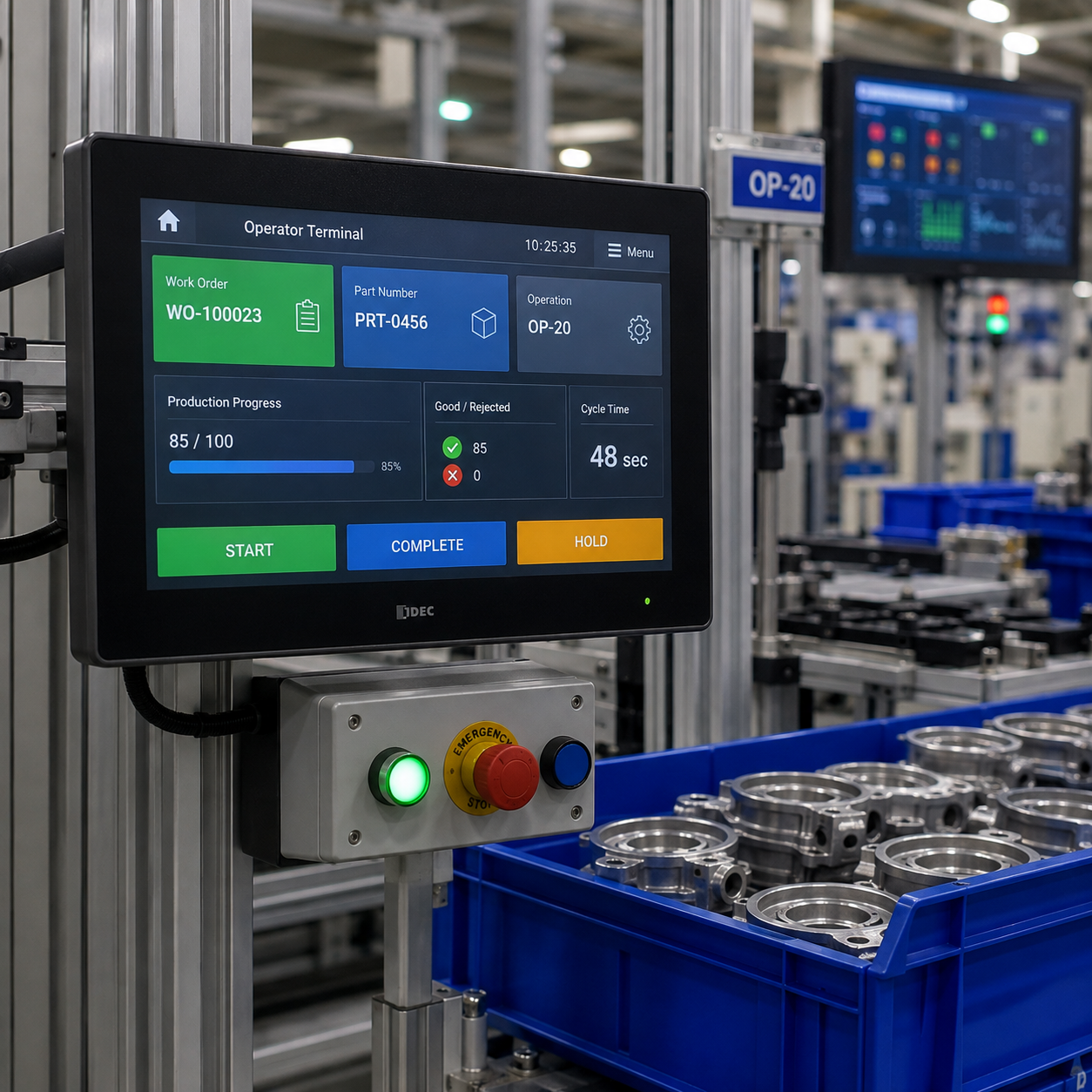
Operator Terminals
Enable operators to perform digital production transactions at stations.
Turn Maintenance Data into Actionable Insights
A centralized maintenance database enables organizations to review maintenance activities, equipment history, and performance trends through structured reports and dashboards. TPMS helps teams monitor maintenance performance and access equipment-related information.
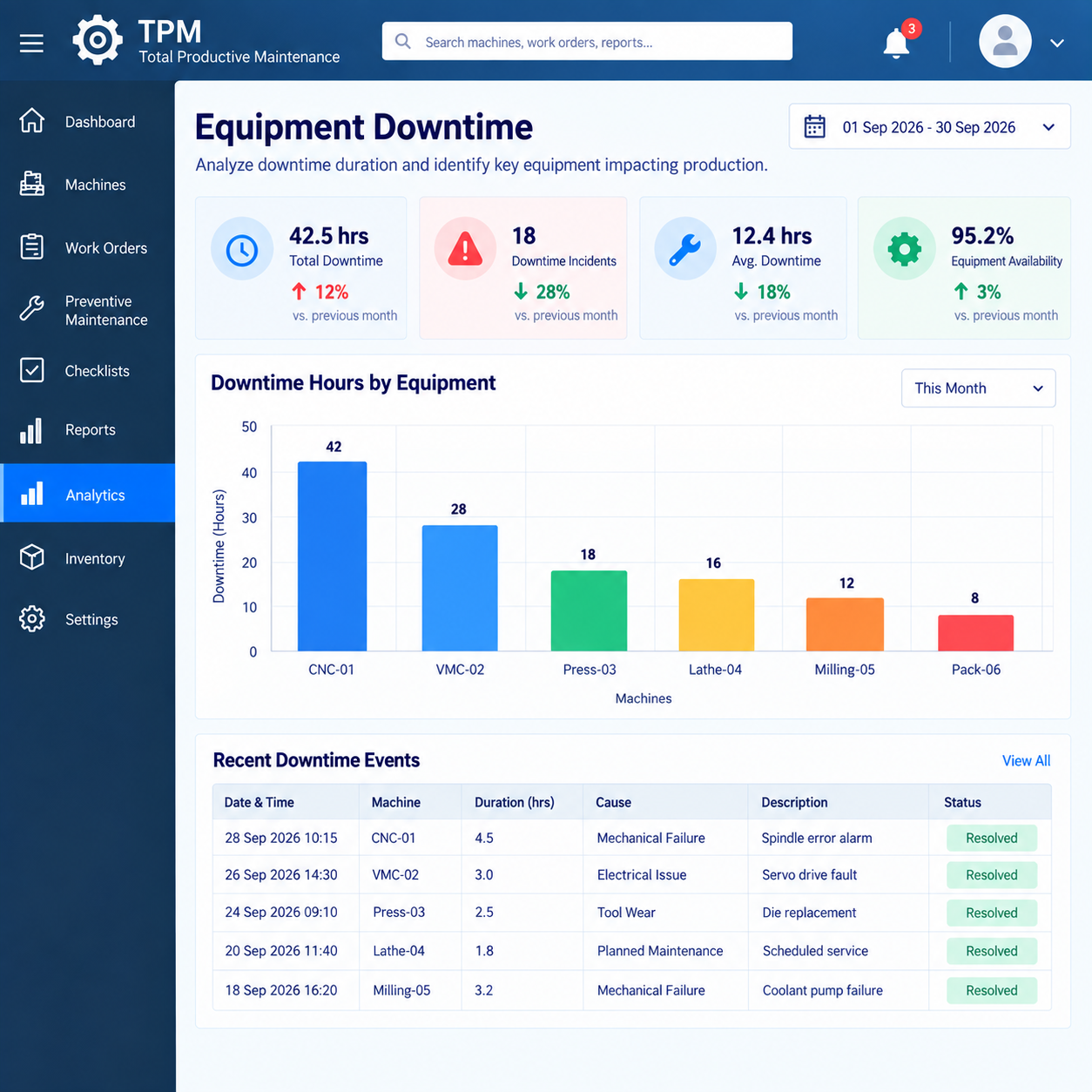
Equipment Downtime Reports
Preventive Maintenance Reports
Equipment Maintenance History.
Maintenance KPI Dashboard
Spare Parts Consumption Reports
Why Manufacturers Choose Our TPM Software?
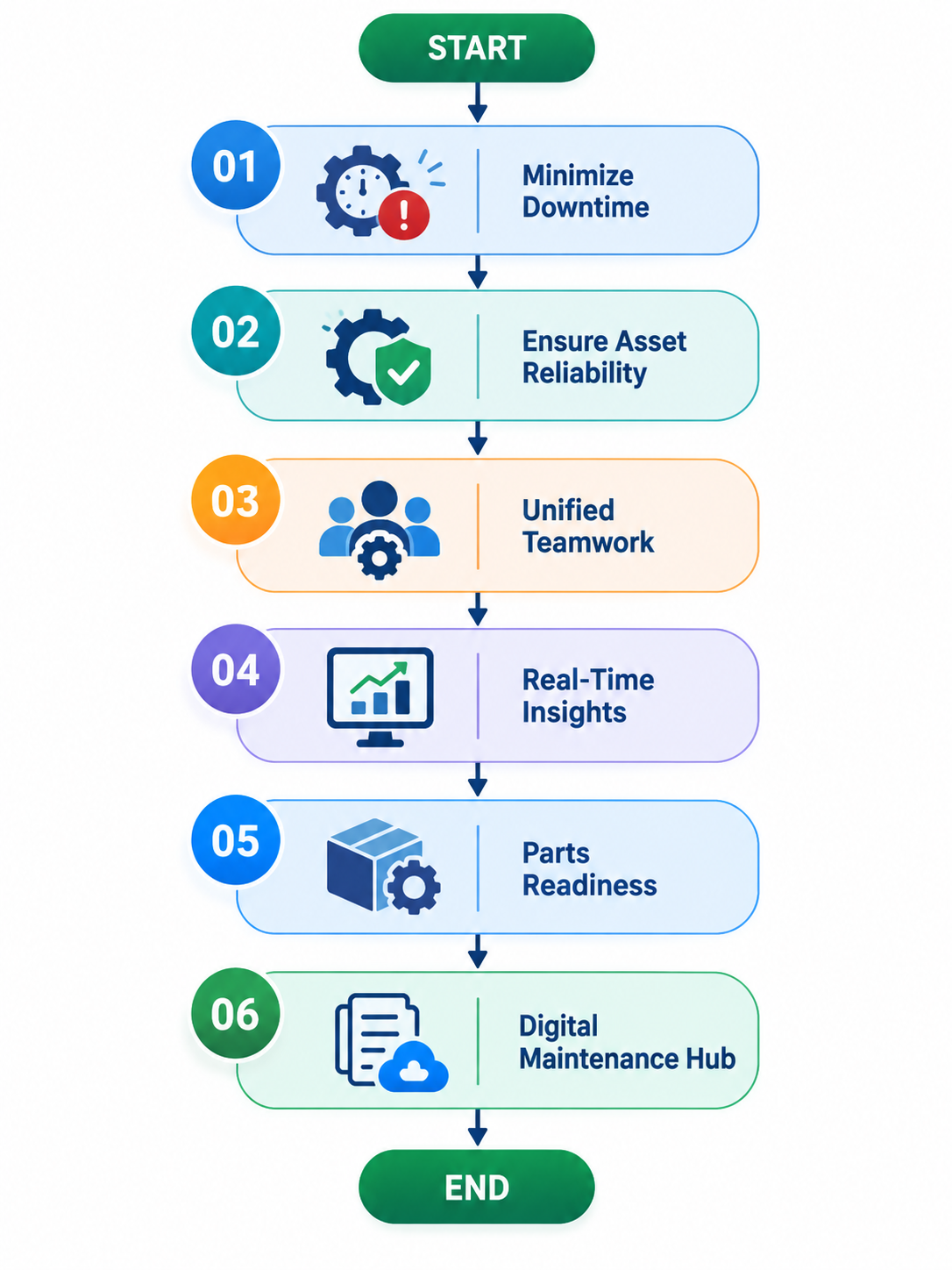
TPMS Software helps manufacturing organizations improve maintenance processes, production visibility, and operational efficiency. It supports a connected and proactive maintenance environment through digital workflows and centralized information.
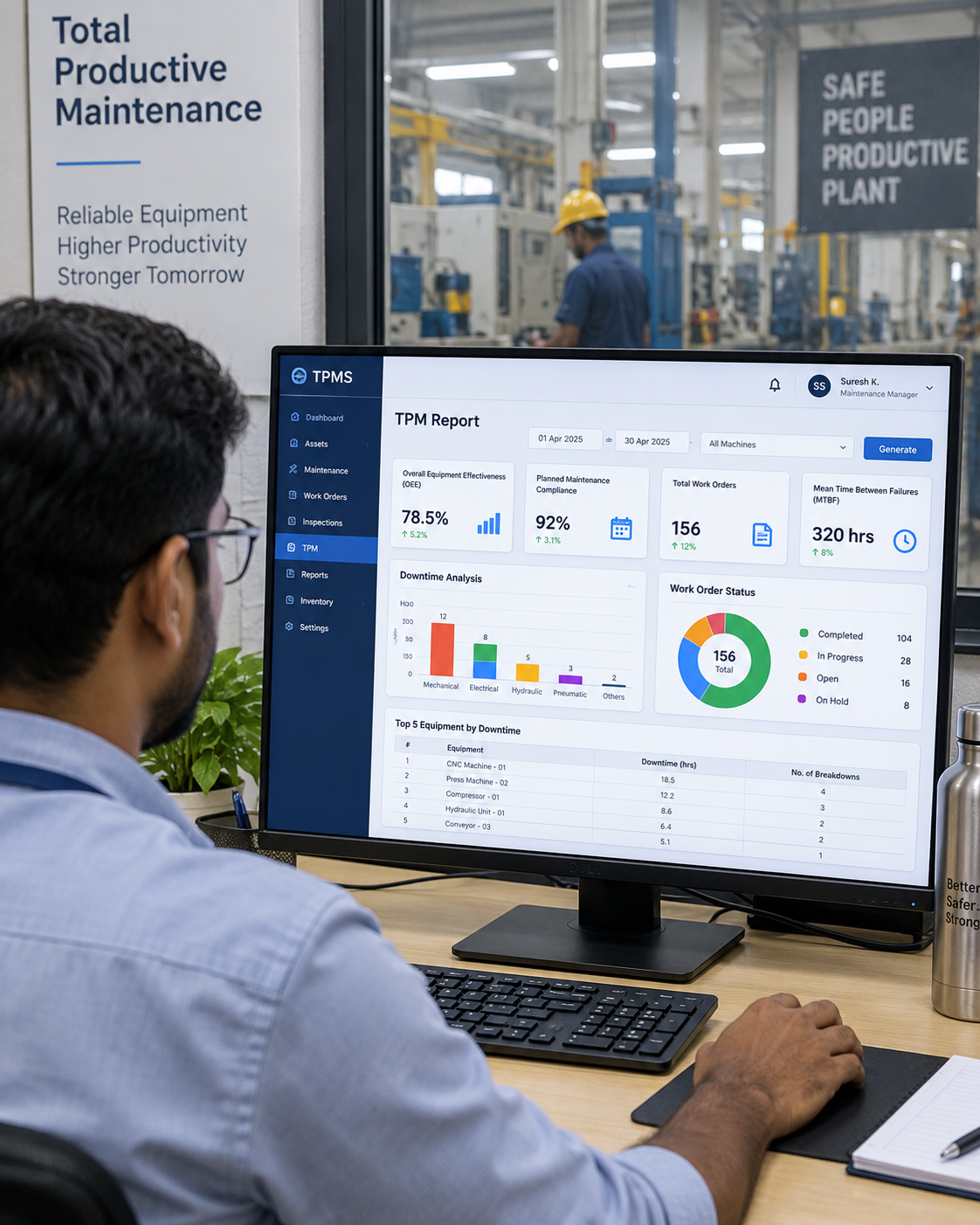
Reduced Unplanned Downtime
Support proactive maintenance and structured breakdown management to reduce unexpected equipment downtime.
Equipment Reliability
Organize servicing, inspections, and equipment maintenance history to support reliable equipment performance.
Team Collaboration
Connect operators, technicians, and supervisors through digital maintenance workflows.
Performance Visibility
Monitor maintenance activities, downtime, and relevant equipment KPIs for improved performance visibility.
Spare Parts Planning
Improve visibility of maintenance parts and replenishment requirements to support maintenance planning.
Centralized Records
Maintain accessible digital equipment and maintenance information in a centralized system.













Our Trusted Clients
We’re proud to collaborate with industry leaders and innovative companies