
Asset Tracking for Warehouse :
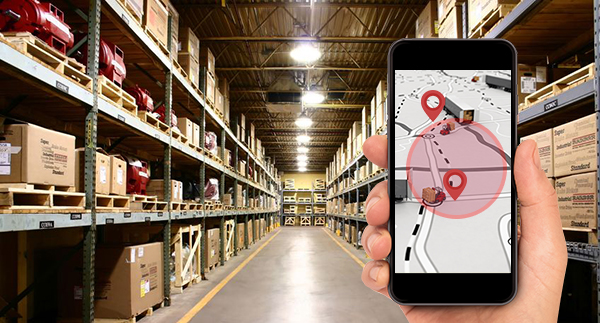
Asset tracking is the technique you can use to monitor your physical property using RFID tags that transmit their place.
If you need to know the location, status, maintenance schedule, and other important information about your assets from your location and the physical assets of your organization. You can find and substitute this user-friendly machine

Working :
Asset tracking allows you to detect any maintenance problems.
This indicates where and when the goods are loaded or unloaded in the warehouse.
A distinctive RFID that allows assets to be monitored as a distinctive item will be given to each product. The RFID reader scans the entire barcode over a radio frequency connection and then transmits it to the server, which is then transmitted to the localhost.
Tracking consists of indoor monitoring, outdoor tracking, and checkpoint tracking. Indoor monitoring utilizes an RFID reader installed inside the warehouse in that region. The outdoor system comprises of an RFID to be checked in the region outside the warehouse. The checkpoint monitoring system reads the data at the warehouse checkpoint.
In the warehouse, middleware manages the flow of RFID data in ERP systems between the tracking system and the product. Application software is used to process the data obtained by referring to the item data stored in the main database.
When unauthorized products pass through the checkpoint, a message will be sent to the corresponding department and the real item will be shown on the screen. Your assets can be tracked through the use of mobile computers, barcode labels, handheld barcode scanners and asset management software.
Benefits :
- This can maximize the efficiency of asset control and minimize equipment losses and administrative costs.
- It is effective for production planning and decreases downtime.
- It enables you to monitor your assets correctly and effectively.
- The possibility to find lost products in a warehouse.
- Warehouse allocation can be tracked through the supply chain.
- Sales forecast your wealth in real-time.
- This lowers the cost of labor.
- Different tags of the products from the same location can be identified.
Applications across industries :
- Automotive industries
- Aerospace industries
- Machinery industries
- Pharmaceutical industries
- Electrical industries
- Electronic industries
- steel industries
References :
1.https://pdfs.semanticscholar.org/5baf/bc760ce3b06c6b3448d4331408f340bcfc48.pdf
3.https://pdfs.semanticscholar.org/8fcb/c2c25ef608787a44d15199d8f72f8421b809.pdf
Related products :
Andon System | Leading Manufacturer in India