
Introduction
Waste management has evolved from a back-office function into a strategic business priority as regulators, investors, and communities demand greater accountability. Organizations are expected to demonstrate that every hazardous, biomedical, and industrial waste stream is handled in full compliance with regulatory requirements.
Environmental agencies have tightened reporting requirements, expanded documentation obligations, and increased penalties for non-compliance. At the same time, sustainability goals and ESG reporting depend on accurate, traceable waste data rather than fragmented spreadsheets and paper records.
Relying on manual waste management can make it difficult for organizations to maintain accurate records, prepare for audits, meet regulatory requirements, and ensure consistent practices across different locations. To address these challenges, businesses in manufacturing, aerospace, healthcare, chemical processing, and energy are increasingly turning to waste management software. By bringing the complete waste lifecycle into a digital system, these solutions create structured and traceable workflows, helping organizations improve compliance, maintain better records, and operate more efficiently.
Understanding Waste Management Compliance
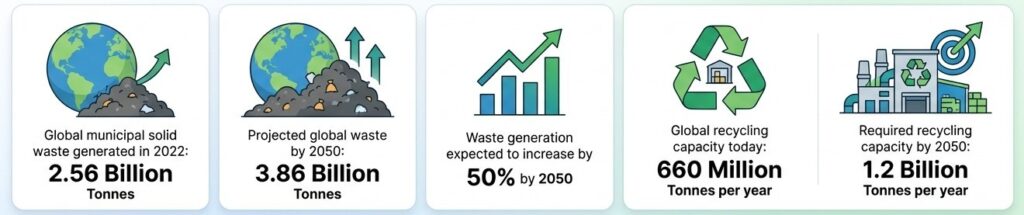
Waste management compliance involves meeting regulatory requirements for the generation, storage, transportation, and disposal of waste. Although requirements vary by waste type, industry, and jurisdiction, every stage of the waste lifecycle must be documented and traceable.
Hazardous waste requires manifests, labeling, storage limits, and licensed transporters. Biomedical waste follows additional infection control protocols, while chemical waste must meet both environmental and occupational safety regulations. Industrial waste, including scrap metal, packaging, and manufacturing byproducts, also requires proper classification and disposal.
Organizations must maintain accurate records and provide them during inspections. Traceability from waste generation to final disposal is a key compliance requirement.
For organizations operating multiple facilities, varying regulations, vendors, and waste streams increase compliance complexity. A centralized system helps standardize records, reduce compliance gaps, and improve visibility for proactive environmental risk management.
What Is Waste Management Software?
Waste management software is a digital platform designed to manage the entire waste lifecycle from the moment waste is generated to its final, certified disposal while embedding compliance requirements directly into daily operations. Its core purpose is to remove the guesswork and manual effort from waste handling, replacing it with configurable, rules-based workflows that reflect an organization’s specific regulatory obligations.
At its foundation, a waste management system provides lifecycle management: every waste stream is logged, categorized, tracked through storage and transport, and closed out only once disposal is verified. Compliance automation is built into that lifecycle, meaning the system can flag storage time limits, missing documentation, or expired vendor licenses before they become violations rather than after.
Configurable workflows allow the platform to be adapted to different waste types and site-specific requirements. A chemical manufacturer’s hazardous waste routing will look different from a hospital’s biomedical waste process, and the software should accommodate both without forcing a one-size-fits-all structure. Waste categorization tools help staff classify materials correctly at the point of generation, reducing the risk of mishandled waste streams.
Vendor integration connects the platform directly to licensed transporters and disposal facilities, keeping credentials and certifications current. Digital approvals replace informal sign-offs with structured, role-based authorization steps. Centralized documentation ensures manifests, certificates, and permits live in one searchable location rather than scattered across departments. And because every action within the system is logged, audit trails and reporting capabilities are available on demand, giving compliance teams the evidence they need without last-minute scrambling.
Managing Waste Compliance Across Multiple Sites
Enterprise-wide waste management introduces challenges that single-site operations rarely face. Each facility may operate under different regional regulations, work with different vendors, and generate different waste profiles depending on its production processes. When waste management data is scattered across different locations, compliance teams can struggle to track site-level activities in real time, often discovering gaps only after they have already developed into larger issues.
Waste management software addresses this by providing a single platform where site-specific regulations can be configured independently while still feeding into standardized, enterprise-wide workflows. This balance lets local teams comply with their regulatory environment while leadership retains a consistent, comparable view of performance across all locations.
Corporate reporting becomes far more manageable when every site follows the same documentation standards, and vendor management benefits from consolidated oversight, since organizations can compare vendor performance across facilities rather than negotiating in isolation. Cross-location compliance also enables meaningful performance benchmarking between sites.
How Waste Management Software Works
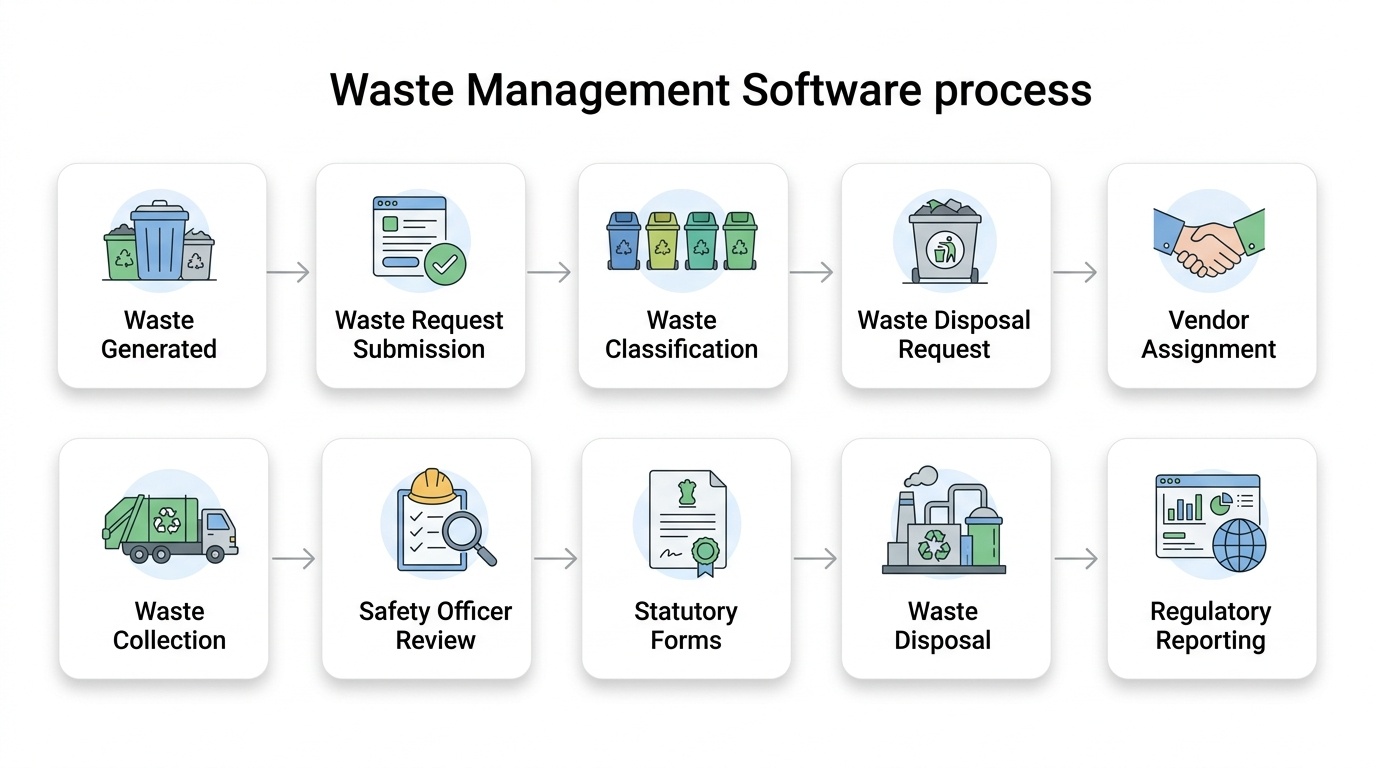
1. Waste Categorization
The workflow begins the moment waste is generated. Staff classify the material using predefined categories aligned with regulatory definitions of hazardous, biomedical, chemical, or general industrial waste. Accurate categorization at this stage determines everything downstream: storage requirements, handling protocols, and which disposal vendors are eligible to receive the material. Digital categorization tools reduce reliance on individual judgment by presenting standardized options and flagging waste types that require special handling.
2. Waste Disposal
Once categorized, waste enters a structured disposal workflow. The software tracks the material through storage, records the date it was generated, and calculates permissible holding periods automatically. When waste is ready for pickup, the system generates the necessary transport documentation and routes it to an approved vendor. This structured waste disposal workflow ensures nothing is delayed, forgotten, or handled outside of approved procedures.
3. Automated Disposal Tracking and Escalation
As waste moves from storage to transport to final disposal, the platform maintains continuous status visibility. If a scheduled pickup is delayed, a storage limit is approaching, or documentation is missing, automated escalation alerts notify the responsible personnel before the issue becomes a violation. This proactive tracking mechanism is one of the most valuable shifts that digital waste management introduces. Problems are caught in advance rather than discovered during an audit.
4. SDS Integration for Hazardous Waste Management
For hazardous waste management, Safety Data Sheet (SDS) integration allows the system to pull chemical hazard information directly into the waste record. This ensures that handling instructions, compatibility warnings, and disposal restrictions are always aligned with the most current SDS data, reducing the risk of improper mixing, storage, or transport of incompatible substances.
5. Regulatory Reporting and Compliance Management
Waste management software consolidates data from every site and waste stream to generate the reports regulators require, often on a scheduled or automated basis. Rather than compiling figures manually before a deadline, compliance teams can generate accurate regulatory reports directly from validated system data, significantly lowering the risk of reporting errors or missed submissions.
6. Dashboards and Waste Analytics
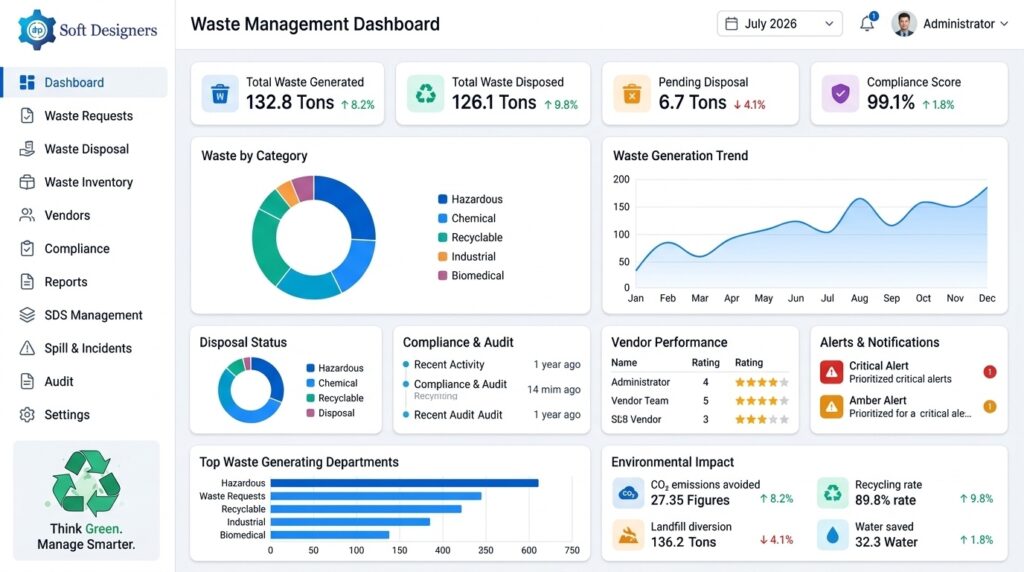
Real-time dashboards give EHS managers and plant leadership a consolidated view of waste volumes, categories, disposal timelines, and compliance status. Waste analytics surface patterns such as a facility generating unusually high hazardous waste volumes that might otherwise go unnoticed until they show up in a regulatory report or an unexpected cost.
7. Reporting and Performance Analysis
Beyond regulatory submissions, the software supports internal performance analysis: tracking diversion rates, comparing facilities against each other, and measuring progress toward sustainability targets. This turns waste data from a compliance obligation into a genuine operational insight tool.
Benefits of Using Waste Management Software
1. Improved Regulatory Compliance
The most immediate benefit organizations experience is a measurable improvement in regulatory compliance. Waste management software encodes regulatory requirements, storage limits, documentation standards, reporting deadlines directly into the platform’s logic. Instead of relying on individual staff members to remember every rule, the system enforces them automatically, flagging non-compliant conditions before they escalate. This structural approach dramatically reduces the likelihood of violations that stem from human oversight rather than intentional negligence.
2. Centralized Documentation Management
Manifests, disposal certificates, permits, and vendor licenses are notoriously easy to misplace when stored across multiple departments or physical filing cabinets. A centralized digital repository ensures every document tied to a waste event is stored in one place, linked directly to the relevant waste record. When an auditor or regulator requests evidence, teams can retrieve it in minutes rather than days, and there’s no risk of a document existing only as a memory of “someone filed that somewhere.”
3. Better Hazardous Waste Tracking
Hazardous waste carries the highest regulatory scrutiny, and digital tracking gives organizations continuous visibility into where each hazardous stream sits within its lifecycle. From the moment a container is opened to the moment a certified disposal facility confirms treatment, the system maintains a complete chain of custody. This level of hazardous waste tracking is difficult, if not impossible, to replicate reliably through manual logs.
4. Enhanced Audit Readiness
Audit readiness is often the difference between a routine inspection and a stressful, resource-draining event. With historical waste data, documentation, and approval trails stored in a searchable system, organizations can respond to auditor requests immediately rather than reconstructing records under time pressure. This readiness signals organizational maturity to regulators and often results in smoother, shorter inspections.
5. Automated Workflow Management
Automated workflows bring structure and clarity to waste handling by defining exactly how each waste stream should be managed. From classification and storage to approval, transportation, and final disposal, the system guides users through each step and highlights the next action that needs to be completed. This consistency matters especially in facilities with shift changes or high staff turnover, where institutional knowledge might otherwise walk out the door with a departing employee.
6. Increased Department Accountability
Because every action within the system is timestamped and attributed to a specific user, waste management software naturally increases accountability across departments. Supervisors can see exactly who logged a waste event, who approved its disposal, and who verified final documentation. This visibility discourages shortcuts and creates a culture where compliance responsibilities are clearly owned rather than diffused.
7. Improved Vendor Coordination
Disposal vendors and transporters are a critical, and sometimes overlooked, part of the compliance chain. Waste management software tracks vendor licensing status, certification expirations, and historical performance, ensuring organizations only work with currently qualified partners. Improved vendor coordination also streamlines scheduling, reduces communication delays, and provides a documented record of every vendor interaction tied to a specific waste stream.
8. Faster Regulatory Reporting
Meeting regulatory reporting deadlines can be challenging, especially when teams have to gather and consolidate information manually from several facilities, increasing the likelihood of delays and data inaccuracies. By pulling directly from validated system records, waste management software allows compliance teams to generate accurate reports in a fraction of the time, freeing staff to focus on higher-value environmental initiatives rather than data compilation.
9. Better Spill and Incident Management
Spills and environmental incidents require immediate, well-documented response. Integrated spill reporting tools allow staff to log incidents in real time, trigger emergency response protocols, and initiate any required regulatory notifications without delay. This immediacy not only supports compliance but also protects worker safety and limits environmental impact.
10. Real-Time Visibility Into Waste Activities
Leadership teams benefit from real-time dashboards that consolidate waste activity across every facility. Rather than waiting for monthly or quarterly reports, plant managers and EHS leaders can see current waste volumes, pending approvals, and compliance status at any moment, enabling faster and better-informed decisions.
11. Stronger Sustainability Performance
Beyond compliance, digital waste management provides the data foundation needed for credible sustainability reporting. Accurate waste categorization and disposal records allow organizations to measure diversion rates, identify reduction opportunities, and report progress toward ESG commitments with confidence, rather than relying on estimates.
The Role of Waste Audits
Waste audits, whether conducted internally or by external regulators, serve as the ultimate test of whether documented processes reflect actual practice. Internal audits allow organizations to identify gaps before a regulator does, reviewing documentation completeness, storage compliance, and vendor credentials on a recurring basis. External audits, conducted by regulatory bodies or third-party certification agencies, carry higher stakes and often trigger formal corrective action requirements when deficiencies are found.
A structured waste management system supports both audit types by maintaining consistent, retrievable documentation throughout the year rather than only around audit season. When gaps are identified, corrective actions can be assigned, tracked, and closed within the same platform, creating a documented trail of continuous improvement. This ongoing cycle of compliance verification, documentation review, and inspection readiness transforms audits from a source of anxiety into a routine validation exercise.
Spill Reporting and Environmental Incident Tracking
Environmental incidents demand speed and precision. When a spill occurs, the priority is immediate incident recording capturing what happened, where, and how much material was involved followed swiftly by emergency response actions to contain and mitigate impact.Certain spills may also require organizations to notify regulatory authorities, with reporting deadlines varying according to the type and quantity of material released.
After the immediate response, root cause analysis determines what allowed the incident to occur, whether it was equipment failure, procedural gaps, or human error. This analysis feeds directly into corrective actions designed to prevent recurrence. Digital incident tracking makes it possible to analyze incident trends over time, revealing whether certain facilities, shifts, or waste types are associated with higher incident rates. These insights help organizations identify preventive measures before similar events occur, shifting spill management from simply responding to incidents toward a more proactive approach to controlling and reducing risk.
Manual vs Digital Waste Management
| Area | Manual Waste Management | Digital Waste Management | Business Impact |
|---|---|---|---|
| Record Keeping | Paper logs and disconnected spreadsheets stored across departments | Centralized digital records accessible in real time | Reduces lost or duplicated documentation |
| Approvals | Verbal or email-based sign-offs with no consistent trail | Structured digital approval workflows with timestamps | Speeds up decision-making and accountability |
| Documentation | Manifests and certificates filed manually, often incomplete | Automatically generated, standardized records for every waste-related activity. | Improves accuracy and audit defensibility |
| Reporting | Manual compilation before deadlines, prone to errors | Automated, scheduled regulatory reports | Cuts reporting time and reduces compliance risk |
| Audit Readiness | Scrambling to locate historical records | Instant retrieval of complete waste history | Builds confidence during inspections |
| Vendor Management | Vendor credentials tracked informally | Vendor licensing and performance tracked systematically | Reduces risk of using non-compliant disposal partners |
| Tracking | Waste status known only through manual follow-up | Real-time status visibility from generation to disposal | Prevents waste from sitting unmanaged |
| Compliance | Reactive, discovered after issues arise | Proactive, flagged before deadlines are missed | Minimizes regulatory exposure |
| Visibility | Siloed by department or site | Enterprise-wide dashboard visibility | Enables informed, timely decisions |
| Analytics | Limited to periodic manual analysis | Continuous waste analytics and trend identification | Supports data-driven waste reduction strategy |
| Workflow | Inconsistent, dependent on individual staff | Standardized, configurable workflows | Reduces variability and human error |
| Data Accuracy | Prone to transcription and entry errors | Validated at the point of entry | Strengthens overall compliance integrity |
Organizations that still rely on manual, paper-based, or spreadsheet-driven waste tracking often underestimate how much operational drag this creates. The table below illustrates the practical differences between manual and digital approaches to waste management.
The pattern across nearly every row is the same: manual waste management depends on individual diligence, while digital waste management builds consistency into the process itself. This distinction is particularly critical during regulatory inspections, when organizations must be able to provide clear records and evidence to demonstrate that requirements have been properly met.
Future Directions in Digital Waste Management
The next generation of digital waste management is being shaped by technologies that extend beyond basic recordkeeping. Artificial intelligence is increasingly applied to waste classification and predictive analytics, helping organizations forecast volumes and anticipate compliance risks before they materialize. IoT sensors are being deployed on storage containers to monitor fill levels in real time, reducing the need for manual inspections.
Barcode and QR-based tracking make container management more efficient by allowing employees to record movements directly from mobile devices instead of relying on paper-based logs. Cloud-based platforms provide centralized access to waste information across multiple facilities, while integration with ERP systems connects waste-related data with wider operational, accounting, and business processes.
With growing ESG expectations and stricter sustainability reporting standards, organizations need more accurate and detailed visibility into their waste-related activities. Modern waste management solutions can help by incorporating regulatory updates directly into the platform, reducing the need for teams to monitor changes manually. As a result, waste management is evolving from occasional documentation into a continuous, data-driven process that helps businesses maintain regulatory compliance while supporting their long-term environmental and sustainability objectives.
Conclusion
Waste management is no longer a task that can be handled reactively with spreadsheets and filing cabinets. The regulatory landscape has grown too complex, the consequences of gaps too costly, and the expectations from stakeholders too high for manual processes to keep pace. Organizations still dependent on disconnected, paper-driven processes face more than potential compliance issues; they also lack the clear, centralized visibility required to effectively monitor and improve their environmental performance.
Digital waste management changes that equation. By embedding regulatory requirements into everyday workflows, centralizing documentation, and providing real-time visibility across every site and waste stream, waste management software transforms compliance from a source of risk into a demonstrable operational strength. It reduces the burden on EHS teams, shortens audit preparation from weeks to minutes, and gives leadership the data needed to make informed decisions rather than educated guesses.
Looking ahead, the organizations that treat waste data as a strategic asset rather than a regulatory afterthought will be the ones best positioned to meet tightening environmental standards, satisfy sustainability commitments, and build lasting trust with regulators, investors, and the communities they operate in.