
Introduction
Audits are the backbone of quality, safety, and regulatory compliance in any organization. Yet when they are managed manually through spreadsheets, emails, and paper checklists, they become time-consuming, error-prone, and difficult to track. Findings get lost in inboxes, corrective actions fall through the cracks, and leadership is left without real visibility into risk. This is where the best audit management software comes in. By digitizing and automating the entire audit lifecycle, organizations can move from reactive, fragmented processes to a proactive, streamlined audit management system built for continuous improvement. In this blog, we explore what audit management software is and the key benefits it brings to organizations across industries, from manufacturing and healthcare to pharmaceuticals and financial services.
What is Audit Management Software?
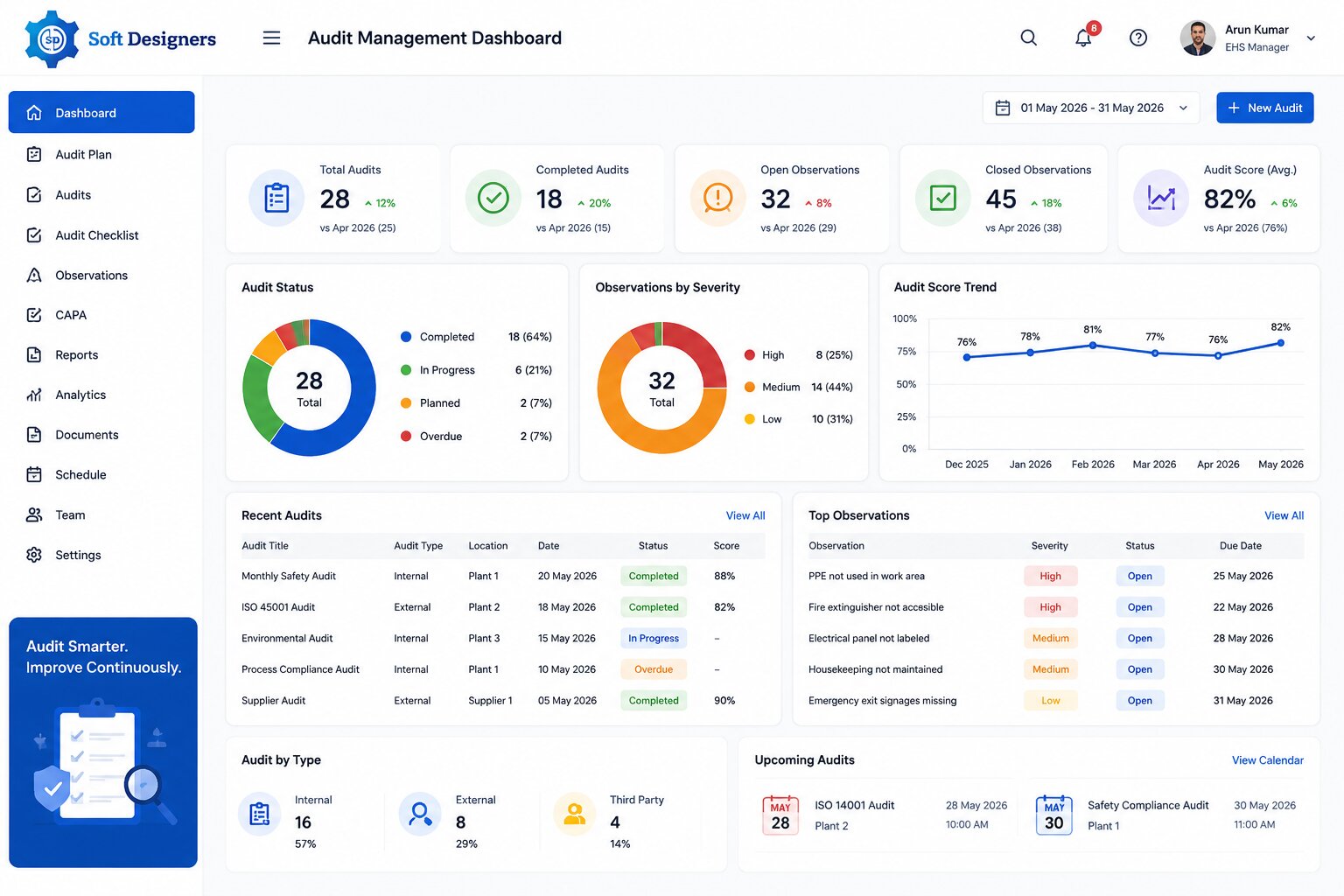
Audit management software, also known as an audit management system or audit software, is a digital platform designed to plan, schedule, execute, and monitor audits from a single, centralized system. It typically covers the entire audit lifecyclefrom creating audit checklists and scheduling audits to recording findings, managing nonconformances, tracking corrective actions, and generating compliance reports.
Instead of relying on disconnected tools such as Excel trackers, email chains, and paper forms, teams get a unified workflow that improves accuracy, accountability, and visibility across the organization. As internal audit software, most modern platforms also offer mobile access, allowing auditors to conduct assessments on the shop floor, in warehouses, or at supplier sites and sync data instantly to a central dashboard. As organizations scale and face increasingly complex regulatory landscapes, this shift from manual to automated audit management has become less of an option and more of an operational necessity.
Benefits of the Best Audit Management Software
Choosing the best audit management software can transform how an organization approaches quality, risk, and compliance. It doesn’t just make audits faster; it changes how issues are identified, escalated, resolved, and prevented from recurring. Below are the key benefits it delivers.
Centralized Audit Management
All audit-related datachecklists, schedules, findings, evidence, and reports are stored in one centralized audit management platform. This eliminates the need to search through emails, spreadsheets, or physical files, giving audit teams a single source of truth accessible anytime, anywhere. When auditors, quality managers, and department heads all work from the same system, miscommunication drops sharply, and historical audit data becomes easy to retrieve for trend analysis or external inspections.
Audit Scheduling
Audit scheduling allows organizations to plan and manage audits well in advance, based on predefined frequencies, regulatory requirements, or risk levels. Instead of relying on manual tracking across spreadsheets or calendars, audit teams get a clear, centralized schedule that shows what audits are due, when, and for which department or site. This reduces the administrative burden on audit teams and guarantees that no critical audit, whether internal, supplier, or regulatory, is ever overlooked.
Nonconformance
When a deviation from a standard or procedure is identified, quality audit software allows auditors to log nonconformances (NCs) instantly, along with supporting evidence such as photos, documents, or on-site notes. This real-time capture ensures nothing slips through the cracks and gives quality teams immediate insight into where processes are breaking down.
OFI
Beyond nonconformances, auditors can capture Opportunities for Improvement (OFI) areas that meet requirements but could be enhanced further. Documenting OFIs helps organizations move beyond mere compliance toward operational excellence, encouraging a mindset where audits are seen as a tool for growth rather than just a checkbox exercise.
NC Closure
Identifying issues is only half the job. Nonconformance management software tracks closure through structured workflows, ensuring that corrective actions are implemented, verified, and formally closed rather than left pending indefinitely. Automated reminders and status tracking prevent NCs from becoming “forgotten” items that resurface during the next audit cycle.
Audit Scoring
Automated audit scoring provides an objective, quantifiable measure of performance for each audit. This allows organizations to benchmark departments, sites, or vendors against one another, quickly identify areas that need attention, and track performance improvements or declines over successive audit cycles.
Easier Approval Process
Built-in approval workflows route audit reports, findings, and corrective actions to the right stakeholders automatically. This reduces delays caused by manual sign-offs, eliminates bottlenecks caused by unavailable approvers, and keeps the entire approval process transparent, traceable, and easy to audit itself.
Faster Audit Execution
Traditional paper-based audits involve manual note-taking, physical evidence collection, and hours of after-the-fact data entry before a report is ready. Audit software removes these delays with mobile-friendly checklists that auto-populate recurring fields, capture photo evidence on the spot, and work offline, syncing automatically once back online. This lets auditors complete assessments in real time and run more frequent audits, enabling tighter monitoring of high-risk processes, sites, or suppliers without straining team capacity.
Automated Notifications & Escalations
The system automatically notifies responsible personnel about pending tasks, upcoming deadlines, or overdue actions. Escalation workflows ensure that unresolved issues are pushed up the chain of command before they become critical, reducing the risk of small problems turning into major compliance failures or safety incidents.
AI-Based Root Cause Analysis
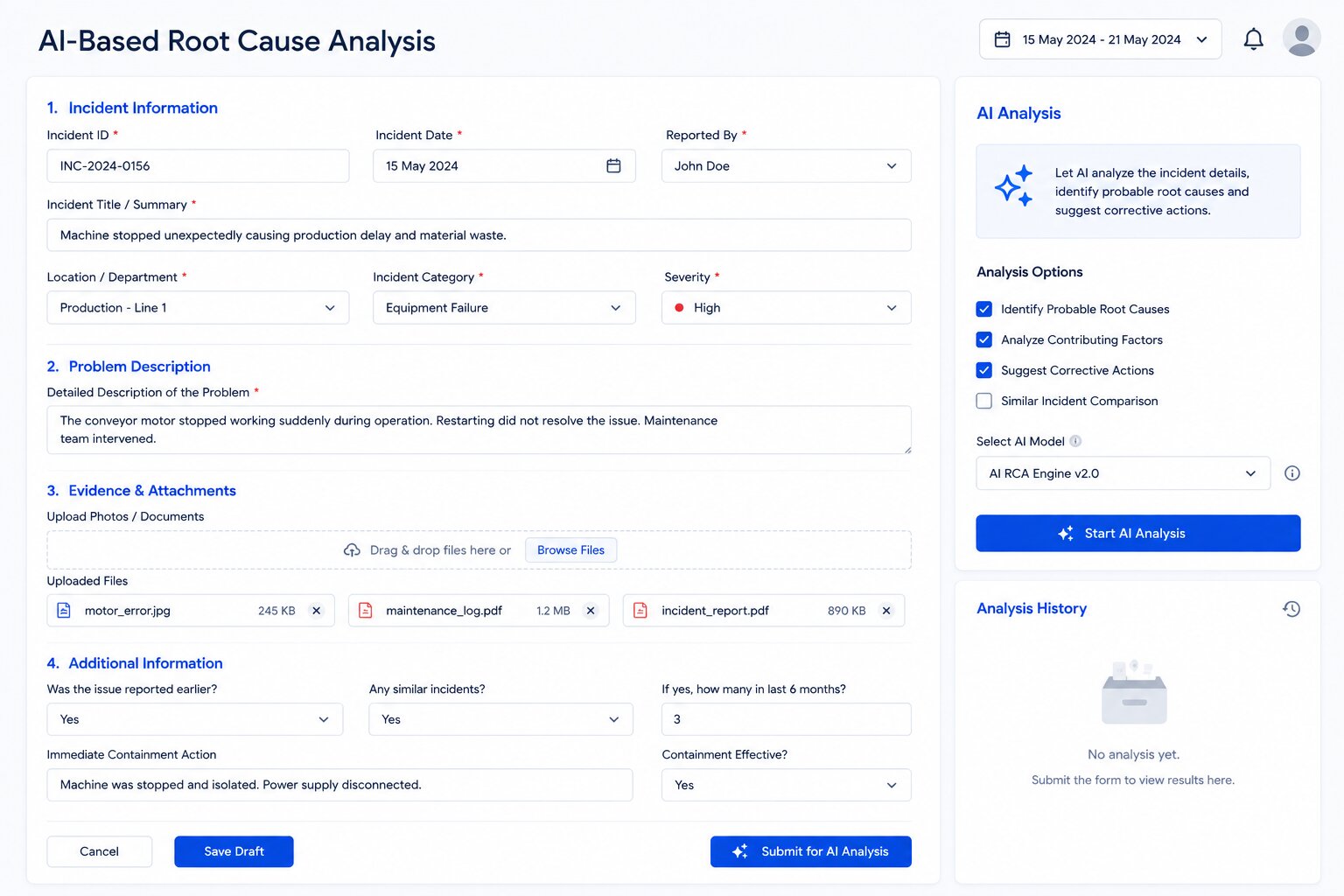
Advanced audit management platforms use AI to analyze patterns in nonconformances and suggest probable root causes based on historical data. This accelerates investigation, reduces guesswork, and helps teams address the actual source of recurring problems rather than just treating symptoms, saving significant time for quality and compliance teams.
Corrective & Preventive Action (CAPA)
A strong CAPA module allows teams to define corrective actions to fix identified issues and preventive actions to stop recurrence altogether. This structured approach closes the loop between identifying a problem and permanently resolving it, ensuring that the same nonconformance doesn’t appear audit after audit.
Action Tracking
Every corrective and preventive action is assigned an owner, deadline, and status. Action tracking dashboards ensure accountability and make it easy to follow up on tasks until they are fully resolved, giving managers a clear, real-time view of what’s outstanding across the entire organization.
Regulatory Compliance
The best audit management software, whether used as general-purpose audit software or dedicated compliance audit software, is built to align with industry standards and regulations, helping organizations stay audit-ready at all times, respond confidently to regulatory inspections, and avoid costly penalties or shutdowns resulting from non-compliance.
| Standard / Regulation | Area | Main Purpose | |
|---|---|---|---|
| 1 | OSHA Standards | Occupational Safety | Workplace safety, hazard prevention, inspections and regulatory compliance |
| 2 | ISO 45001 | Occupational Health & Safety | Occupational health & safety management system |
| 3 | ISO 14001 | Environment | Environmental management and compliance |
| 4 | ISO 9001 | Quality | Quality management and process compliance |
| 5 | ISO 19011 | Auditing | Guidelines for planning and conducting audits |
| 6 | ISO 31000 | Risk Management | Risk identification, assessment and treatment |
| 7 | ISO 37301 | Compliance Management | Managing legal and regulatory compliance obligations |
Real-Time Dashboards & Reports
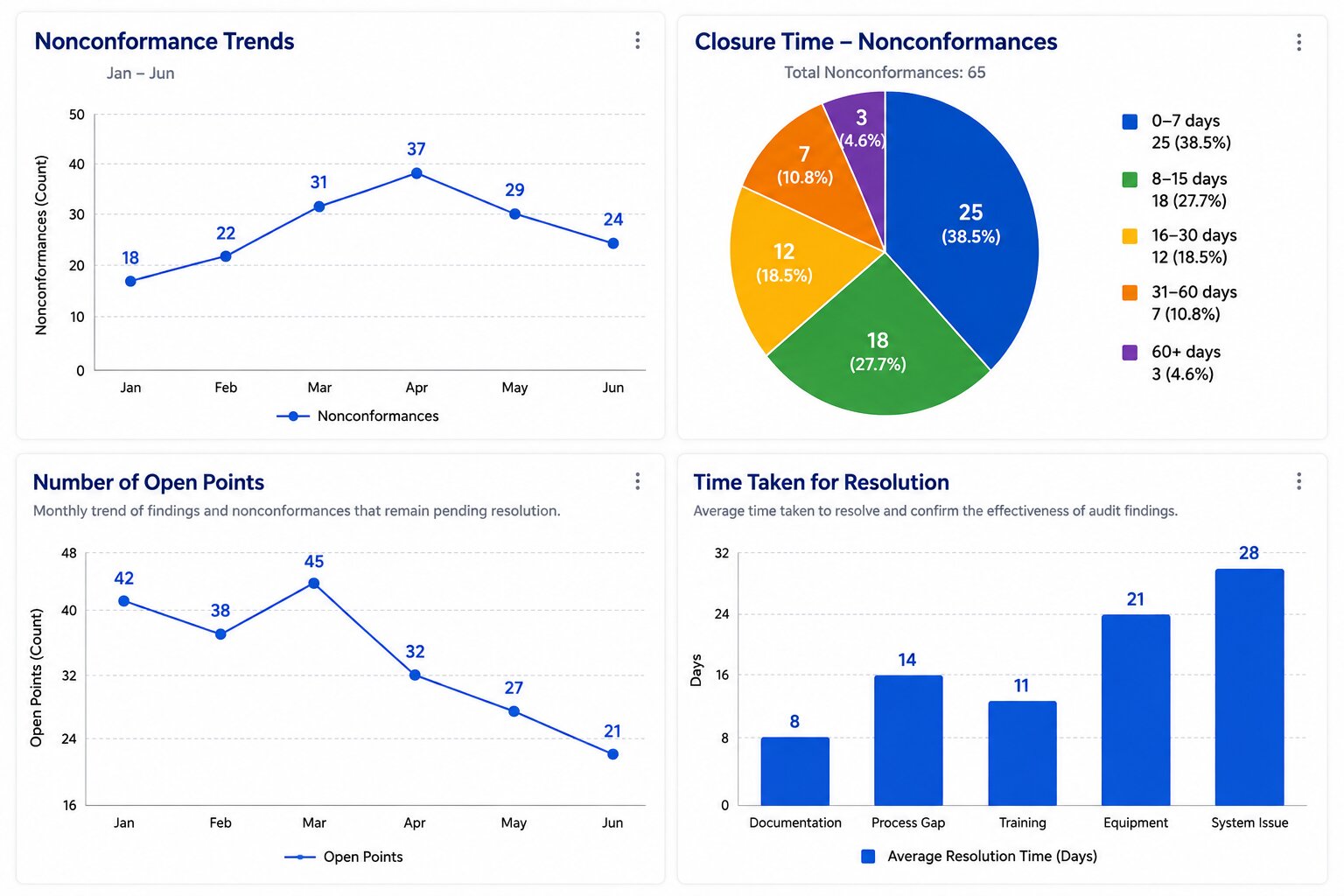
Interactive dashboards provide real-time visibility into key metrics such as
- Closure time – how long it takes to close a nonconformance, measured from the date it is opened to the date it is verified and closed.
- Number of open points – how many findings or nonconformances are still pending resolution at any given time.
- Time taken for resolution – how long it takes to actually solve the issue behind an audit finding, from the moment it is raised to the moment a fix is implemented and confirmed effective.
- Trends of NC – patterns in nonconformances over time, such as which departments, processes, or locations generate the most findings, and whether the overall number of NCs is rising, falling, or repeating for the same root cause.
These insights help leadership make informed decisions quickly, identify systemic issues before they escalate, and demonstrate continuous improvement to auditors and stakeholders alike.
Complete Audit Trail
Every actionfrom audit creation to finding closure is logged with timestamps and user details. As audit tracking software, this complete audit trail ensures transparency, protects the organization during regulatory reviews or internal investigations, and provides strong, defensible evidence of due diligence when it matters most.
Improved Accountability
With clear ownership assigned to every task, finding, and action, employees and departments are held accountable for their responsibilities. This reduces the chances of issues being overlooked, forgotten, or quietly deprioritized and fosters a culture where quality and compliance are everyone’s responsibility, not just the audit team’s.
Data-Driven Decision Making
Consolidated audit data and analytics from compliance management software empower leadership to identify recurring issues, high-risk areas, and performance trends across sites, suppliers, or business units. This enables decisions based on evidence rather than assumptions, helping organizations allocate resources more effectively toward the areas that need them most.
Continuous Improvement
Ultimately, the goal of audit software is to support a culture of continuous improvement. By systematically identifying gaps, tracking corrective actions, and analyzing trends over time, organizations can steadily enhance quality, safety, and operational efficiency, turning audits from a periodic obligation into an ongoing driver of organizational excellence.
Conclusion
Investing in the best audit management software is no longer a luxury; it’s a necessity for organizations that want to stay compliant, efficient, and competitive in an increasingly regulated business environment. From centralized audit management and automated scheduling to AI-based root cause analysis and real-time dashboards, the right audit management system transforms audits from a compliance checkbox into a strategic tool for continuous improvement. Organizations that adopt such solutions not only reduce risk and improve accountability but also build a stronger foundation for long-term operational excellence, customer trust, and sustainable growth. You are enterprise with large number of employees; they should have mandatory audit management software