
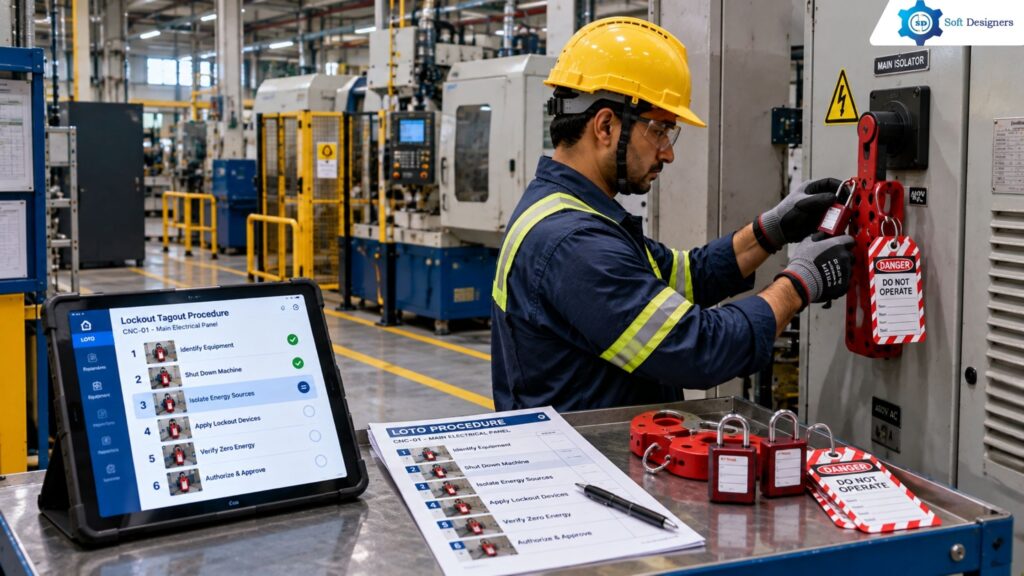
Lockout tagout (LOTO) protects maintenance teams from hazardous energy, yet many manufacturing plants still run it on laminated sheets, binders, and handwritten permits. When a plant decides to digitize lockout tagout procedures, the aim is straightforward: every isolation step should be visible, verified, and recorded at the moment it happens.
This article covers what digital LOTO means, why paper falls short, the standard procedure, and how to digitize lockout tagout procedures in seven practical steps. It also looks at the features to prioritize, the challenges to expect, and how Softdesigners’ lockout tagout software supports the shift.
What Does It Mean to Digitize Lockout Tagout Procedures?
To digitize lockout tagout procedures means moving the whole energy control lifecycle, from the written procedure to the final lock removal, into one connected system. It goes well beyond scanning PDFs. A properly digital program changes how procedures are stored, executed, and proven.
- Digital procedure library: Every machine-specific procedure lives in one controlled repository, so technicians open the current approved version instead of a printed copy that may be years old.
- Workflow-driven execution: The system guides authorized employees through each isolation step in sequence and holds progress until the previous step is confirmed.
- Connected records: Locks, tags, permits, inspections, and approvals link to the same asset record, which builds an audit trail without manual paperwork.
Why Paper-Based LOTO Procedures Fall Short in Manufacturing Plants
Paper works on a small scale, but it struggles once a plant adds more machines, shifts, and contractors. Four weaknesses appear again and again.
- Outdated procedures: Equipment changes faster than documents. A new valve can make a printed procedure wrong while it still hangs on the machine.
- No real-time visibility: Supervisors cannot see which machines are locked out, who holds the locks, or how long isolation has lasted without walking the floor.
- Missed or incomplete steps: A paper checklist can be signed without the work being done, and nobody can verify the sequence afterward.
- Shift handover gaps: When a job spans shifts, lock ownership and status often pass along verbally, which is exactly where information gets lost.
These gaps carry real regulatory weight. OSHA’s control of hazardous energy standard, 29 CFR 1910.147, requires documented procedures and periodic inspections, and paper makes both harder to prove.
Step-by-Step LOTO Procedure
Digitization works best when the underlying procedure is sound, so it helps to restate the standard sequence that any software has to support.
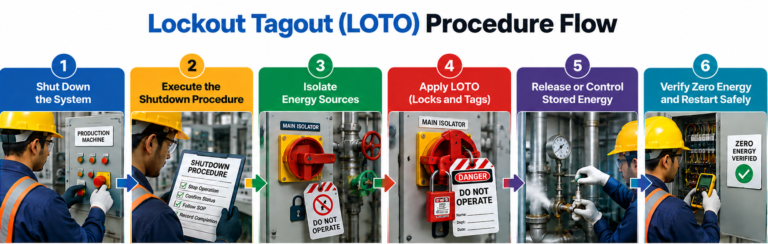
- Shut down the system: Notify affected employees, identify the energy sources, and review the machine-specific procedure before touching any control.
- Execute the shutdown procedure: Stop the equipment through its normal controls, in the order the procedure defines.
- Isolate energy sources: Operate breakers, disconnects, and valves so that every energy source is separated from the machine.
- Apply LOTO (locks and tags): Each authorized employee attaches a personal lock and tag to every isolation point.
- Release or control stored energy: Bleed pressure, discharge capacitors, block moving parts, and relieve spring tension.
- Verify zero energy and restart safely: Attempt a start-up to confirm isolation, complete the work, then remove locks, clear the area, and restore energy in the correct order.
Each of these six steps is a point where software can add control. Notifications can reach affected employees before shutdown, sequencing can prevent isolation steps from being skipped, and a required zero-energy check can stop a job from moving forward until someone confirms it. The procedure itself stays the same, but the system makes it far harder to deviate from
How to Digitize Lockout Tagout Procedures
A phased approach keeps the project manageable and protects data quality. These seven steps follow the order most manufacturing plants find workable.
- Audit your current LOTO program: Review existing procedures, inspection records, and incident history to find gaps, duplicates, and outdated documents before anything moves into software.
- Build an asset and energy source register: List every machine with its electrical, pneumatic, hydraulic, thermal, and gravitational energy sources and isolation points. This register becomes the foundation of every digital procedure.
- Standardize machine-specific procedures: Rewrite procedures in one consistent format with clear steps, photos of isolation points, and required devices. Consistency makes training and review faster.
- Define roles and authorizations: Separate authorized employees, affected employees, and approvers, and set permissions to match. Only trained people should be able to apply or release locks.
- Configure digital workflows: Set up step sequencing, approvals, and mandatory verification checkpoints so the system enforces the procedure instead of merely displaying it.
- Link LOTO with permit to work: Connect lockout records to the permit to work process so that hot work, confined space entry, and similar permits cannot be issued until isolation is confirmed.
- Enable mobile and QR access: Place a QR code on each machine so technicians can scan it and open the exact procedure on a phone or tablet at the point of work.
Key Features to Look for in Digital LOTO Software
Not every tool that claims to digitize lockout tagout procedures covers the full lifecycle. Measure vendors against the capabilities below before you commit.
- Machine-specific procedure management: The software should store versioned procedures for each asset, complete with photos, device lists, and approval history. Revisions must be controlled so that only the current version reaches the field.
- Real-time lock and tag tracking: Supervisors need a live view of which locks are applied, who owns them, and which machines are isolated right now. That visibility prevents accidental start-ups and speeds up audits.
- Group lockout and shift handover support: Complex jobs involve many people and several shifts. The system should record each person’s lock, transfer responsibility cleanly at handover, and show when the last worker has removed their lock.
- Automated periodic inspections and reminders: OSHA requires periodic inspection of energy control procedures at least once a year. Scheduled inspections, reminders, and recorded results keep that obligation from slipping.
- Audit-ready reporting: Reports should show who isolated what, when, and under which permit, and they should export quickly for internal reviews, ISO 45001 audits, or regulator requests.
Common Challenges When You Digitize Lockout Tagout Procedures
Even well-planned projects meet friction. Knowing the usual obstacles lets you plan around them.
- Incomplete asset data: Many plants lack accurate lists of machines and isolation points. Start with critical equipment and expand in phases instead of waiting for perfect data.
- Connectivity limits in plant areas: Pump rooms, basements, and remote yards often have weak signals. Choose software with offline access that syncs once the device reconnects.
- Hardware and software mismatch: Existing locks, tags, and devices must work with QR labels and scanning methods. Test a pilot area before full rollout.
- Keeping procedures current: Digital records go stale when nobody owns them. Tie procedure reviews to the management of change process so equipment modifications trigger updates.
Benefits of Digitizing Lockout Tagout Procedures
The payoff shows up in safety, productivity, and governance at the same time.
- Fewer energy control incidents: Enforced sequencing and verification reduce the human errors that lead to unexpected energization.
- Faster, more consistent execution: Technicians open the right procedure in seconds and follow the same steps on every shift, which shortens downtime.
- Stronger compliance posture: Automated inspections and complete records make it easier to demonstrate conformity with OSHA 1910.147 and ISO 45001.
- Better management visibility: Dashboards expose lockout duration, overdue inspections, and repeat issues, so leaders act on data rather than anecdotes.
How Softdesigners Lockout Tagout Software Supports Digital LOTO
Softdesigners’ lockout tagout software gives manufacturing teams one platform to run isolation from request to release.
- Permit to work integrations: LOTO records connect directly with permit to work, so high-risk permits depend on confirmed isolation.
- Approval workflow: Configurable approvals route each lockout request to the right supervisor or safety officer before work begins.
- Notification: Automated alerts keep workers, supervisors, and safety teams informed about new lockouts, pending approvals, and overdue inspections.
- Report analytics: Built-in reports and dashboards give EHS managers a clear view of lockout activity, compliance status, and trends across plants.
Conclusion
Paper-based energy control cannot keep pace with modern plants. When you digitize lockout tagout procedures, you replace uncertainty with verified steps, live visibility, and records that stand up in any audit. Begin with a program audit and a clean asset register, build workflows that enforce each step, and connect lockout to permit to work. To see how this works in practice, explore Softdesigners lockout tagout software and request a demo.
Acting early also pays off over time. The procedures, registers, and approval rules built now become reusable assets as the program grows, so each additional machine can be brought under the same controls in a fraction of the effort.
Digitize Lockout Tagout Procedures FAQ
Digitizing lockout tagout procedures means using digital software to manage energy isolation instructions, lock and tag records, approvals, verification steps, and inspections instead of relying on paper-based documents.
Manufacturing plants can digitize LOTO procedures by auditing existing documents, creating an equipment and energy source register, standardizing procedures, configuring digital workflows, integrating Permit to Work systems, and enabling mobile or QR code access.
Digital LOTO software improves workplace safety, reduces procedural errors, streamlines approvals, supports shift handovers, provides real-time lockout visibility, and simplifies compliance documentation and audits.
Key features include machine-specific procedures, lock and tag tracking, group lockout management, shift handover records, automated inspection reminders, approval workflows, mobile access, and audit-ready reports.
Yes. Digital LOTO software can integrate with Permit to Work systems to link energy isolation verification with high-risk work permits, helping ensure required safety checks and approvals are completed before work begins.
Softdesigners Lockout Tagout Software helps manufacturing plants manage isolation procedures, digital approvals, automated notifications, Permit to Work integrations, and reporting dashboards to improve safety oversight and maintain traceable LOTO records.