
Few workplaces carry as many hazards at once as a single mine. Underground workings bring ground instability, methane accumulation, oxygen deficiency and restricted escape routes, while open-pit operations add slope failures, haul road traffic and dust. Drilling, blasting, material transportation and mineral processing each introduce separate risks, and every one of them needs environmental, health and safety monitoring that continues across all shifts, which is where EHS software in the mining industry becomes relevant.
Much of that responsibility falls on mining Safety Officers. Inspections, permit checks, gas-reading reviews, incident follow-ups and training records compete for limited time, and scattered paper files make it difficult to see which issues remain open. Centralized EHS software keeps hazards, permits, inspections and corrective actions in one system, giving Safety Officers and mine management a shared view of outstanding work. It supports field judgment and does not replace it.
What Is EHS Software in the Mining Industry?
EHS software in the mining industry is a digital platform used to manage environmental monitoring, occupational health and workplace safety across mining operations. A mining safety management software platform records hazards, inspections, permits, incidents and corrective actions in a structured form, with each entry tied to a location, a responsible person and a due date.
Paper-based systems usually leave these records in site offices, logbooks and individual files, so a pending permit closure or an overdue corrective action can stay unnoticed for days. Centralized digital management brings records from underground and surface operations into one environment, accessible through web and mobile tools even from remote locations. The software documents and tracks the safety process. Ventilation, gas detection, ground support and equipment maintenance remain physical controls handled by trained personnel and approved instruments.
Key EHS Challenges in the Mining Industry
Underground Mining Hazards
Roof falls and rockfalls remain a constant concern where ground conditions change between shifts. Methane accumulation creates explosion risk, while carbon monoxide, carbon dioxide and other poisonous gases, along with oxygen deficiency, depend on effective ventilation. Methane is flammable at roughly 5% to 15% by volume in air, carbon monoxide has an OSHA eight-hour limit of 50 ppm (NIOSH recommends 35 ppm), and carbon dioxide an eight-hour limit of 5,000 ppm. Restricted access complicates evacuation, since escape routes can be long and worker locations uncertain
Open-Pit Mining Hazards
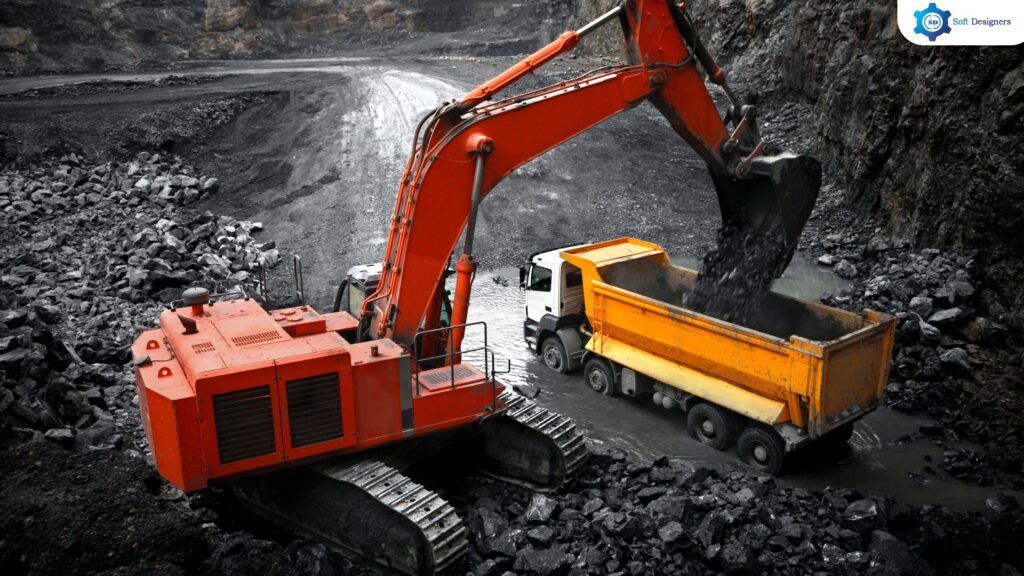
Slope failures and falling rocks threaten benches and haul roads. Heavy equipment adds collision and rollover risk: haul trucks have large blind spots, reversing is especially dangerous, and an excavator working beneath an unstable slope exposes the operator and nearby workers. Dust and poor visibility worsen these conditions, while drilling, blasting and work near excavated edges demand strict exclusion-zone discipline.
Confined-Space and Oxygen-Related Hazards
Shafts, tanks, sumps and enclosed maintenance areas can hold oxygen deficiency, oxygen enrichment, carbon dioxide or toxic gases that give little warning. A maintenance crew entering a sump without atmospheric testing faces conditions nobody has verified. As a general occupational reference, normal air holds approximately 20.9% oxygen, while OSHA defines oxygen-deficient atmospheres as below 19.5% and oxygen-enriched atmospheres as above 23.5%. These are reference values, not entry criteria. Statutory limits for mine atmospheres come from DGMS regulations such as the Coal Mines Regulations, 2017, vary by mine type and take precedence. Safe entry depends on testing with approved instruments, adequate ventilation, written entry authorization and rescue arrangements in place before anyone enters.
Other Occupational Safety Challenges
Work at height on conveyor galleries and crusher structures, machinery entanglement, crushing injuries, electrical hazards and fire risks occur routinely. Respirable dust leads to respiratory disease, noise and vibration from drilling and haulage affect hearing and the body over years, heat stress burdens underground crews, and chemical exposure accompanies processing and maintenance.
Challenges in Manual Safety Management
Records spread across several mining locations are hard to consolidate. Near misses go unreported when forms are completed days later, and documentation is often left incomplete. A Safety Officer who finds the same unsafe condition repeatedly during underground inspections may struggle to prove the pattern from separate paper files. Corrective actions after an equipment-related incident can stay open for weeks, and training expiry for employees and contractors is easy to miss.
Why Is EHS Software Important in the Mining Industry?
Digital safety management plays a vital role in strengthening safety practices across mining operations.
Improves Hazard Identification and Risk Management
Hazards are logged with location, likelihood, severity and assigned control measures. Risk ratings stay visible and reviewable, so a hazard noted during a shift reaches the person who must act on it.
Strengthens Incident Reporting and Investigation
Accident and near-miss reports are captured when the event happens, including from remote areas. Investigations link root cause analysis to assigned corrective actions, which makes delays in closure easy to see.
Improves Emergency Preparedness
Emergency plans, evacuation procedures, rescue-team details and worker accountability records stay in one place, so documents can be reviewed and drills tracked.
Supports Regulatory Compliance
Permits, inspection records and audit findings are stored with dates and approvals, which supports compliance tracking. Applicable Indian mining regulations and site-specific requirements still determine what must be done.
Improves Occupational Health Monitoring
Dust exposure records, gas-monitoring entries, noise assessments and health surveillance documents sit alongside safety data. Overdue assessments and exposure trends become easier to identify, which strengthens occupational health and safety management.
Provides Better Safety Visibility
Dashboards in mining safety software show open hazards, overdue corrective actions, inspection completion and training status across sites, helping Safety Officers and mine management prioritize outstanding issues.
Key Features of EHS Software for Mining Operations
EHS software features for mining companies are usually delivered as connected modules within one EHS management software platform.
Risk Assessment Management
Job Safety Analysis (JSA) and Job Hazard Analysis (JHA) break tasks into steps, identify hazards, apply risk scoring and document control measures. For a drilling or maintenance task, mining risk assessment records let the Safety Officer confirm that controls were defined before work began.
Permit to Work Management
Digital permits cover confined-space entry, work at height, hot work and electrical maintenance. Permit to Work software tracks approvals, conditions and closure, so open permits do not go unnoticed. Linked LOTO records allow isolation to be checked before electrical maintenance starts.
Incident Management
Incident management software records accidents, near misses and unsafe conditions, supports root cause analysis and tracks Corrective and Preventive Action (CAPA) through to closure.
Safety Inspection and Audit Management
Safety inspection software supports underground and surface inspections, safety audits and equipment checklists for haul trucks, excavators, wheel loaders, bulldozers, drilling rigs, conveyors and crushers. Findings generate follow-up tasks, although mechanical repair remains a maintenance function.
Atmospheric, Gas and Chemical Safety Management
EHS software records oxygen (O₂), carbon dioxide (CO₂), methane (CH₄), carbon monoxide (CO) and other gas readings with timestamps and location details. It can also generate alerts when readings exceed configured safety limits. SDS Management Software provides centralised access to chemical safety information, including handling instructions, storage requirements, PPE recommendations, first-aid measures and spill response procedures. Together, these features help Safety Officers manage gas monitoring records and chemical safety information across mining operations.
PPE and Fall Protection Management
Helmets, goggles, gloves, respirators, safety boots and hearing protection are tracked with training records, and full-body harness and lifeline inspections are documented. AI-powered PPE compliance monitoring, can flag defined visual gaps from camera feeds. Ensuring that workers actually wear protective equipment still depends on supervision and site discipline.
Emergency and Headcount Management
Employee and contractor records, entry and exit information where integrated, and evacuation drill records support emergency accountability.
Environmental and Occupational Health Management
Dust and noise monitoring records, water quality results, emissions records, waste handling and disposal documentation and occupational health files are organized for environmental compliance management, with inspection findings assigned for correction.
EHS Dashboard and Reporting
An EHS dashboard brings key mining safety information into one place, including incident reports, risk assessments, JSA records, permits, inspections, gas readings, PPE compliance and corrective actions. Safety Officers can monitor activities across underground and surface operations, identify overdue actions, review recurring hazards and track safety performance through reports and visual summaries. This helps management make informed decisions and address safety concerns before they lead to serious incidents.
How Does EHS Software Improve Safety Management in Mining Operations?
The scenarios below are illustrative operational examples, not documented incidents.
Managing Confined-Space Entry
A maintenance crew is assigned to clean a sump. The confined-space permit records the authorizing person, isolation requirements, atmospheric test results, entry personnel and rescue arrangements. The Safety Officer reviews these entries before entry is allowed and tracks the permit until closure. If testing has not been recorded, the gap is visible before anyone enters.
Monitoring Oxygen and Hazardous Gases
Pre-entry readings from approved instruments are recorded against the permit, and readings taken during the work are added, either entered or transferred through suitable sensor integrations. A deficient or enriched oxygen reading, or methane or carbon monoxide above site-defined limits, alerts designated personnel and is logged for follow-up. Monitoring frequency must be set by the risk assessment, site conditions and applicable regulations, so hourly testing is not universally sufficient. Recording a reading never replaces physically detecting the gas or the ventilation controls that manage it.
Conducting Job Safety Analysis Before Work
Before conveyor repair or blast preparation, a JSA divides the task into steps, identifies hazards, records PPE requirements and sets controls. The assessment becomes a documented pre-work step, while controls such as guarding and barricades remain physical measures.
Managing Work-at-Height Activities
Permits, harness inspection records, lifeline documentation and rescue planning can be verified together before work begins on a crusher structure or conveyor gantry.
Controlling Heavy Equipment and Pedestrian Interaction
A haul truck reversing near workers, or an excavator operating beside an unstable slope, creates risks that traffic management, exclusion zones and operator competence must control. Digital checklists record pre-start inspections of haul trucks, wheel loaders and bulldozers, and report log near misses. AI-powered worker-equipment proximity detection, can flag unsafe proximity and restricted-zone access for review, supporting physical traffic controls without replacing them. Conveyor and crusher maintenance adds hazardous energy risk, so LOTO records document isolation before work starts.
Tracking Mining Accidents and Corrective Actions
After an equipment-related incident, the report, investigation findings and assigned corrective actions stay linked. Overdue items are flagged, and analysis of recurring incident patterns can show when the same unsafe condition keeps appearing in underground inspections.
Improving Emergency Worker Accountability
During an evacuation, integrated headcount information helps identify workers whose status still needs verification. Evacuation and rescue operations are carried out physically by trained personnel.
Conclusion
Mining combines ground instability, hazardous gases, heavy equipment, confined spaces and long-term health exposures, and these risks differ between underground and open-pit operations, while fragmented records make consistent oversight difficult. Managing them requires disciplined hazard identification and risk management, controlled confined-space entry, dependable gas-monitoring records, PPE compliance and emergency preparedness.
EHS software in the mining industry brings these records together across sites and shifts, links incidents to corrective actions and gives Safety Officers a clear view of unfinished work. It does not replace engineering controls, approved instruments, trained personnel or statutory procedures. Used alongside them, it supports organized and proactive mining safety management.
Partner with Soft Designers to strengthen mining safety through smarter EHS management, improved risk visibility and proactive workplace safety practices.