
Safety Tips for Using a PTW Health and Safety
PTW Health and Safety is a standard procedure used to control high-risk activities in the workplace. It is an essential process that ensures that all work is carried out safely and systematically.
Here are nine steps to safe work using a Permit to Work:
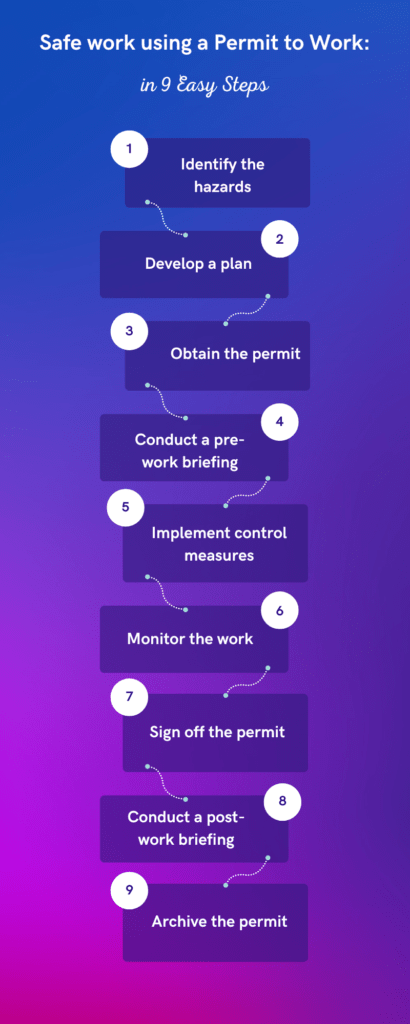
1. Identify the hazards:
Identify all the hazards associated with the work activity and assess the risks involved.
2. Develop a plan:
Develop a plan to control the risks and ensure that all necessary resources are available.
3. Obtain the permit:
Obtain a permit to work from the authorized person, which should clearly outline the scope of work, location, and duration.
4. Conduct a pre-work briefing:
Conduct a pre-work briefing that includes all relevant information, such as the hazards, risks, and control measures.
5. Implement control measures:
Implement control measures, such as isolation, lockout/tagout, and personal protective equipment (PPE), as per the PTW requirements.
6. Monitor the work:
Monitor the work activity to ensure that it is being carried out as per the PTW and that all control measures are in place..
7. Sign off the permit:
Once the work is completed, sign off the permit to confirm that the work has been carried out in a safe and controlled manner.
8. Conduct a post-work briefing:
Conduct a post-work briefing to review the work activity and identify any lessons learned.
9. Archive the permit:
Archive the permit to work for future reference and ensure that it is easily accessible to authorized personnel.
By following these nine steps, you can ensure that high-risk activities are carried out safely and systematically, minimizing the risk of accidents and injuries in the workplace.
You can manage Permit to work easily and quickly!
Want to know how? Click the below button to know more
Permit to Work (PTW) Safety FAQ
What is a Permit to Work (PTW) system?
A Permit to Work (PTW) system is a formal safety procedure used to control high-risk or non-routine work activities. It ensures that hazards are identified, risks are assessed, and appropriate safety measures are implemented before work begins.
What are the key steps in a PTW safety process?
The PTW process typically includes steps such as job request, hazard identification, risk assessment, permit preparation, approval, pre-job briefing, work execution, monitoring, and final closure. These steps ensure safe planning and execution of high-risk tasks.
Why is hazard identification important in PTW?
Hazard identification is crucial because it helps recognize potential risks before work begins. By identifying hazards early, organizations can implement control measures to prevent accidents and ensure worker safety.
How does a PTW system ensure workplace safety?
A PTW system ensures safety by providing a structured process for authorizing work, communicating risks, and enforcing safety controls. It ensures that only trained personnel perform tasks under controlled conditions.
What types of work require a permit to work?
PTW is required for high-risk activities such as hot work, confined space entry, electrical work, working at heights, and maintenance tasks involving hazardous conditions.
How does digital PTW software improve safety processes?
Digital PTW software improves safety by automating workflows, standardizing procedures, and providing real-time visibility into ongoing work. It reduces paperwork, minimizes human error, and enhances compliance with safety regulations.
What is the importance of monitoring and closure in PTW?
Monitoring ensures that safety measures are followed during work, while closure verifies that the task is completed safely and the site is secure. Proper closure also provides documentation for audits and continuous improvement.