
Andon:
There are many ways to use the Andon system in Lean manufacturing and in several other global industries such as Chemical Industries, Automotive industries, Oil and gas industries, FMCG, Manufacture and process industries, Electronic industries, Aerospace industries Pharmaceutical industries and food & beverage industries etc.,
Regardless of where it’s being used, the only way Andon works is if you truly empower operators to use it. This means giving operators not only the permission but the obligation to stop the line when issues arise.
Employees, especially in manufacturing, are hesitant to stop the line because of the cost of downtime or for fear of being wrong
In manufacturing premises, it is important to have a visual and audible response tool such as Andon system in order to reduce the production downtime.
This system act as visual and audio alarm raised by the operator in order to alert the maintenance department. There will be an Andon Monitor where it will display the machine or system with colour coding i.e., Red defined as Issue, Yellow as Issue acknowledged and Green defined as Ready
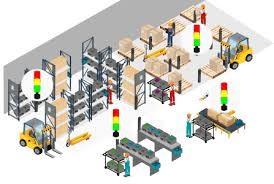
The Andon system in Lean manufacturing takes the position that stopping work at the moment will save the organization from major and costly issues in the future.
The Andon system in Lean manufacturing also requires a plan for resolving the issue. Who will be the team that gathers to perform the root cause analysis and apply the solution? Given that this can occur at any moment, knowing the players ahead of time will increase the speed of resolution. If operators are left waiting around after raising the issue in Andon system, they will be less likely to pull it in the future because the cost will seemingly outweigh the benefit

Do you want to implement Andon?