Category: EHS Management

EHS ManagementRisk assessment

Risk Assessment Matrix: A Step-by-Step Guide

Introduction: Understanding the Importance of Risk Assessment Matrix

Risk is an inherent part of any business endeavor. However, how you manage and mitigate those risks can significantly impact your success. One essential tool in the realm of risk management is the Risk Assessment Matrix. In this comprehensive guide, we will take you through the step-by-step process of creating and using a Risk Assessment Matrix to make informed decisions, prioritize risks, and ultimately enhance your business’s resilience.

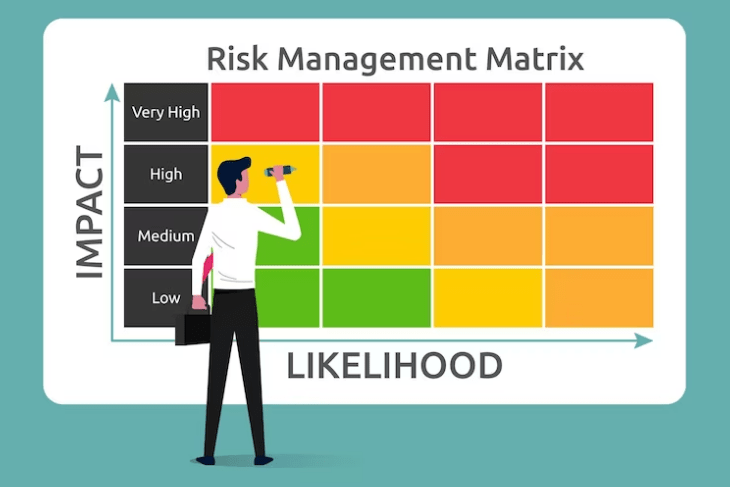
risk matrix

Step 1: Identify and Define Your Risks

The first step in creating a matrix for Risk Assessment is to identify and define the specific risks your business faces. These risks can vary widely and may include financial, operational, strategic, or compliance-related challenges. To compile a comprehensive list, consider conducting brainstorming sessions, reviewing historical data, and seeking input from various departments and stakeholders within your organization.

Step 2: Assess Probability and Impact

Once you’ve identified the risks, the next step is to assess their probability and impact. Use a scale, such as low, medium, or high, to determine how likely each risk is to occur and what the potential consequences would be if it does. This step helps you prioritize risks and allocate resources more effectively.

Step 3: Create the Risk Assessment Matrix

Now it’s time to construct your Risk Assessment. This matrix typically consists of a grid, with one axis representing the likelihood of a risk occurring and the other axis showing the impact of the risk. Each intersection in the grid is assigned a risk rating, often color-coded for quick reference. For instance, a low likelihood and low impact risk might be labeled as “low risk,” while a high likelihood and high impact risk would be labeled “high risk.”

Step 4: Develop Risk Mitigation Strategies

With your Risk Assessment in hand, it’s time to move on to developing risk mitigation strategies. For each high and medium-risk area, create specific action plans that outline how your business will address and mitigate the risks. These strategies may involve process improvements, financial safeguards, or contingency planning.

Step 5: Implement and Monitor

Put your risk mitigation strategies into action and continuously monitor their progress. Regularly update your Risk Assessment Matrix as new risks emerge or existing risks evolve. Be flexible and adaptable in your risk management approach.

Step 6: Communicate and Educate

Effective communication and education are vital in risk management. Ensure that your employees, stakeholders, and decision-makers are well-informed about the risks, the mitigation strategies in place, and their roles in risk management.

Embrace Proactive Risk Management

In today’s dynamic business environment, proactive risk management is critical. A Risk Assessment Matrix is a powerful tool that can help businesses navigate uncertainties and make informed decisions. By following this step-by-step guide, you can create and use a Risk matrix to enhance your business’s resilience, protect your investments, and optimize your decision-making processes.

Remember, risk management is an ongoing process, and a well-constructed Risk Matrix is a valuable asset for any business looking to thrive in a rapidly changing world.

Conclusion: Embrace the Digital Revolution in Risk Management

The adoption of a digital solution for your Risk Assessment Matrix can transform the way your business manages and mitigates risks. It streamlines the process, improves accuracy, and provides real-time insights, all of which are vital for modern businesses seeking to thrive in a dynamic environment.

As the digital revolution continues, embracing digital risk management tools is not just an option; it’s a necessity for organizations looking to stay competitive and resilient. By following this step-by-step guide, you can harness the power of digitalization to enhance your risk management practices and make more informed decisions for the future of your business.

Risk Assessment Matrix FAQ

What is a risk assessment matrix?
A risk assessment matrix is a visual tool used to identify, evaluate, and prioritize risks by comparing their likelihood of occurrence with their potential impact. It helps organizations make informed decisions and focus on high-risk areas.
How does a risk assessment matrix work?
The matrix plots risks on a grid where one axis represents likelihood and the other represents impact. Based on their position, risks are categorized as low, medium, or high priority, helping teams decide which risks need immediate attention.
What are the steps to create a risk assessment matrix?
The key steps include identifying risks, determining their likelihood, assessing their impact, assigning a risk score, and prioritizing them for action. These steps ensure a structured and effective risk evaluation process.
Why is a risk assessment matrix important?
It is important because it provides a clear and structured way to evaluate risks, prioritize critical issues, and allocate resources effectively. This improves decision-making and helps prevent potential disruptions.
What is the difference between likelihood and impact in a risk matrix?
Likelihood refers to how probable it is that a risk will occur, while impact refers to the severity of the consequences if it happens. Both factors are used together to determine the overall risk level.
How often should a risk assessment matrix be updated?
A risk assessment matrix should be reviewed and updated regularly—at least annually or whenever there are significant changes in operations, processes, or external conditions—to ensure it reflects current risks.
Which industries use risk assessment matrices?
Risk assessment matrices are widely used across industries such as manufacturing, construction, healthcare, oil & gas, and IT, as they help manage operational, safety, and compliance risks effectively.
EHS Management

Why Every Business Should Create Incident Reports?

There may not be a top priority on your priority list when you are in the fast-paced world of business, where there are always new challenges and opportunities around every corner. It is important for the health, safety, and overall success of your organization to pay attention to these seemingly routine documents.

This blog explores the compelling reasons why every business should make incident reporting a fundamental part of its operations, no matter their company size or industry.

  1. Safety First, Always:

The most important part of incident reports is how they help you keep your staff, clients, and visitors safe. Documenting incidents, near-misses, or dangerous situations enables you to look into the root causes, take corrective action, and avoid future occurrences. It’s a proactive move to ensure a secure workplace.

2. Legal and Regulatory Compliance:

Various laws and regulations require businesses to maintain incident records. Failing to comply can result in fines, penalties, and legal consequences. By diligently creating incident reports, you demonstrate your commitment to abiding by the law and protecting your business from unnecessary legal troubles.

3. Risk Mitigation:

Incident reports serve as a valuable tool for risk management. They help identify patterns and trends, allowing you to take proactive measures to mitigate risks before they escalate into more significant problems. By addressing potential issues early on, you can save your business from costly setbacks.

4. Employee Empowerment:

Employee reporting of incidents promotes a culture of accountability and responsibility. Employee engagement and investment in the company’s performance increase when they perceive that their issues are taken seriously and change for the better. As a result, morale and production may increase.

5. Continuous Improvement:

Incident reports are not just about addressing problems; they’re also a pathway to improvement. By analyzing incident data, you can identify areas where processes can be refined, training can be enhanced, or equipment can be upgraded. This continuous improvement cycle can help your business stay competitive and efficient.

6. Insurance Benefits:

Having thoroughly recorded incident reports helps speed up the insurance claim filing procedure. Insurance firms frequently need thorough records to adequately evaluate claims. By having incident reports close to hand, you may speed up the claims procedure and return to normal more quickly.

7. Customer Trust and Reputation:

Safety-conscious businesses earn the trust of their customers. When customers know that you prioritize safety and take incidents seriously, it enhances your reputation. It’s a powerful marketing point that can set you apart from competitors.

In conclusion, incident reports are an essential instrument for maintaining safety, compliance, and overall corporate performance. They are not merely formal paperwork. By incorporating incident reporting into daily operations, your company will be better equipped and more resilient to deal with the challenges of the modern world.

Therefore, don’t undervalue the importance of the incident report form you have on your desk; it can hold the key to a safer and more prosperous future for your company.

Incident Reporting FAQ

What is an incident report?
An incident report is a formal document that records details of workplace events such as accidents, near misses, injuries, or safety violations. It includes information like date, time, location, people involved, and the nature of the incident.
Why is incident reporting important for businesses?
Incident reporting is essential because it helps businesses identify hazards, improve workplace safety, and prevent future incidents. It also supports compliance with regulations and strengthens overall risk management.
What types of incidents should be reported?
All incidents should be reported, including accidents, near misses, unsafe conditions, property damage, and health or safety concerns. Even minor incidents are important, as they help identify risks before they lead to serious issues.
How does incident reporting improve workplace safety?
Incident reports help organizations analyze root causes and implement corrective actions. This proactive approach reduces risks and prevents similar incidents from occurring in the future.
Can incident reporting reduce business costs?
Yes, effective incident reporting reduces costs by preventing accidents, minimizing downtime, and avoiding legal penalties. Addressing issues early is far less expensive than dealing with major incidents later.
How does incident reporting support compliance?
Many safety regulations require businesses to document and report workplace incidents. Maintaining accurate records ensures compliance, avoids penalties, and supports audits and inspections.
What are the benefits of using digital incident reporting systems?
Digital systems enable real-time reporting, centralized data storage, automated workflows, and advanced analytics. This improves accuracy, speeds up response time, and enhances overall safety management.
EHS Management

EHS Safety Management | Safety Software | Blog

Healthy Employees, Productive Workplace: A Deep Dive into Health and Safety in the Workplace

Introduction:

Health and safety in the workplace form the foundation of a productive and harmonious work environment, ensuring the physical and mental well-being of employees while safeguarding them from potential hazards. Health and safety measures not only prevent accidents and injuries but also contribute to higher employee morale, increased job satisfaction, and better overall performance. By prioritizing health and safety, organizations demonstrate their commitment to their workforce’s welfare, leading to a more engaged and motivated team.

The relationship between the components of employee health, workplace safety, and productivity creates a positive reinforcement cycle. As each element strengthens the others, organizations that prioritize these factors create a work environment where employees thrive, leading to increased productivity, improved business outcomes, and a stronger company culture.

The National Safety Council found that companies with strong safety cultures have employee injury rates that are 70% lower than companies with weak safety cultures. This leads to reduced absenteeism and increased productivity.

A healthier workforce is not just beneficial for individual employees; it has a ripple effect on the entire organization. Reduced absenteeism, higher morale, and better work quality are interconnected outcomes that create a positive cycle of improved productivity and organizational success. Organizations that invest in the health and well-being of their employees reap the rewards of a thriving, motivated, and high-performing workforce.

Learn about the Core Components of Health and Safety in the Workplace:

The key elements of a comprehensive health and safety program are:

  • Safety Committees and Employee Involvement: 

Establish safety committees comprising both management and employees to discuss safety concerns, review incidents, and suggest improvements. Involving employees in the decision-making process fosters a sense of ownership and encourages a collaborative approach to safety.

  • Safety Training and Education: 

Safety training and education are crucial for equipping employees with the knowledge and skills needed to perform their tasks safely. This includes training on using equipment, handling hazardous materials, following emergency procedures, and understanding workplace hazards. Regular refresher training ensures that employees stay up-to-date with best practices.

  • Injury Prevention Strategies: 

Injury prevention strategies involve identifying potential hazards and taking proactive measures to prevent workplace injuries. This can include implementing safety protocols, providing personal protective equipment (PPE), and using engineering controls to mitigate risks. By focusing on prevention, organizations can reduce the number of workplace accidents.

  • Emergency Response Planning: 

Develop comprehensive emergency response plans that cover a range of potential scenarios, such as fires, natural disasters, and medical emergencies. Conduct drills to ensure that employees are familiar with evacuation routes, assembly points, and emergency procedures.

  • Behavioral Safety Programs: 

Implement programs that focus on changing employee behavior and attitudes towards safety. These programs promote a safety-conscious culture by encouraging employees to watch out for each other’s safety, report unsafe conditions, and actively participate in safety initiatives.

  • Data Analysis and Continuous Improvement: 

Regularly analyze incident data, near-miss reports, and feedback from employees to identify trends and areas for improvement. Use this data to refine safety policies, procedures, and training programs to continually enhance the effectiveness of the health and safety program.

The role of Soft Designers company culture in promoting health and safety is essential for creating a safe, productive, and supportive work environment. We encourage open communication and make it easier for employees to voice safety concerns, report hazards, and provide feedback on health-related issues. This enables prompt identification and resolution of potential risks. 

To know more about our EHS Solution click below:

The challenges facing by manufacturing industry without EHS Software Solution:

The manufacturing industry faces several challenges related to employee safety due to the nature of its operations, use of heavy machinery, and complex work environments. Here are some key challenges:

Hazardous Work Environment:

Manufacturing often involves heavy machinery, chemicals, and hazardous materials. The presence of these elements increases the potential for accidents, exposure to toxins, and other safety risks.

Manual Handling and Ergonomics:

Employees in manufacturing often engage in manual lifting, carrying, and repetitive motions. These tasks can lead to musculoskeletal injuries if proper ergonomic practices are not followed.

Chemical Exposure:

Exposure to hazardous chemicals poses a significant risk. Adequate training, proper handling, and the use of personal protective equipment (PPE) are essential to mitigate this challenge.

Lack of Awareness:

Some employees might underestimate the risks associated with their tasks, leading to complacency and a lack of attention to safety protocols.

Emergency Response Preparedness:

Manufacturing sites must be prepared for various emergencies, including fires, chemical spills, and equipment malfunctions. Having well-rehearsed emergency response plans is crucial.

Addressing these challenges requires a comprehensive EHS software solution which helps in robust training, clear communication, regular equipment maintenance, proactive hazard identification, and fostering a culture of safety that values employee well-being.

There will be a solution to overcome the above challenges. Here are some software solutions and strategies that can help overcome the challenges faced by the manufacturing industry in employee safety:

1. Hazard Identification and Risk Assessment Software: Implement software that assists in identifying workplace hazards and conducting risk assessments. This enables proactive measures to mitigate risks and prioritize safety.

2. EHS safety software: Use Environment, Health, and Safety (EHS) management software to streamline safety processes, incident reporting, corrective action tracking, and compliance management.

3. AI PPE detection camera: AI-powered Personal Protective Equipment (PPE) detection is an innovative solution for enhancing workplace safety by ensuring that employees are wearing the necessary protective equipment.

4. Compliance Tracking Solutions: Use software to track and manage compliance with safety regulations, enabling automated alerts for renewals, audits, and inspections.

5. Mobile Apps for Reporting: Provide employees with mobile apps for reporting hazards, near-misses, and incidents on the go. This encourages a reporting culture and ensures timely identification of issues.

6. Cloud-Based Collaboration Tools: Use cloud-based platforms for communication and collaboration on safety initiatives, sharing best practices, and distributing safety-related updates.

7. Emergency Notification Systems: Implement software that enables rapid communication during emergencies, ensuring employees are informed and guided on proper procedures.

8. Data Analytics for Continuous Improvement: Utilize data analytics to analyze incident trends, identify recurring issues, and implement improvements to safety protocols.

9. Training Management Software: Adopt software to manage and track employee training, ensuring that everyone receives proper safety training and certifications.

By integrating these software solutions and strategies, the manufacturing industry can effectively address safety challenges, enhance operational efficiency, and create a culture of safety that prioritizes the well-being of employees.

Here are some case studies and success stories showcasing how top-class companies have successfully implemented EHS (Environment, Health, and Safety) software to enhance their safety and compliance efforts

EHS case study

Conclusion:

In the ever-changing landscape of safety, the journey towards a secure and thriving work environment is ongoing. As leaders, employees, and stakeholders, it’s crucial that we remain vigilant and adaptable to the dynamic challenges and opportunities that lie ahead.

Safety protocols that were effective yesterday might need adjustments to meet the demands of tomorrow. Regulatory requirements can shift, new technologies emerge, and best practices evolve. Staying updated is not just a choice; it’s a responsibility that ensures the well-being of every individual within our workplaces.

Adapting our strategies isn’t just a response to change; it’s a proactive stance against potential risks. It’s an acknowledgment that safety isn’t static; it’s a living, breathing commitment that requires our constant attention. By continuously fine-tuning our safety measures, we create a foundation of resilience that can withstand any unexpected challenges that come our way.

As technology advances and our understanding of safety deepens, there’s an abundance of resources, training, and expertise available to us. By embracing these tools and insights, we empower ourselves to create a culture where safety isn’t just a rule; it’s a shared value.

So, let’s stand together on the edge of change, with our eyes open to the future. Let’s commit to learning, growing, and refining our safety strategies. Let’s adapt and innovate, always putting the well-being of our colleagues first. By doing so, we not only protect ourselves and those around us, but we also contribute to a workplace where everyone can thrive, succeed, and look forward to each day with confidence. Stay updated, stay prepared, and let’s build a safer, brighter future together.

Prioritize and invest in your workplace health and safety initiatives today. Every step you take towards creating a safer environment ripples into a more secure future for everyone involved.

EHS Safety Management Software FAQ

What is EHS safety management software?
EHS safety management software is a digital platform that helps organizations manage environmental, health, and safety processes such as incident reporting, audits, compliance tracking, and risk assessments in one centralized system.
Why is EHS management important for businesses?
EHS management is important because it helps organizations identify hazards, reduce workplace risks, ensure regulatory compliance, and protect employees and the environment. It also supports sustainable operations and improves overall business performance.
What are the key features of EHS software?
Key features include incident management, risk assessment tools, audit management, compliance tracking, training management, real-time dashboards, and reporting. These features help organizations streamline safety processes and improve decision-making.
How does EHS software improve workplace safety?
EHS software improves workplace safety by enabling real-time monitoring, automating safety workflows, and identifying hazards early. It allows organizations to take proactive actions, reducing incidents and ensuring safer working environments.
How does EHS software help with compliance?
EHS software helps maintain compliance by tracking regulatory requirements, automating reporting, and maintaining accurate records. This ensures organizations meet safety and environmental standards while avoiding penalties.
What are the benefits of implementing EHS software?
Benefits include improved efficiency, reduced operational costs, enhanced safety performance, better data visibility, and stronger compliance. It also helps organizations transition from reactive to proactive safety management.
How does technology transform EHS management?
Technology transforms EHS management by digitizing processes, automating data collection, and providing real-time analytics. This leads to better decision-making, improved risk management, and a more proactive approach to workplace safety.

EHS ManagementUncategorized
Couple of workers fixing and climbing a scaffolding while following all the safety measures

Work at height Safety: Elevate Your Safety Standards

Work at height Safety solution to streamline the safety process

Working at Height safety software helps workers stay safe when working at height. It includes tools to help workers identify risks, plan work, and keep track of safety precautions. It also provides safety guidance and checklists to ensure workers are following proper safety protocols. The software can also help employers stay compliant with safety regulations.

worker working at height

How to Stay Safe When Working at Height:

Working at height can be dangerous and even deadly if you don’t take the proper precautions. The following tips can help you stay safe when working at height:

1. Wear the right safety equipment: When working at height, always wear a safety harness, hard hat, eye protection, and the appropriate work shoes.

2. Use the right tools: Make sure you have the right tools for the job, and that they are in good working order. Always make sure ladders and scaffolds are safe.

3. Inspect your equipment: Before you start the job, inspect all of your equipment to make sure it is in good condition and fit for purpose.

4. Secure your work area: Make sure your work area is secure and that you have taken all necessary steps to protect yourself and others in the area.

5. Have an emergency plan: In the event of an accident, it is important to have an emergency plan in place. Make sure everyone knows what to do, who to call, and where to go in case of an emergency.

6. Train your workers: Before anyone works at height, they should be trained in the proper procedures and safety protocols.

Are you looking for a way to manage workplace safety and reduce the risks associated with working at height?

Soft Designers provides a comprehensive solution that can help you better monitor and manage your safety protocols. With our software, you can quickly assess the risks of working at height and ensure that employees are following safety regulations.

Try our working at height safety software today and take your safety protocols to the next level.

Work at Height Safety FAQ

What is considered work at height?
Work at height refers to any task performed where a person could fall and suffer injury if proper precautions are not taken. This includes working on ladders, scaffolding, rooftops, or near open edges and fragile surfaces.
Why is work at height safety important?
Falls from height are one of the leading causes of workplace injuries and fatalities. Proper safety measures help prevent accidents, protect workers, and ensure compliance with safety regulations in industries such as construction and manufacturing.
What are the key safety measures for working at height?
Key safety measures include conducting risk assessments, using proper equipment, ensuring stable platforms, providing fall protection systems, and training workers. Employers must also plan and supervise work carefully to minimize risks.
What personal protective equipment (PPE) is required?
PPE for work at height includes safety harnesses, helmets, non-slip footwear, and fall arrest systems. These tools help reduce the risk of injury and ensure worker protection during elevated tasks.
What are common hazards when working at height?
Common hazards include falls from ladders or scaffolding, fragile surfaces, falling objects, unstable platforms, and adverse weather conditions. Identifying these risks early is critical for preventing accidents.
When is fall protection required?
Fall protection is generally required when working at heights of 4 feet in general industry and 6 feet in construction. However, protection is also necessary when working near dangerous equipment or open edges, regardless of height.
How can digital safety solutions improve work at height safety?
Digital safety solutions like EHS software help improve work at height safety by enabling real-time hazard reporting, digital permits, compliance tracking, and safety audits. These tools ensure better visibility, faster decision-making, and proactive risk management.
EHS Management

PTW Health and Safety: 9 Steps To Work Safely

Safety Tips for Using a PTW Health and Safety

PTW Health and Safety is a standard procedure used to control high-risk activities in the workplace. It is an essential process that ensures that all work is carried out safely and systematically.

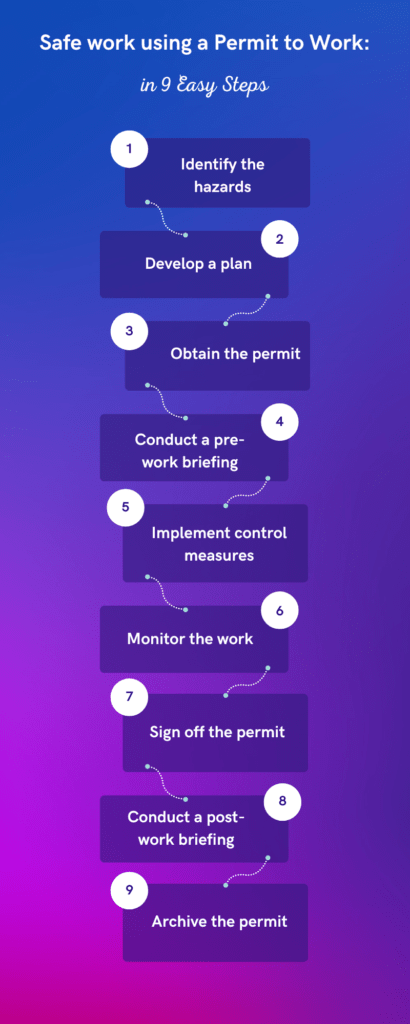
Here are nine steps to safe work using a Permit to Work:

9 steps for safety PTW

1. Identify the hazards:
Identify all the hazards associated with the work activity and assess the risks involved.

2. Develop a plan:
Develop a plan to control the risks and ensure that all necessary resources are available.

3. Obtain the permit:
Obtain a permit to work from the authorized person, which should clearly outline the scope of work, location, and duration.

4. Conduct a pre-work briefing:
Conduct a pre-work briefing that includes all relevant information, such as the hazards, risks, and control measures.

5. Implement control measures:
Implement control measures, such as isolation, lockout/tagout, and personal protective equipment (PPE), as per the PTW requirements.

6. Monitor the work:
Monitor the work activity to ensure that it is being carried out as per the PTW and that all control measures are in place..

7. Sign off the permit:
Once the work is completed, sign off the permit to confirm that the work has been carried out in a safe and controlled manner.

8. Conduct a post-work briefing:
Conduct a post-work briefing to review the work activity and identify any lessons learned.

9. Archive the permit:
Archive the permit to work for future reference and ensure that it is easily accessible to authorized personnel.

By following these nine steps, you can ensure that high-risk activities are carried out safely and systematically, minimizing the risk of accidents and injuries in the workplace.

You can manage Permit to work easily and quickly!

Want to know how? Click the below button to know more

Permit to Work (PTW) Safety FAQ

What is a Permit to Work (PTW) system?
A Permit to Work (PTW) system is a formal safety procedure used to control high-risk or non-routine work activities. It ensures that hazards are identified, risks are assessed, and appropriate safety measures are implemented before work begins.
What are the key steps in a PTW safety process?
The PTW process typically includes steps such as job request, hazard identification, risk assessment, permit preparation, approval, pre-job briefing, work execution, monitoring, and final closure. These steps ensure safe planning and execution of high-risk tasks.
Why is hazard identification important in PTW?
Hazard identification is crucial because it helps recognize potential risks before work begins. By identifying hazards early, organizations can implement control measures to prevent accidents and ensure worker safety.
How does a PTW system ensure workplace safety?
A PTW system ensures safety by providing a structured process for authorizing work, communicating risks, and enforcing safety controls. It ensures that only trained personnel perform tasks under controlled conditions.
What types of work require a permit to work?
PTW is required for high-risk activities such as hot work, confined space entry, electrical work, working at heights, and maintenance tasks involving hazardous conditions.
How does digital PTW software improve safety processes?
Digital PTW software improves safety by automating workflows, standardizing procedures, and providing real-time visibility into ongoing work. It reduces paperwork, minimizes human error, and enhances compliance with safety regulations.
What is the importance of monitoring and closure in PTW?
Monitoring ensures that safety measures are followed during work, while closure verifies that the task is completed safely and the site is secure. Proper closure also provides documentation for audits and continuous improvement.
EHS Management

Permit To Work Risk Assessment

What is Permit to work?

Permit to work is an integrated part of control of work (COW). Work control consists of PTW, hazard identification and risk assessment, and isolation management. It is intended to protect employees who are working in dangerous conditions. It guarantees that management systems are followed in such a way that the project is completed safely. The permit to work procedure includes procedures for requesting, reviewing, authorising, and documenting. This ensures that two potentially hazardous procedures do not occur in close proximity.

Why is it important?

Permits to work or safety permits guarantee that workers are informed, trained, and monitored to reduce the danger of any potential human failure events occurring. Risk management is an important component of any modern organization’s operational strategy since it ensures that risk and consequences are considered on a daily and task-by-task basis.

  • Identify the project’s scope, including key stakeholders and a timeframe.
  • Identifying hazards and risks
  • Outline a strategy for mitigating potential hazards.
  • Identify workers and ensure that all training needs are met.


permit to work benefits

Types of PTW or Permit to work?

1. Hot work permit:

The term “hot work” refers to any operation that involves the application of heat or ignition sources to tanks, vessels, pipelines, and other structures that may hold or contain dangerous gas, or in regions where flammable atmospheres may exist. It is usually red or has a red edge.

[download_after_email id=”17717″]

2. Height work permit:

A permit for “Working at Height” is required for all work at heights of 2 meters or above. When scaffold materials are held at the site of erection prior to erection, the “Pre Erection Checklist for Scaffold” must be completed in the appropriate form. Before being used, all tubular scaffolds must be tested and certified. A medical certificate for workers who must work at heights is essential.

[download_after_email id=”17720″]

3. Confined space work permit:

A confined space entry also refers to a vessel entry, and the term permit-required confined space was established by OSHA. Equipment and regions are the responsibility of industries and some workplaces. Confined space that is not intended for work people but allows staff entry to complete a specific duty. They include any vessel, tank, container, pit, or other similar place with a very limited aperture that is not suitable for working for an extended period of time, and this enclosed system causes an accident to occur.

[download_after_email id=”17723″]

3. Excavation Work Permit:

The authorization for employees to mine or excavate land in order to construct infrastructure, extract resources, or uncover hidden artefacts is covered by this permission. There are a variety of risks associated with excavation, such as falling, getting trapped, explosions, and airborne contaminants.

[download_after_email id=”17725″]

4. Electrical Work Permit:

Any task that requires the worker to purposely come into touch with electrically powered circuits is considered electrical work. Unless the testing allows for the worker and/or the worker’s tools to intentionally come into contact with the electrically powered circuits, testing and/or the usage of testing equipment are not considered electrical work.

[download_after_email id=”17727″]

Learn about the importance of digital permit to work or electronic permit system?

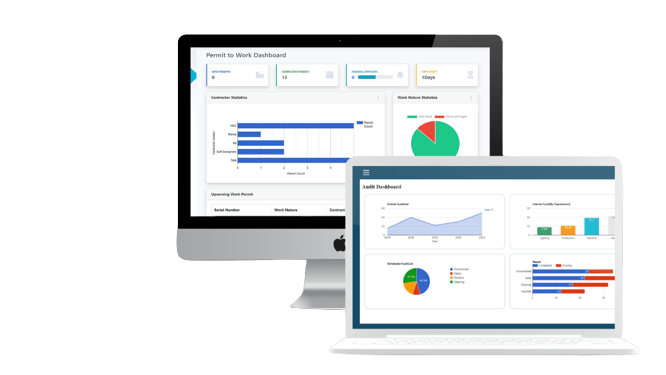
The permit to work system’s digitization assists in removing the tedious Excel-based or paper-based processes that are often connected to a manual PTW system. With the help of an E-ptw or electronic permit system, you may streamline the entire procedure to produce a system that is constantly connected, simple to use, highly collaborative, and that has greater accessibility and control over permits.

How to get started:

By registering for a free 14-day free trial account on Soft Designers, you get experience the Best Work Permit software. There are no user or usage restrictions with the trial account, which provides you access to all of the software’s features.

Permit to Work Risk Assessment FAQ

What is a permit to work risk assessment?
A permit to work risk assessment is a structured process used to identify, evaluate, and control hazards before starting high-risk or non-routine work. It ensures that all potential risks are assessed and proper safety measures are in place before issuing a work permit.
Why is risk assessment important in a PTW system?
Risk assessment is essential because it helps identify hazards, evaluate their severity, and implement control measures before work begins. It ensures that high-risk activities are carried out safely and reduces the likelihood of accidents and incidents.
What are the steps involved in permit to work risk assessment?
The key steps include identifying hazards, assessing risk levels, defining control measures, obtaining approvals, and continuously monitoring the work. These steps ensure that safety precautions are followed throughout the work lifecycle.
What types of work require a permit to work risk assessment?
High-risk activities such as hot work, confined space entry, electrical work, working at height, and excavation typically require a permit to work risk assessment to ensure safe execution.
How does a PTW system help in risk control?
A PTW system helps control risks by enforcing safety procedures, ensuring proper authorization, and documenting hazards and precautions. It provides a clear communication channel between teams and ensures accountability throughout the task.
How does digital permit to work software improve risk assessment?
Digital PTW software improves risk assessment by automating hazard identification, standardizing checklists, and providing real-time visibility into ongoing work. It reduces human error, enhances compliance, and ensures better tracking of safety measures.

EHS Management

Digital EHS Cloud based Software is important! How?

Learn Why Digital EHS is important at workplace!

Digital EHS – Soft Designers cloud-based EHS software helps you save time, reduce risk, and prevent unwanted events. If you’re looking for a simple, affordable EHS software system then you are on the right page. By using cloud-based EHS software you can eliminate the costs of server hardware, security, maintenance, and upgrades.

Cloud solutions can be easily deployed across an entire organization. This is especially useful for those in manufacturing that are looking to improve an EHS program within a large workforce spread across several facilities.

The important terms to know:


SaaS Cloud based software:

By using cloud (SaaS), you can access the software remotely over the internet on a monthly or annual subscription basis. We handle hosting, security updates, and maintenance.

No long-term commitment:

The software uses a subscription model, so users don’t have to sign a long-term contract.

Free trial:

Cloud based software is available on a try-before-you-buy basis. This allows users to gain first-hand experience with the software without making an upfront investment.

Friendly User interface:

The user experience with cloud software is much better than traditional software. Therefore, the software gets more user adoption.

Connect anywhere:

Cloud is accessible via web browser or mobile interface from anywhere since it only requires an internet connection to function.

Data recovery:

Backups and data recovery are included with cloud systems. Hence, you need not implement manual or automated processes to backup your data.

Subscription:

There is a monthly or annual fee for accessing the software.

Cloud based EHS software is subscription-based, which means that organizations pay a monthly or annual fee to use the software. This eliminates the need for upfront hardware and software costs, as well as the need for IT infrastructure and support. Learn more about how Soft Designers are helping industries by implementing EHS Solutions

Say bye to paper and spreadsheet solutions, it’s time to implement digital ehs software.

Would like to know about the ROI?

Cloud-Based EHS Software FAQ

What is cloud-based EHS software?
Cloud-based EHS software is a digital platform that allows organizations to manage environmental, health, and safety processes online. It centralizes data, enables real-time monitoring, and provides easy access from any location using internet-enabled devices.
Why should companies switch to digital EHS software?
Companies should switch to digital EHS software to eliminate manual paperwork, reduce errors, and improve efficiency. Digital systems automate workflows, enhance visibility, and help organizations proactively manage risks and compliance.
What are the benefits of cloud-based EHS systems?
Cloud-based EHS systems offer benefits such as real-time data access, scalability, improved collaboration, automated reporting, and enhanced data security. They also help organizations monitor safety performance and make data-driven decisions.
Can cloud EHS software be accessed remotely?
Yes, cloud-based EHS software can be accessed from anywhere using mobile devices, tablets, or desktops. This enables teams to report incidents, perform audits, and monitor safety activities in real time, even from remote locations.
How does cloud-based EHS software improve workplace safety?
It improves workplace safety by enabling real-time incident reporting, risk assessment, and hazard identification. Organizations can take immediate corrective actions, track safety trends, and prevent recurring incidents through data-driven insights.
Is cloud-based EHS software scalable for growing organizations?
Yes, cloud-based EHS software is highly scalable. It can be easily expanded to support multiple sites, users, and processes, making it suitable for both small businesses and large enterprises with global operations.