
In today’s industrial world, technology is growing fast and becoming safer and smarter. Many companies are now upgrading from old methods to new digital solutions to protect employee health and safety. Earlier, everyone depended on traditional paper-based permit forms, which took a lot of time and created many challenges in daily operations.
Now, the year 2025 brings the best technological solution to transform your safety processes of of AI-Powered Permit to Work Systems. This advanced technology is helping all industries manufacturing plants, oil & gas, and construction work faster, reduce manual effort, and identify risks even before the job starts.
In this blog, we will explore the major changes brought by AI-powered PTW systems and how they are improving safety in every industry.
Let’s Breakdown the Main Points in This Blog:
How Permit to Work Systems Moved from Paper Forms to Smart Predictive Safety:
Once upon a time, every industry relied on traditional paper-based forms. Getting approvals from safety officers, HODs, and supervisors caused delays and confusion. Later, companies shifted to digital Permit to Work systems, which made approvals faster, saved time, and simplified the entire workflow.
Now technology has changed again into AI-based Digital PTW. We don’t need to store information manually because AI can identify the risk before work starts, easily predict risks, analyze past incidents, and give the proper process. This change has moved the system from manual to a smart, real-time safety system.
- AI Automation: Digital PTW system now check, verify, Analyze and tracking the permits without the Human Mistakes.
- Predictive Safety with AI: AI systems can detect hazards, predict risks, and alert teams before an accident occurs.
- Automatic Reports: The system automatically creates safety reports, logs, and history, saving time and helping companies maintain compliance easily
- Good Communication: All Industry workers, safety officers, Supervisors, technical members, get instant updates quickly No confusion and no delays anymore.
How AI and Automation Are Transforming Safety Management:
AI and automation of safety management are faster and safer, smarter. Automated systems check all the steps of safety procedures, verify the permits, and send alert notifications to unsafe risks.
AI and automation are completely changing the way companies manage safety by making daily safety activities faster, smarter, and more reliable. Instead of depending only on manual checks and paperwork, AI systems can automatically detect hazards, predict risks, and track incidents in real time. They analyze data from inspections, sensors, CCTV, and previous incidents to identify unsafe patterns early, helping teams prevent accidents before they happen. Automated alerts ensure that supervisors are informed immediately when something goes wrong, and routine tasks like checklists, approvals, and reports are handled instantly without mistakes.
Overall, AI turns safety management from a reactive process into a proactive, intelligent system that protects workers and improves efficiency.
How Digital Tools Are Improving Efficiency and Performance:
Digital tools are greatly improving efficiency and performance by replacing time-consuming manual work with fast, automated processes. Instead of filling out forms, searching through files, or waiting for approvals, workers can now complete tasks instantly using mobile apps and cloud platforms. Real-time dashboards give teams clear visibility into ongoing activities, while automated reminders, checklists, and reporting systems ensure that nothing is missed. With all information stored in one place, decisions become faster, collaboration improves, and overall productivity increases across the entire organization.
1.Speeds up work with automated tasks and instant digital approvals.
2.Reduces errors by storing all data in one organized, cloud-based system.
3.Improves performance with real-time dashboards and smart tracking.
4.Eliminates paperwork, reducing time, and effort spent on manual processes.
5.Provides quick insights through analytics, helping managers make better decisions.
OSHA and AI-Powered PTW: Why It Matters:
OSHA is a global standard that helps companies keep workers safe and reduce accidents. It tells organizations how to identify risks, control hazards, and follow proper safety procedures. An AI-powered Permit to Work system supports these rules by making safety checks faster, smarter, and more accurate. It keeps all permits digital, tracks every step, and ensures the right safety actions are taken before work begins. By using AI PTW, companies can easily meet OSHA requirements and create a safer workplace for everyone.
- AI PTW helps companies follow OSHA rules by making hazard checks, approvals, and documentation fully digital and error-free.
- It improves safety performance by predicting risks early, preventing unsafe work, and keeping clear records for audits and compliance.
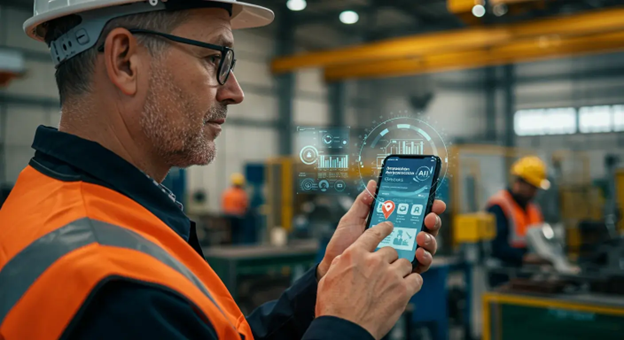
- AI PTW increases worker involvement by allowing employees and contractors to easily report hazards, submit permits, and follow safety steps from mobile or desktop.
How to Get Your Company Ready for the Future of Work Permits:
To prepare your company for the future of work permits, start by shifting from paper-based forms to digital workflows. Train your team to use smart PTW tools that simplify approvals and improve safety compliance. Make sure all departments follow a standardized, digital permit process. With the right technology and training, your organization can achieve faster, safer, and smarter permit management.
1. Move from Paper to Digital Platforms
Shift all permit forms, templates, checklists, and approvals into a digital system. This reduces delays, avoids missing documents, and allows your team to access permits anytime, anywhere using mobile devices.
2. Train Your Teams on Smart Safety Tools
Prepare your workforce with training sessions on how to use digital PTW software, AI-based alerts, QR scanning, and mobile inspections. Well-trained teams adapt faster and use the tools efficiently without resistance.
3. Standardize Your Permit Process Across All Sites
Ensure every location follows the same workflow, same approval levels, risk matrix, hazard controls, and digital formats. Standardization avoids confusion and ensures uniform safety compliance.
4. Integrate AI for Hazard Detection & Predictive Risk
Adopt AI tools that analyse incidents, Near misses, site conditions, and equipment data to predict risks before they occur. This helps your organization shift from reactive safety to predictive safety.
5. Build a Real-Time Dashboard
Encourage managers and safety officers to use dashboards for tracking approvals, pending permits, high-risk jobs, and overdue tasks. Real-time insights help in faster decision-making and better risk control.
6. Automate Workflows to Reduce Delays
Enable automated notifications, escalation alerts, competency checks, and expiry reminders. Automation ensures no permit gets stuck waiting for someone to remember.
7. Strengthen Compliance with Digital Audit Trails
Digital PTW systems provide time-stamped logs, user activity records, and evidence-based documentation. This makes audits easier, more transparent, and fully compliant with safety standards.
Conclusion:
Soft Designers empowers organizations with advanced AI-driven safety tools that simplify workflows and enhance protection across all sites. The future of work permits is intelligent, connected, and proactive and Soft Designers is helping companies lead that future with confidence.
FAQ:
1. How does AI improve safety?
AI can predict risks, alert supervisors, check if safety rules are followed, and reduce human mistakes.
2. Does AI reduce the workload of safety teams?
Definitely. AI handles checks, reminders, approvals, and follow-ups automatically.
3. What industries benefit from AI PTW?
Manufacturing, Construction, Oil & Gas, Chemical,, Power Plants, .and many more
4.How fast can a company shift from manual PTW to AI PTW?
Very fast. Most companies switch within a few days with basic training.
5. Is it easy for workers to use?
Yes. It has a simple dashboard and mobile app. Even first-time users can follow the steps easily.